Survival isn't a math problem. If you ask most disaster response manuals, they'll tell you the first 72 hours are everything. They call it the golden window. After that, hope turns into a recovery operation rather than a rescue mission.
Except nobody told Hernán Alberto Gil Flores. You might also find this related story insightful: Why the New ATF Firearm Shipping Rules Change Everything.
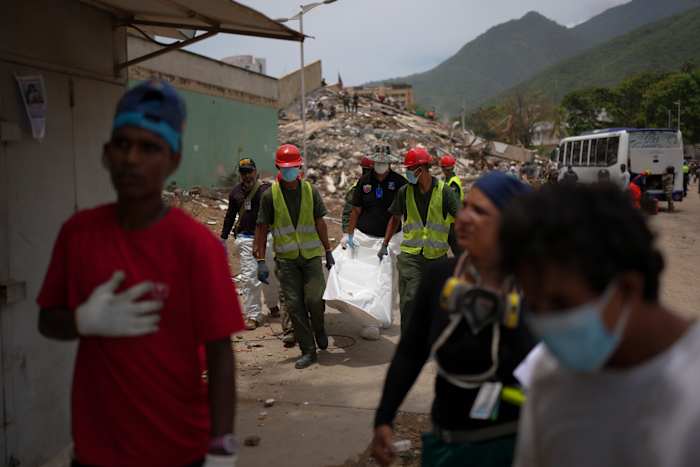
On July 2, 2026, a massive coalition of international rescuers, including the Los Angeles County Fire Department's elite urban search and rescue team, pulled the 43-year-old security guard alive from the catastrophic ruins of the Galerías Playa Grande shopping center in La Guaira, Venezuela. He had been trapped for eight agonizing days. Under 140 tons of shattered concrete, inside a collapsed basement, Gil Flores defied the statistics.
When the twin 7.2 and 7.5 magnitude earthquakes razed Venezuela's northern coast on June 24, the devastation was instant. The official death toll quickly climbed past 2,200, with tens of thousands initially reported missing. In the chaos, the local response struggled to cope, prompting the U.S. Department of State to activate USA-2—the specialized Los Angeles County crew. Together with teams from Chile, Portugal, Costa Rica, El Salvador, Mexico, and Virginia, they proved that sticking around past the deadline saves lives. As reported in latest reports by Associated Press, the results are widespread.
The Reality of Concrete Pockets and Survival Science
How does someone survive eight days without food and with barely any water? It comes down to structural luck and extreme physical endurance.
Gil Flores was working a night shift inside a small security cabin when the twin tremors struck less than a minute apart. While the nine-story concrete complex pancaked around him, his reinforced workstation cabin held its ground. It took the brunt of the weight and created a vital pocket of air.
[Collapsed Structure Roof]
       \       /
        \     /  <-- 140 Tons of Rubble
     [Security Cabin]  <-- Structural Void (Air Pocket)
         [Victim]
In urban search and rescue, these voids are everything. When heavy buildings collapse, they rarely flatten completely like a deck of cards. Reinforced pillars, heavy appliances, or steel cabins create lean-to or structural voids. If a victim is lucky enough to land in one, their survival timeline stretches.
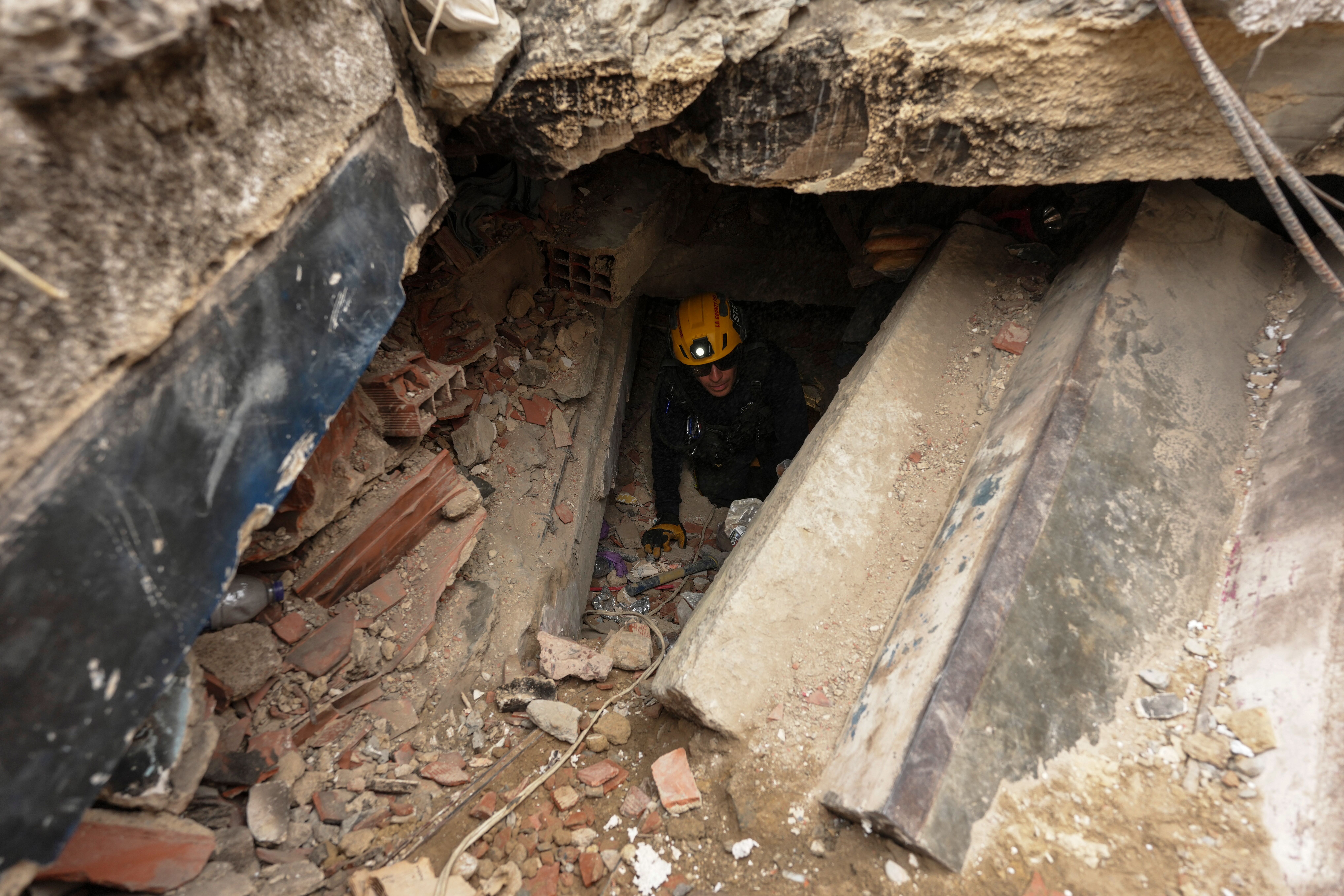
But air is only part of the equation. The human body needs hydration. In this specific operation, once rescue teams made contact with Gil Flores four days into his entrapment, they didn't just dig. They used specialized technical equipment to feed him water and liquid nutrients through thin tubing and syringes while navigating the shifting ruins.
Inside the Logistics of Global Disaster Response
When a major earthquake hits, you can't just fly a bunch of firefighters into a disaster zone and tell them to start digging. It requires massive logistical coordination and specialized gear.
The Los Angeles County Fire Department deployed 71 personnel, six canine teams, and roughly 84,000 pounds of specialized rescue equipment. They worked alongside the Virginia-based USA-1 team and various international groups to coordinate round-the-clock drilling, shoring, and tunneling.
The operation to extract Gil Flores illustrates why these missions take so long. Rescuers initially dug a tunnel, only to realize the structural instability of the rubble made it a death trap for both the victim and the handlers. They had to abandon that route, use the first tunnel purely as a support beam, and cut a completely separate second access route.
Scent Canines vs Electronic Listening Devices
The search combined old-school biology with high-tech acoustic gear. Teams utilized both methods to pinpoint survivors in the rubble.
- Specialist Canine Teams: Scent dogs are trained to ignore the ambient chaos, dust, and smell of decaying matter to lock onto the scent of living human sweat and breath. When a dog indicates a find, it gives the team a precise starting point.
- Acoustic Listening Devices: Firefighters like Michael Toepfer from the LA crew use ultra-sensitive microphones placed on the concrete. The entire site goes dead silent via a whistle command. Rescuers shout commands into the rubble, asking victims to tap three times if they can hear them, using the devices to amplify faint, rhythmic thumping through feet of solid stone.
What Dictates the Decision to Keep Digging
The Venezuelan government faced criticism for a slow initial response, which placed the burden of heavy rescue directly onto international shoulders. With the unofficial missing list hovering around 38,000 people in the days following the disaster, deciding when to stop searching is a brutal calculation.
Rescuers don't pull out just because a clock hits 72 hours. They look at the quality of the structures. If a building is made of wood or light steel, voids are rare, and survival rates drop fast. Heavy concrete structures, like those in Catia La Mar and Caraballeda, take longer to clear but offer a much higher probability of survivable voids.
As long as listening devices pick up rhythmic tapping, or search dogs show high-interest alerts, the mission remains a rescue. The miracle in La Guaira wasn't just luck. It was the result of seven nations refusing to let a bureaucratic timeline dictate when a life was lost.
If you want to understand how these teams operate under pressure, look at the protocols established by the International Search and Rescue Advisory Group (INSARAG). They provide the global standards that allow an LA firefighter, a Costa Rican Red Cross worker, and a Chilean engineer to work in the same hole without speaking the same language. You can track updates on international deployments and safety guidelines through the INSARAG Central Registry to see how these coordinated efforts are managed in real time.