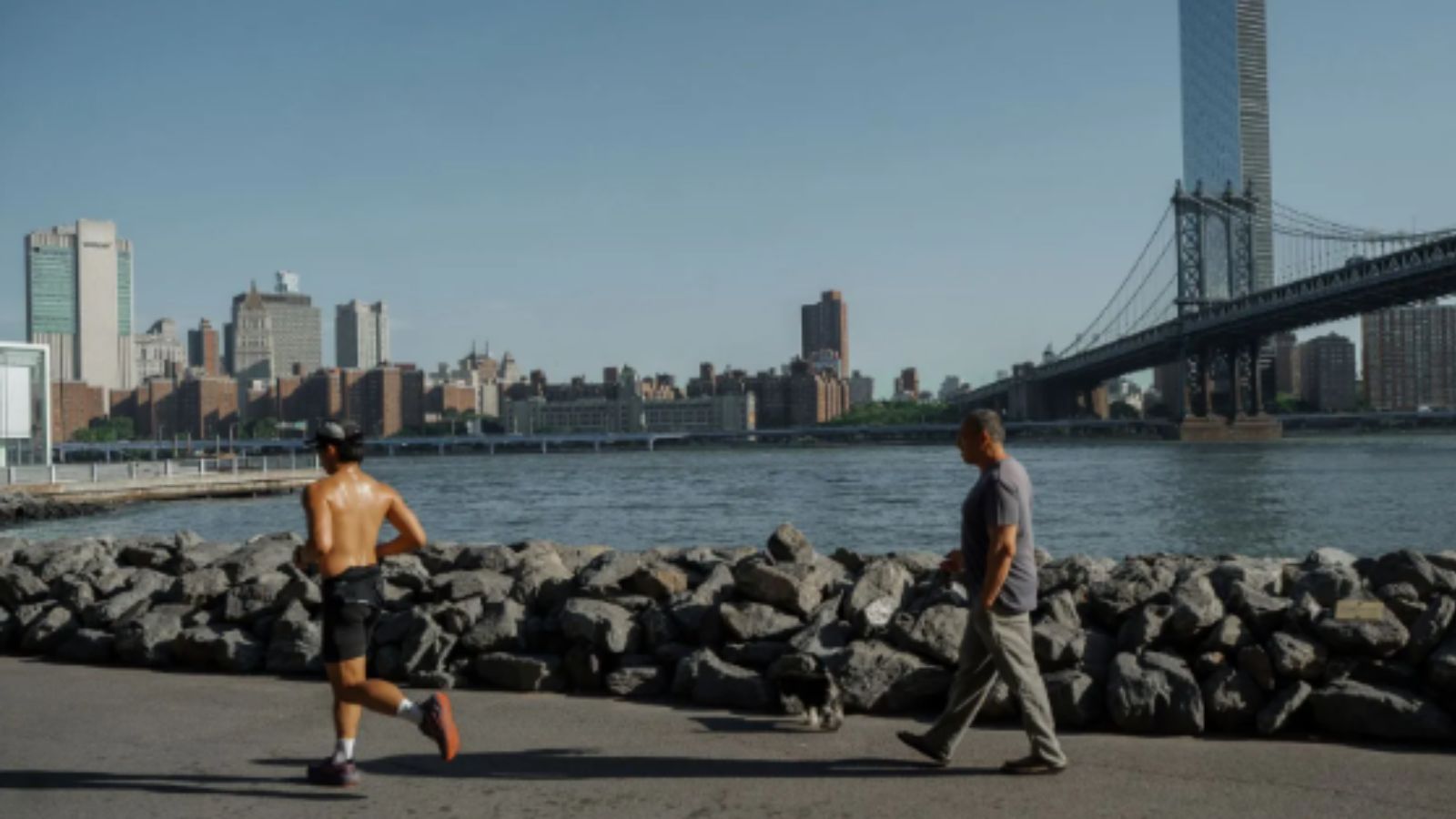
Legionnaires’ disease is no longer an isolated civic anomaly; it is a predictable output of aging urban infrastructure reacting to a changing thermal profile. While standard reporting framing treats local outbreaks—such as those observed in metropolitan New York—as discrete, accidental failures of maintenance, a systemic analysis reveals a structural confluence of macro-climatic shifts and micro-environmental vulnerabilities. Managing this public health asset risk requires moving past reactive remediation toward a predictive, framework-driven containment model.
The Tripartite Growth Vector of Legionella Pneumophila
Understanding the proliferation of Legionella requires isolating the biological engine from the transmission mechanism. The bacteria are ubiquitous in natural aquatic environments in low concentrations, but they become clinically significant threats only when engineered systems amplify them. This amplification relies on three distinct pillars.
The Thermal Incubation Threshold
Legionella bacteria exhibit a highly specific metabolic response to temperature. Below 20°C (68°F), the organism remains dormant but viable. The critical acceleration zone exists between 20°C and 45°C (68°F to 113°F), with optimal replication occurring precisely between 35°C and 46°C. Urban microclimates, exacerbated by rising ambient summer temperatures and the urban heat island effect, consistently push municipal water inputs and stagnant storage systems into this optimal incubation window.
Biofilm Kinetics and Nutrient Availability
Stagnation within piping networks creates a low-shear environment that allows biofilms to adhere to internal surfaces. These biofilms act as a protective matrix, shielding Legionella from chemical biocides and providing a rich nutrient source of protozoa, algae, and organic carbon. High ambient temperatures accelerate the metabolic rate of these supporting microorganisms, compounding the growth rate of Legionella exponentially rather than linearly.
Aerosolization Mechanics
The final vector is mechanical. Legionella cannot infect via ingestion; transmission requires inhalation of respirable droplets (1 to 5 micrometers in diameter) capable of penetrating deep into the alveolar spaces of the human lung. Open-loop evaporative cooling towers, misters, decorative fountains, and compromised potable hot water systems (such as low-flow showerheads) act as the physical delivery mechanisms that convert a localized bacterial colony into a community-wide airborne threat.
The Macro-Environmental Catalyst: Climate Change as a Risk Multiplier
Connecting a localized Legionnaires' outbreak to global climate shifts requires looking at specific meteorological mechanisms. The correlation rests on two main variables: elevated wet-bulb temperatures and hyper-localized precipitation events.
[Ambient Temperature & Humidity Elevation] ──> [Increased Cooling Tower Thermal Load] ──> [Optimal Biofilm Incubation]
                                                                                                    │
[Intense Precipitation Events] ───────────────> [Municipal Stormwater Surges] ──────────> [Organic Nutrient Influx]
The Cooling Tower Thermal Load Function
As summer heatwaves extend in duration and intensity, commercial HVAC infrastructure operates at or near peak capacity for longer cycles. Open-loop cooling towers rely on evaporative cooling to reject heat from buildings. When ambient wet-bulb temperatures rise, the efficiency of this evaporation decreases. Systems respond by circulating higher volumes of water at temperatures that frequently sit within the 32°C to 40°C danger zone. The system is simultaneously under maximum mechanical stress and presenting the perfect thermodynamic conditions for bacterial amplification.
Precipitation Shock and Municipal Water Quality
Increased frequencies of extreme rainfall events directly alter the chemistry of municipal water supplies. Heavy precipitation causes stormwater runoff that overburdens water treatment facilities, leading to transient spikes in turbidity and organic carbon in the distribution network.
- Biocide Consumption: The influx of organic matter rapidly consumes free residual chlorine or chloramine in the water mains.
- Pathogen Shielding: Turbidity provides physical sediment that shields bacteria from UV disinfection and chemical treatment.
- Entering the Building Enclosure: The water arriving at commercial and residential facilities already possesses a depleted defensive profile and a higher baseline nutrient load, shifting the burden of disinfection entirely onto the building's internal systems.
Infrastructure Decay and the Structural Vulnerability Framework
The external environmental pressure of climate change interacts with a highly vulnerable internal environment: the legacy plumbing architectures of major metropolitan areas.
The Low-Flow Dilemma and Hydraulic Stagnation
Modern green building standards emphasize water conservation, mandating low-flow fixtures across commercial and residential sectors. While effective for resource conservation, this creates unintended hydraulic consequences. Reduced volumetric flow rates increase the residence time of water within a building’s footprint. Potable water that previously cleared the system in hours now sits for days in large-diameter risers, losing its residual chlorine chlorination and absorbing ambient building heat until it matches the room temperature incubation zone.
Complex Hydraulic Dead Legs
Decades of building renovations, tenant build-outs, and structural reconfigurations leave behind "dead legs"—sections of pipe capped off or isolated from the main flow. These dead legs represent completely un-flushed volume. They act as permanent reservoirs of stagnant, biocide-depleted water where biofilms mature undisturbed. As pressure fluctuations occur within the broader system, these highly concentrated bacterial reservoirs back-flow into the active potable streams, causing recurring, mystifying spikes in contamination.
The Economics of Mitigation: Shifting from Reactive Remediation to Predictive Engineering
The traditional civic response to a Legionnaires' cluster is reactive hyper-chlorination or thermal eradication (flushing systems with water above 60°C). This is an operational failure mode. It damages infrastructure through accelerated pipe corrosion, offers only temporary suppression, and incurs massive capital expenditure. A definitive mitigation model requires a structural pivot toward real-time chemical tracking, systemic hydraulic balancing, and automated maintenance protocols.
Continuous Free-Oxidant Monitoring
Buildings must implement automated, inline amperometric sensors at the point of entry and at the most distant points of the domestic hot water loop. Relying on monthly manual grab samples creates a dangerous visibility lag. If residual free chlorine drops below 0.5 mg/L, automated dosing pumps must instantly supplement secondary disinfection (such as chlorine dioxide or copper-silver ionization) to neutralize incoming organic loads before they can establish a foothold in internal biofilms.
Thermodynamic Isolation and Balancing
Hot water systems must be mechanically re-engineered to maintain a strict thermodynamic barrier. Water heaters should store and distribute water at a minimum of 60°C (140°F), utilizing localized thermostatic mixing valves immediately before the point of use to prevent scalding while ensuring the recirculation loop remains completely hostile to bacterial life. Conversely, cold-water lines must be physically insulated from parallel steam or hot-water risers to prevent ambient heat transfer from pushing cold water above the 20°C dormancy ceiling.
Predictive Risk Modeling over Ambient Targets
Public health policies and facility management guidelines must stop treating cooling towers as independent variables. Risk assessments must integrate real-time local weather telemetry. When regional forecasts predict a combination of high humidity and consecutive days above 32°C, facility managers must proactively step up biocide dosing frequencies and scale back mechanical load through chiller redundancy, rather than waiting for a positive laboratory culture that takes 7 to 10 days to confirm a colony-forming unit spike.
The structural trajectory is clear: as urban centers grow warmer and municipal infrastructure ages, the statistical probability of Legionella colonization moves from a variable risk to a baseline certainty. The entities that survive this shift without catastrophic liability or public health failures will be those that treat water quality not as a quarterly compliance checklist, but as a dynamic, continuous thermodynamic equation.