Equatorial Guinea is scaling up its malaria control strategy from an isolated island project to a nationwide elimination campaign, attempting to replicate two decades of localized success on Bioko Island. The central premise of this expanded initiative relies on aggressive indoor residual spraying, real-time data surveillance, and a heavy reliance on public-private funding partnerships with international oil corporations. Yet, transitioning a containment model from a controlled insular geography to a resource-strapped mainland brings profound administrative, financial, and logistical hurdles that public health analysts cannot ignore.
For over twenty years, the Bioko Island Malaria Control Project served as the primary laboratory for the nation's anti-vector efforts. Funded largely by energy conglomerates operating off the coast alongside state backing, the program drove down parasite prevalence significantly through targeted spraying and case management. But Bioko is an island. Its borders are naturally defined, making vector management considerably more straightforward than managing transmissions across porous mainland borders where rural poverty, infrastructure deficits, and administrative friction complicate healthcare delivery. Also making headlines lately: The Synthetic Drug Supply Chain in Chicago Why Standard Responses Fail.
The Mechanics of Real-Time Surveillance
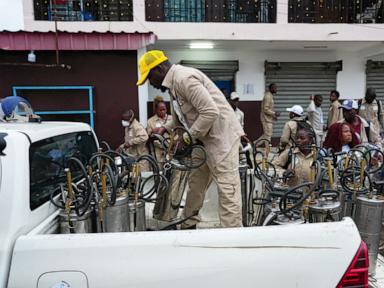
Modernizing disease eradication requires moving past generalized public health campaigns into hyper-targeted data collection. Teams on the ground now utilize digital tracking tools to map out exactly which households have received insecticide treatments and which neighborhoods report spikes in febrile illnesses.
This feedback loop allows health ministry officials to reallocate spraying crews and medication supplies dynamically rather than waiting for quarterly reports. When a cluster of cases emerges in a dense urban neighborhood or a remote rural settlement, the response time is measured in days instead of months. Additional details regarding the matter are detailed by Medical News Today.
However, data collection is only as reliable as the infrastructure supporting it. In many communities slated for the nationwide rollout, substandard housing materials, unpaved roads, and incomplete residential layouts make consistent tracking difficult. Spraying teams frequently encounter structural obstacles where walls are constructed from porous or fragile materials that fail to retain insecticides effectively. Data points on a dashboard cannot substitute for physical building blocks.
The Fragile Foundation of Private Sector Reliance
A unique structural characteristic of Equatorial Guinea's public health success is its funding model. Major international oil companies operating within the nation's lucrative energy sector have historically footed a substantial portion of the bill. This arrangement filled gaps that state budgets alone could not bridge.
Relying on corporate philanthropy and private-sector partnerships introduces long-term vulnerabilities. Corporate priorities shift, commodity markets fluctuate, and concession timelines eventually expire. Tying national health security to the fiscal health of foreign energy extraction firms creates an inherent systemic risk. If corporate funding dips or extraction projects wind down, maintaining an expensive, high-intensity vector control program becomes an immediate budgetary crisis for the central government.
Furthermore, economic inequality remains a stark reality across the country. While national leadership highlights macroeconomic indicators driven by energy wealth, a significant portion of the population continues to navigate daily life in conditions of severe under-resourcing. Malaria thrives precisely in these environments of rural poverty and infrastructural neglect, where preventive measures like bed nets and treated walls are undermined by basic struggles for daily survival.
Emerging Vectors and Biological Hurdles
As the campaign pushes forward, biological variables threaten to outpace logistical gains. Mosquito populations adapt. Chemical resistance to standard insecticides grows more pronounced with every passing year of heavy spraying.
To counteract this, health authorities are exploring advanced biological interventions, including the potential deployment of drones for mapping breeding sites and future trials involving genetically modified mosquitoes designed to suppress wild populations or block parasite transmission. These frontier technologies sound revolutionary in international policy briefs, but introducing genetically altered organisms into fragile ecosystems requires rigorous regulatory oversight, extensive community engagement, and deep scientific trust.
Skepticism from local populations who have historically experienced marginalization is a formidable barrier. Public health initiatives cannot succeed through top-down mandates alone; they require active community participation and absolute transparency. When families are asked to open their homes repeatedly to inspection and chemical spraying teams, trust becomes the most valuable currency in the entire operation.
The expansion of Equatorial Guinea's elimination plan represents a bold step into unchartered territory. Whether it can overcome the stark divide between controlled corporate-backed enclaves and neglected mainland realities will determine if this ambitious roadmap becomes a continental benchmark or a cautionary tale of overextension.
The ultimate test lies not in the sophistication of the technology deployed, but in the durability of the state's commitment once the initial international spotlight fades.
Equatorial Guinea expands malaria elimination drive
This video provides an overview of Equatorial Guinea's transition from localized island containment to a nationwide malaria control strategy.