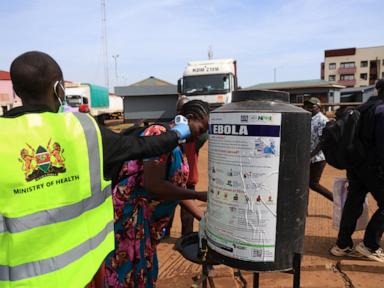
The fluorescent lights in a small rural clinic buzz like a trapped wasp. Heat clings to the plastic chairs. Someone coughs three doors down—dry, heavy, a sound that makes every pair of eyes in the waiting room snap upward.
Eight. Meanwhile, you can find similar stories here: Inside Equatorial Guineas High Stakes Gamble to Eradicate Malaria.
Just one digit. A tidy little number you can count on the fingers of one hand plus three. Yet when public health officials in Kenya confirm an eighth Ebola case while a wider regional outbreak stretches across neighboring borders, that tiny integer stops being arithmetic. It becomes a fuse.
I have stood inside isolation wards where the air smells sharp with chlorine bleach and quiet dread. You remember the sound first: the crinkle of heavy nitrile gloves being pulled taut, the soft swish of Tyvek gowns against thighs, the muffled cadence of voices speaking through fabric masks. Fear does not arrive with sirens. It arrives in the sudden pause before someone reaches for a door handle. To see the bigger picture, check out the detailed report by Mayo Clinic.
Let us be honest from the start. Ebola is terrifying. The words alone carry a heavy cultural memory—images of hazmat suits, breathless television anchors, and worst-case projections that make your stomach tighten before you even finish reading a headline. When a regional outbreak widens and a country tallies its eighth confirmed case, the mind races ahead of the evidence. It is completely normal to feel a knot of alarm, or to wonder whether health systems on the ground can hold the line. I do not pretend to have every answer on day eight of a moving crisis. Uncertainty is part of the terrain.
Still, panic is a poor guide through an infectious disease outbreak. Clarity is better. Context is better. And above all, seeing the human beings standing between a virus and a community makes the stakes unmistakable.
When a Number Becomes a Neighbor
To understand what the eighth confirmed case in Kenya really means, strip away the clinical shorthand. A "confirmed case" is not a spreadsheet row. It is a person whose body has become an unwilling battleground for a filovirus—a pathogen capable of causing severe viral hemorrhagic fever, marked early on by fever, fatigue, muscle pain, headache, and sore throat, before progressing in many patients to vomiting, diarrhea, internal or external bleeding, and multi-organ failure.
Think of Ebola like a spark jumping through dry grass along a windy ridge. The grass does not care where the surveyors drew the county line or the national border. Viruses move along human paths: market days, shared matatus and buses, family funerals, cross-border trade routes, and clinic visits made when a headache still feels like ordinary malaria or typhoid.
To make these invisible chains of transmission concrete, consider a hypothetical scenario modeled on how real contact-tracing teams operate during cross-border flare-ups. Suppose a young trader—let us call him Musa, a purely hypothetical composite figure created to illustrate epidemiological tracing—travels across a regional border after caring for a sick relative whose illness was never formally tested. Three days later, Musa feels bone-deep exhaustion and a burning fever. He stops at a local clinic, visits two relatives to drop off parcels, and rests at home. By the time laboratory testing confirms Ebola—marking, say, the eighth recognized case in the country—the clock has already been ticking for days.
Every hour between symptom onset and safe isolation matters. Not because people are careless, but because early Ebola wears a disguise. Early on, it looks painfully familiar. A fever and body ache in East Africa can be dozens of things that happen every single week. By the time a clinician suspects Ebola, the patient may already have interacted with dozens of people across a household, a neighborhood, and a transit corridor.
Contact tracers step into that gap with notebooks, phone logs, and quiet persistence. Their job is detective work under pressure. Who sat beside the patient? Who washed the laundry? Who held a feverish child through the night? Finding every contact—and checking their temperature day after day for twenty-one days, the maximum incubation window for Ebola—is exhausting, unglamorous work that saves lives long before a single new treatment is given.
The Quiet Architecture Behind Every Confirmed Case
People often ask why an eighth case sparks such urgent regional attention when earlier cases may have seemed contained. The answer lies in momentum and geography.
A widening regional outbreak means transmission is active across more than one place or across porous borders where families, commerce, and health workers move constantly. When cases appear across a region rather than inside a single isolated pocket, the risk multiplies in two ways: more chains of transmission can start simultaneously, and healthcare facilities near borders absorb heavier strain.
Picture a frontline nurse at a regional referral hospital at the end of a twelve-hour shift. Her ears ache from the elastic straps of protective gear. Her skin feels pruned inside double gloves. Every time a patient arrives with high fever and unexplained bleeding or severe gastrointestinal distress, her brain runs a rapid checklist: triage protocol, safe waste disposal, hydration support, lab sample transport, personal protective equipment stock. One slip in donning or doffing a gown, one delayed isolation room, one missed contact—and the virus gets another opening.
Healthcare workers are the load-bearing pillars of any Ebola response. When an outbreak widens, they face physical exhaustion, stigma in their own communities, and real personal danger. Supportive care—aggressive fluid replacement, electrolyte balance, oxygen, and treating secondary infections or organ complications—dramatically improves survival compared to leaving patients untreated. Yet delivering intensive supportive care requires trained staff, steady supplies, and calm coordination.
That is why confirming an eighth case in Kenya is simultaneously a sobering warning and proof that surveillance is working. Every confirmed case means a sample was collected, transported, and tested, turning a suspected illness into a known target. In outbreak control, what you cannot see is far more dangerous than what you have identified.
Why Borders Rarely Stop a Virus
Maps love straight lines and neat colors. Pathogens ignore both.
Along East African corridors, daily life has always straddled borders. Cousins live ten kilometers apart across an international boundary. Farmers sell produce in towns on either side. Someone seeking care may cross into a neighboring country because a clinic there is closer, more affordable, or trusted by their family.
When a regional outbreak widens, national borders become checkpoints for coordination rather than walls against biology. Health ministries on both sides have to share data fast, align screening and referral pathways, and keep accurate information flowing so rumors do not outpace facts.
Rumors travel faster than any virus. Fear breeds them. When a community hears whispers of a deadly disease, panic can push sick people to hide rather than seek care, or cause families to mourn loved ones through high-risk traditional practices before health teams can intervene safely. Trust is the currency that keeps an outbreak response alive. Without trust between health workers and local elders, leaders, and families, contact tracers hit closed doors.
Consider how fragile trust can be when someone is grieving. Imagine a mother—again, a hypothetical illustration to show the human dilemma, not a real individual—told that her brother who died of a sudden fever cannot be buried the way their family has buried their dead for generations. Even when she understands the risk of post-mortem transmission, asking a grieving family to step back from their own rituals requires immense compassion, clear explanation, and culturally respectful safe-burial teams. Coercion breeds fear; partnership builds safety.
What Separates Contagion from Control
Ebola has a grim reputation, and its case fatality rates in past outbreaks have often been high, varying by virus species, how quickly patients reach care, and the quality of supportive treatment available. Knowing how dangerous the virus is should make us sober, not fatalistic.
Outbreaks do not spread on autopilot. They spread where gaps exist: late detection, unmonitored contacts, overwhelmed clinics, or fractured communication. They slow down and stop when those gaps are closed methodically, day after day.
Effective containment rests on a chain of practical actions working together:
- Rapid case finding and isolation: Spotting symptomatic individuals quickly and moving them into safe care settings so household and clinic exposure drops sharply.
- Relentless contact tracing: Identifying everyone who had close contact with a confirmed or probable case and monitoring them daily for three weeks so any new fever is caught on hour one rather than day five.
- Infection prevention and control: Protecting doctors, nurses, cleaners, and ambulance crews with proper gear, hand hygiene, and safe decontamination so hospitals become places of healing rather than amplification.
- Community engagement: Listening to local concerns, countering misinformation plainly, and working alongside community leaders so people seek testing early and support neighbors in isolation.
- Cross-border coordination: Sharing timely alerts and aligning response teams across neighboring jurisdictions so mobile cases do not slip between systems.
Notice how none of these steps are magic. None of them depend on luck. Every single one is a human discipline practiced under pressure.
When public health teams investigate an eighth case in Kenya amid a wider regional outbreak, they are racing against the incubation period—typically two to twenty-one days, most often around eight to ten days—trying to stay one step ahead of every potential exposure. Every contact traced before symptoms appear is a chain broken in advance.
The Human Cost Behind the Headlines
Statistics flatten reality. They turn trembling hands, sleepless nights, and quiet acts of courage into percentages and case counts.
Think about the families waiting outside a treatment unit for a lab result that feels like it takes forever. Think about the lab technicians working with high-containment samples so clinicians know what they are fighting. Think about the local shopkeeper whose livelihood dips because travelers hear "Ebola" on the radio and stay home. The ripple effects of a widening outbreak touch far more lives than the confirmed case count ever shows.
Even when a person recovers—and many patients do survive with timely, intensive supportive care—the story does not end at discharge. Survivors can face lingering physical symptoms, stigma, and the emotional weight of having survived an illness that terrified everyone around them. Caring for people through an outbreak means looking beyond the acute fever to the whole human being.
At the same time, history offers a hard-won lesson. Countries and communities in the region have confronted serious infectious disease threats before. They know the playbook: surveillance, isolation, tracing, protective gear, clear communication, and steady regional cooperation. Experience does not make an eighth case easy, but it gives responders muscle memory when every hour counts.
Looking Closely at What Comes Next
When a news alert lands about an eighth Ebola case in Kenya during a widening regional outbreak, the temptation is to treat it either as distant news or as inevitable doom. Neither response helps.
Informed attention is different. It asks practical questions without losing sight of the people involved. Are health workers getting the support and supplies they need? Are cross-border surveillance teams sharing information smoothly? Are local communities receiving clear, honest guidance in languages they trust, free of sensationalism?
Because in the end, an outbreak is a test of connection. A virus thrives on isolation, secrecy, and delay. Human beings push it back through coordination, honesty, and care.
A single drop of bleach hits the clinic floor—sharp, clean, unmistakable—and outside, under a wide East African sky, people keep walking, trading, caring for one another, and holding the line one traced contact at a time.