Municipal asset management systems fail when the rate of asset degradation outpaces the speed of the maintenance lifecycle. The June 2026 investigative report by Hong Kong’s Office of the Ombudsman regarding the management of country parks highlights this breakdown. The report exposes a systemic lag in facility repairs, inadequate monitoring of third-party cleaning contractors, and an information deficit that reduces public utility and safety.
To correct these structural deficiencies, municipal administrators must look past surface-level execution delays and isolate the administrative, contractual, and operational bottlenecks that weaken the value of public land assets.
The Maintenance Lifecycle Bottleneck
The primary operational failure identified in the country parks network is the protracted duration between asset damage identification and structural remediation. In public sector asset management, this delay is governed by an expansion of the maintenance lifecycle, which comprises three distinct phases:
- Detection Latency: The duration between the occurrence of a physical defect (e.g., trail erosion, damaged rain shelters) and its formal logging by the Agriculture, Fisheries and Conservation Department (AFCD).
- Administrative Queue Time: The period required to allocate budget, draft engineering specifications, and navigate civil service procurement protocols.
- Execution Lag: The physical construction or repair timeline, often drawn out by geographical isolation and low mechanization.
+-------------------+     +-------------------------+     +-------------------+
| Detection Latency | --> | Administrative Queue    | --> |   Execution Lag   |
| (Defect to Log)   |     | (Procurement & Spec)    |     | (Physical Repair) |
+-------------------+     +-------------------------+     +-------------------+
The third phase exhibits severe vulnerabilities due to the remote topography of Hong Kong’s country parks. Unlike urban infrastructure, repairing assets on the MacLehose or Pat Sin Leng trails precludes the use of heavy machinery due to environmental protection mandates. Consequently, the AFCD relies heavily on manual transport of materials and labor-intensive restoration methods.
Compounding this execution lag is a structural workforce misallocation. The frontline personnel stationed across the AFCD’s 20 management centres operate under a multi-tasking mandate. The same teams responsible for trail maintenance are concurrently deployed for afforestation projects, flora conservation, and seasonal hill-fire prevention and suppression.
When operational demands spike in one quadrant—such as active firefighting during dry seasons—the allocation of labor to structural maintenance drops to zero. This creates an unmanaged backlog of broken facilities, accelerating the physical decay of surrounding infrastructure due to prolonged exposure and continued public use.
Contractual Principal-Agent Failures in Sanitation
The degradation of cleanliness in high-traffic park areas, such as the Sai Kung East coastal nodes, reflects a classic principal-agent problem within outsourced public services. The AFCD (the principal) delegates sanitation operations to private cleaning contractors (the agents). The breakdown in service delivery stems from asymmetrical information and flawed incentive structures.
       [ Principal: AFCD ]
         /           \
  Asymmetric       Flawed
 Information      Incentives
     /                 \
[ Agent: Cleaning Contractors ]
Service Level Agreements (SLAs) in public sector cleaning contracts frequently rely on input-based metrics rather than output-based quality standards. Contracts that specify the number of personnel deployed or the frequency of trash collection visits fail to account for volatile, demand-driven surges in visitor volume during public holidays.
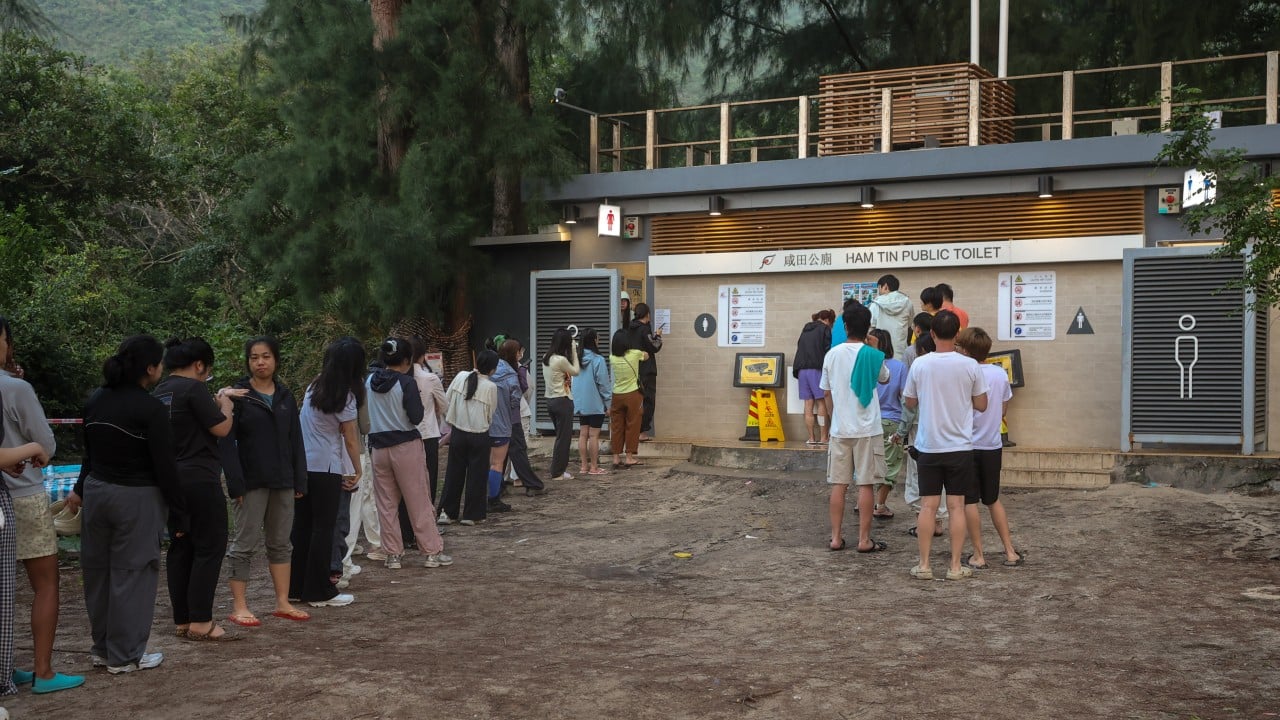
When an influx of visitors generates solid waste at a rate higher than the contracted collection frequency, the infrastructure experiences acute capacity failure. The results are overflowing refuse points, unhygienic public toilets, and localized ecological contamination.
Furthermore, the monitoring mechanisms employed by the authority are fundamentally reactive. Relying on scheduled inspections or retrospective public complaints allows contractors to optimize performance only during known evaluation windows—a phenomenon known as the Hawthorne effect.
Without continuous, independent auditing or real-time data collection via connected IoT weight sensors at remote refuse collection points, the regulatory authority cannot enforce financial penalties for non-performance. The absence of enforceable, variable penalties reduces the contractor’s financial risk, making substandard service delivery a rational economic choice for the private operator.
User-Induced Acceleration of Geomorphic Wear
The physical deterioration of hiking trails is not merely an issue of delayed public works; it is accelerated by a compounding behavioral variable known as user-induced geomorphic wear. High visitor density on popular routes causes severe soil compaction, which destroys the topsoil layer and prevents vegetation regrowth.
When official trails exhibit signs of minor damage or congestion, hikers routinely bypass these bottlenecks by carving unauthorized secondary paths. This behavior alters local hydrology. The creation of parallel, unregulated tracks creates a multi-tread trail morphology that acts as a conduit for surface water runoff during heavy rainfall.
Instead of dispersing naturally across the hillside, precipitation flows along these artificial gullies, accelerating sheet and gully erosion. This process rapidly strips away subsoil layers, exposes unstable boulders, and compromises the structural integrity of the primary trail architecture.
[ Trail Congestion / Damage ]
            |
            v
[ Hikers Create Shortcuts ]
            |
            v
[ Multi-Tread Runoff Channels ]
            |
            v
[ Accelerated Geomorphic Erosion ]
The AFCD’s failure to provide clear, real-time spatial data regarding trail closures, active erosion zones, and alternative low-impact routes leaves visitors unable to adjust their behavior. The lack of dynamic signage and digital mapping infrastructure forces users onto already compromised trails, turning public recreation into a direct driver of environmental degradation.
Strategic Operational Interventions
To resolve these interconnected management failures, the AFCD must transition from its current reactive model to a predictive, data-driven framework. Executing this transition requires three specific structural interventions:
- Decouple the Maintenance Workforce: Eliminate the multi-tasking framework for frontline staff by establishing a dedicated Trail and Infrastructure Maintenance Unit. This team must be insulated from seasonal forestry and firefighting duties, ensuring a consistent labor supply for the maintenance backlog.
- Restructure Outsourced Procurement: Revise all future sanitation contracts from input-based models to dynamic, outcome-based SLAs. Integrate clauses that mandate increased service frequency based on automated weather forecasts and historical peak holiday foot traffic data, backed by liquidated damages for failure to maintain baseline cleanliness metrics.
- Deploy Digital Infrastructure Metrics: Implement automated visitor counters and IoT-enabled trail degradation sensors at high-risk locations. This data must feed into a public-facing dashboard, allowing the management authority to actively divert visitor volume away from oversaturated zones before critical failure occurs.
This predictive framework acknowledges the strict operational constraints of remote public lands. By converting passive inspection routines into active asset management protocols, the state can preserve ecological integrity while maintaining public utility.