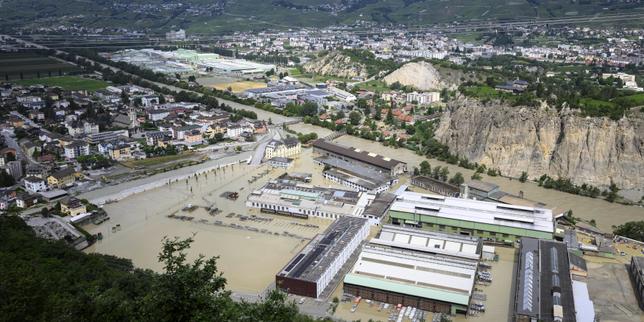
European industry is structurally unprepared for recurring climate crises because decades of supply chain optimization prioritized maximum financial efficiency over physical resilience. When extreme weather disrupts transport corridors, energy grids, and localized manufacturing hubs, the continent discovers that lean inventory models and centralized production facilities cannot absorb consecutive environmental shocks. This vulnerability stems from a fundamental mismatch between rigid legacy infrastructure and the erratic frequency of contemporary meteorological disasters.
For thirty years, corporate boards across Frankfurt, Milan, and Lyon worshipped at the altar of just-in-time manufacturing. Every warehouse eliminated was celebrated as a masterclass in capital allocation. Every single-source supplier vetted purely on cost was treated as a stroke of procurement genius. The math worked brilliantly on spreadsheets during periods of relative climatic stability.
Then the Rhine river dried up.
When water levels dropped below navigable thresholds in recent summers, barge traffic carrying coal, chemicals, and finished steel ground to a halt. Factories in Germany found themselves stranded despite sitting on the banks of one of Europe's busiest commercial waterways. It was not a sudden war or a sweeping tariff that choked production; it was a lack of water.
Financial analysts spent years grading industrial titans on their quarterly earnings reports and carbon accounting metrics while ignoring geography. Physical reality has a stubborn way of breaking through abstract accounting models. The core assumption underpinning modern European industry was that the natural world would behave within a predictable statistical baseline derived from the twentieth century. That baseline is gone.
The Illusion of Redundancy
Corporate executives often claim they have built redundancies into their operations. Dig beneath the surface, and those redundancies usually mean holding two suppliers instead of one within the exact same flood-prone industrial corridor in Northern Italy or the same drought-stricken basin in Spain.
Diversification on paper collapses when a regional weather event knocks out an entire sub-region simultaneously. A manufacturing plant in Bavaria relying on components from a secondary provider fifty miles away gains zero protection when a freak hailstorm or torrential flash flood takes out regional power substations and local transport links in one afternoon.
True structural adaptation requires geographical dispersal and modal variety. Yet, shifting production lines or establishing secondary manufacturing nodes requires massive capital expenditure. Shareholders accustomed to steady dividend payouts throw tantrums at the mention of spending billions on climate-proofing factories that might not flood for another five years.
Short-term market pressures actively punish long-term physical foresight.
Energy Grids Under Siege
Industry runs on power, and Europe's power grid is showing severe strain under thermal stress. During prolonged heatwaves, river temperatures rise to levels that make it impossible for nuclear power plants to cool their reactors without violating environmental regulations governing thermal discharge into local waterways. Output drops precisely when air conditioning demand pushes the grid to its absolute limit.
At the same time, low wind speeds during high-pressure summer blocking patterns reduce the output of wind farms. The convergence of high energy demand, restricted nuclear capacity, and low renewable generation creates localized brownouts and volatility in wholesale electricity markets.
Energy-intensive sectors—such as chemicals, aluminum smelting, and cement production—cannot operate profitably or safely under erratic power supplies. When electricity prices spike due to climatic constraints, industrial operations simply shut down lines.
Chemical facilities cannot toggle their operations on and off like a residential light switch without risking catastrophic equipment damage or severe safety hazards. The current policy framework encourages electrification and decarbonization, which are necessary steps for the long term, but it routinely underestimates the immediate vulnerability of the grid supplying that electricity during extreme weather anomalies.
The Myth of the Agile Supply Chain
Consultants love to throw around terms like operational agility. In practice, heavy industry is anchored to the earth by concrete, heavy machinery, and specialized labor pools. You cannot pick up a multi-billion-dollar steel mill and move it to higher ground over a weekend.
European manufacturing is deeply clustered in specific historical valleys and coastal plains. The Po Valley in Italy, the Ruhr area in Germany, and the industrial belts of the Low Countries are economic engines built explicitly around historic logistics routes—rivers, flat terrain, and natural harbors. These very geographies are ground zero for climate volatility.
Valleys trap heat and amplify flood risks. Coastal areas face rising sea levels and intensified storm surges.
Insurers are beginning to price this reality into their products, and many are quietly withdrawing coverage from industrial zones deemed high-risk. When property and casualty insurance becomes prohibitively expensive or unavailable, capital investment dries up instantly. Banks will not finance plant upgrades in zones where underwriters refuse to write policies.
Regulatory Overload Versus Physical Reality
Brussels has spent the past several years rolling out ambitious regulatory frameworks aimed at greening the economy and standardizing sustainability reporting. Corporate sustainability due diligence directives and carbon border adjustment mechanisms dominate the legislative agenda.
These regulations focus heavily on emissions reductions and administrative accountability. They ask companies to measure their carbon footprints, trace their Scope 3 supply chain emissions, and prove compliance through elaborate documentation.
Yet, very few of these directives mandate physical stress-testing against extreme weather scenarios. A factory can achieve a stellar ESG rating on paper while remaining highly vulnerable to a single river flood that washes out its loading docks.
The regulatory apparatus treats climate change primarily as a carbon accounting problem rather than an engineering and geographic crisis. Bureaucrats draft compliance forms in climate-controlled offices while factory floors face the immediate threat of ruined inventory, warped machinery, and severed logistics lines.
The Cost of Inaction
Ignoring this mismatch between industrial design and environmental reality carries an escalating price tag. When production facilities fail unexpectedly, supply chains fracture across borders.
Automotive assembly lines in Eastern Europe halt because a specialized wiring harness manufacturer in Central Europe flooded. Semiconductor packaging plants experience delays because chemical inputs could not be shipped along low-water rivers. These ripple effects cascade through the broader economy, driving inflation and eroding Europe's competitive edge against global rivals in regions with more adaptable or state-backed industrial strategies.
Companies that survive the coming decades will be those that abandon the illusion of historical stability. They will treat climate adaptation not as a corporate social responsibility checkbox, but as an essential metric of operational survival. This means redesigning logistics, accepting higher baseline inventory costs as the price of security, and relocating vulnerable facilities regardless of short-term capital friction.
The climate is no longer a backdrop to industrial activity. It is the primary constraint. Until European boardrooms and policymakers internalize that truth, industry will remain vulnerable to every meteorological shift that nature decides to throw its way.