Mainstream foreign policy pundits love a simple fairy tale. Bombs fall on an Iranian island, a president drops a casual hint about a diplomatic breakthrough, and suddenly every cable news panel in Washington is nodding along to the same tired script. They call it "escalate to de-escalate." They frame the strike on Qeshm Island alongside Donald Trump’s claim that a deal "could happen" as a calculated masterstroke—a mix of domestic midterm muscle-flexing and coercive diplomacy designed to drag Tehran to the negotiating table.
That analysis is completely backwards.
If you look past the Beltway talking points and examine the actual geography, military doctrine, and political mechanics at play, the Qeshm Island strike isn't a prelude to a grand bargain. Nor is it a cheap domestic campaign stunt to juice turnout before November. It is a structural trap that guarantees the exact opposite of a diplomatic settlement.
The Lazy Consensus of "Coercive Diplomacy"
Every time Washington launches a kinetic strike while keeping a diplomatic channel cracked open, analysts dust off Thomas Schelling’s 1966 classic Arms and Influence. They argue that measured violence signals resolve, raises the cost of resistance, and forces an adversary to cut their losses.
In theory, it sounds clean. In practice, applying Schelling’s cold-war deterrence models to modern asymmetric warfare in the Persian Gulf is like trying to fix a fiber-optic network with a sledgehammer.
I have spent years tracking maritime security and energy chokepoints in the Middle East, watching administrations of both parties burn billions of dollars on "calibrated signaling" that never actually lands the way Pentagon planners intend. When you strike an asset on Qeshm Island, you are not sending a memo to the Iranian Foreign Ministry. You are hitting the Islamic Revolutionary Guard Corps (IRGC) directly in its operational nervous system.
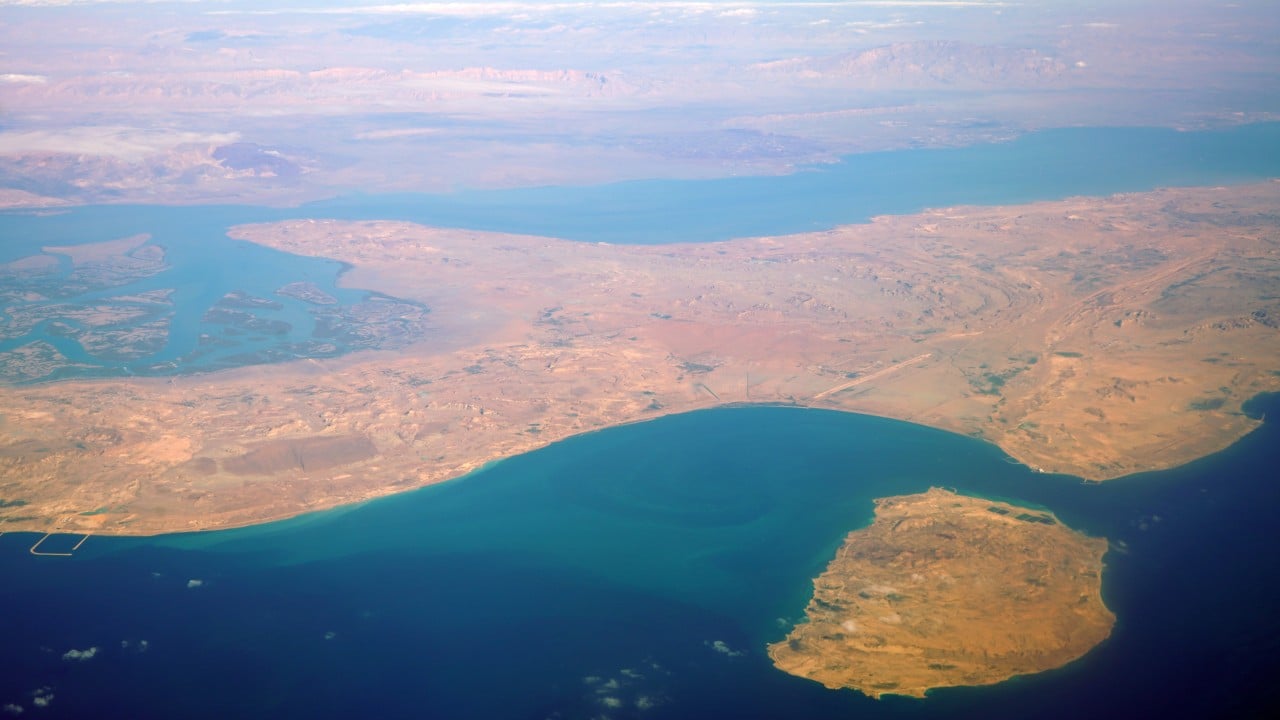
Let’s define what Qeshm Island actually is, because most coverage treats it like just another dot in the Persian Gulf. Qeshm is the largest island in the Strait of Hormuz. It sits parallel to the Iranian coast, guarding the narrowest maritime bottleneck on the planet—a channel roughly 21 nautical miles wide at its tightest point, through which roughly a fifth of the world’s petroleum liquids pass.
Qeshm is not a symbolic outpost. It houses naval bases, underground missile facilities, drone launchpads, and radar installations designed specifically to execute Iran's Anti-Access/Area Denial (A2/AD) doctrine. Hitting Qeshm is not a tap on the shoulder. It is an attempt to blind the sentry standing at Tehran’s front door.
Why the Midterm Narrative Misses the Mark
The second pillar of the mainstream narrative is pure domestic cynicism: Trump ordered the strike to look tough ahead of the midterm elections, then floated the idea of a deal to soothe nervous voters who hate endless Middle Eastern wars.
This gives American voters far too much credit for tracking naval geography in the Strait of Hormuz.
Midterm elections are won and lost on grocery prices, interest rates, healthcare costs, and local turnout mechanics. Nobody in a swing district in Pennsylvania or Michigan changes their congressional vote because of a tactical strike on an Iranian island—unless that strike triggers a spike in global crude prices that adds fifty cents a gallon at the local gas station by Tuesday morning.
If pure midterm optics were the goal, striking Qeshm Island is political malpractice. Any kinetic action in the Strait of Hormuz introduces immediate risk premiums into Brent crude futures and maritime war-risk insurance. A rational political operative trying to protect incumbents ahead of November would want the Strait of Hormuz as quiet as a library.
So why do it? Because the strike wasn't tailored for voters in Ohio. It was tailored for an audience in Tehran, Jerusalem, and Riyadh—and the timing before the midterms is a byproduct of operational windows, not campaign calendars.
Dismantling the "A Deal Could Happen" Illusion
When Trump says a deal "could happen" right after authorized military strikes, reporters treat the two facts as complementary halves of a single strategy. They ask: Will the strikes force Iran to sign a better deal?
They are asking the wrong question entirely. The real question is: What political capital does Tehran have left to sign a deal after being publicly humiliated on its own sovereign territory?
In Western political culture, a leader can take a punch, call a press conference, and frame a compromise as pragmatism. In the political architecture of the Islamic Republic, Supreme Leader Ali Khamenei and the IRGC operate on an economy of prestige and deterrence. Their entire regional brand—the "Axis of Resistance"—is built on the premise that striking Iran directly carries an unbearable, asymmetrical price.
Imagine a scenario where the Iranian leadership sits down at a negotiating table in Vienna or Muscat forty-eight hours after American munitions cratered facilities on Qeshm Island. To their domestic hardliners, to Hezbollah, to the Houthis, and to the militias in Iraq, that isn't diplomacy. That is capitulation under fire.
By pairing the strike with public talk of a deal, Washington actually makes a deal harder to achieve. Trump’s rhetoric strips Tehran of the ambiguity it needs to de-escalate. If Iran negotiates now, they validate the premise that bombing them works. Therefore, the institutional incentives inside the IRGC shift overwhelmingly toward retaliation—not necessarily a suicidal all-out war, but a calibrated, deniable counter-punch designed to restore deterrence before a single diplomat books a flight.
The Asymmetry of Risk in the Strait
To understand why this standoff is far more dangerous than the pundits admit, you have to look at the structural mismatch between American and Iranian objectives in the Gulf.
- What Washington wants: Freedom of navigation, stable global energy prices, containment of Iranian nuclear and ballistic capabilities, and zero American casualties.
- What Tehran needs: Survival of the regime, preservation of its regional deterrence network, and sanctions relief—in that exact order.
Notice the imbalance. The United States is playing for stability; Iran is playing for survival. In asymmetric conflict, the actor who can tolerate disruption always holds a structural advantage over the actor who needs order.
The Pentagon possesses overwhelming conventional superiority. It can obliterate fixed radar sites, coastal defense batteries, and naval piers on Qeshm Island in a matter of minutes. Military analysts look at that capability and see dominance.
What they miss is that Iran’s military doctrine was explicitly engineered around the assumption that its fixed infrastructure would be destroyed in the opening hours of a conflict. Following the lessons of the 1988 Tanker War and the 2003 invasion of Iraq, the IRGC Navy decentralized its command structure. It replaced large, vulnerable surface warships with hundreds of fast-attack craft, mobile coastal anti-ship cruise missiles hidden in mountain tunnels, sea mines, and swarms of one-way attack drones.
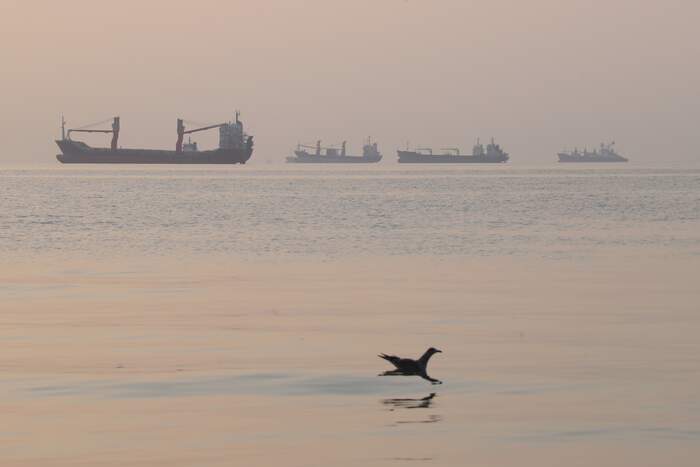
Destroying facilities on Qeshm Island degrades Iran’s static surveillance, yes. It does not remove its ability to make the Strait of Hormuz uninsurable for commercial tankers. You do not need to sink a single supertanker to choke off global oil supplies; you only need to fire enough drones and mines into the shipping lanes that Lloyd’s of London pulls insurance coverage for vessels transiting the channel. Once the insurers walk away, the ships stop moving. No carrier strike group can force a private shipping conglomerate to sail an uninsured vessel worth two hundred million dollars through a mined bottleneck.
The "People Also Ask" Fallacies
When news breaks of a strike in the Persian Gulf, search engines light up with the same predictable questions. Almost all of them are built on flawed assumptions.
1. "Will this lead to World War III?"
No. Global powers do not stumble into total war over tactical strikes on coastal infrastructure. Russia and China have zero interest in fighting the United States on Iran’s behalf. Beijing buys discounted Iranian crude, and Moscow buys Iranian drones, but neither power has a mutual defense treaty with Tehran, nor do they have the expeditionary naval capacity to challenge the U.S. Fifth Fleet in the Persian Gulf. The risk isn't global armageddon; the risk is a prolonged, grinding maritime attrition crisis that triggers a global recession.
2. "Does Iran have the military strength to defeat the U.S.?"
This is a textbook strawman. Iran does not need to defeat the United States military to win. In asymmetric warfare, the insurgent or weaker state wins by not losing, while raising the economic and political pain threshold until the superpower decides the theater is no longer worth the cost. Thinking of this in terms of conventional fleet-on-fleet battles is pure 20th-century nostalgia.
3. "Is Trump using the 'Madman Theory' successfully?"
Richard Nixon’s infamous strategy of convincing adversaries he was irrational enough to do anything only works when the adversary believes you have a clear off-ramp. When Trump alternates between bombing Iranian territory and musing about a deal, Tehran doesn't see a calculated strategist. They see an unpredictable actor who cannot guarantee that a signed agreement won't be torn up or followed by another round of strikes six months later. Remember, Iran already lived through the 2018 withdrawal from the Joint Comprehensive Plan of Action (JCPOA). From Tehran’s perspective, Washington’s signature carries an expiration date tied to the American electoral cycle.
The Uncomfortable Truth About Leverage
Let’s be brutally honest about the flaw in my own argument: doing nothing carries its own fatal price.
If an American administration absorbs repeated proxy attacks, drone swarms, and maritime harassment without imposing direct kinetic costs on the Iranian homeland, deterrence erodes completely. Restraint gets read as weakness. Eventually, an unchallenged adversary pushes too far, kills American personnel, and forces a massive, uncontrolled military response anyway. There are no clean, risk-free options left in the Persian Gulf. Every choice on the Resolute Desk is a different flavor of bad.
That is precisely why honesty matters. Striking Qeshm Island may be defensible as a tactical move to disrupt imminent threats or punish specific IRGC operations. What is indefensible is selling it to the public as a clever shortcut to the negotiating table.
Real diplomatic leverage isn't built by dropping bombs on Tuesday and hoping for a handshake on Friday. It requires sustained economic pressure paired with ironclad, credible guarantees that sanctions relief will actually materialize—and survive the next election—if Tehran makes verifiable concessions. Right now, Washington has plenty of sticks, and almost no credible carrots.
Stop Confusing Motion With Strategy
Look closely at the pattern of U.S.-Iran relations over the last decade. Every administration enters office promising to break the cycle, and every administration ends up trapped in the exact same loop: sanctions, proxy escalation, tactical strikes, and vague talk of diplomacy that goes nowhere.
The strike on Qeshm Island is just the latest turn of that wheel.
Until policymakers stop treating military strikes as a substitute for a coherent diplomatic framework—and stop pretending that an adversary can be bombed into signing a deal while saving face—these headlines will keep repeating. The bombs on Qeshm Island didn't open a door to peace. They just raised the price of admission for a room neither side is actually willing to enter.