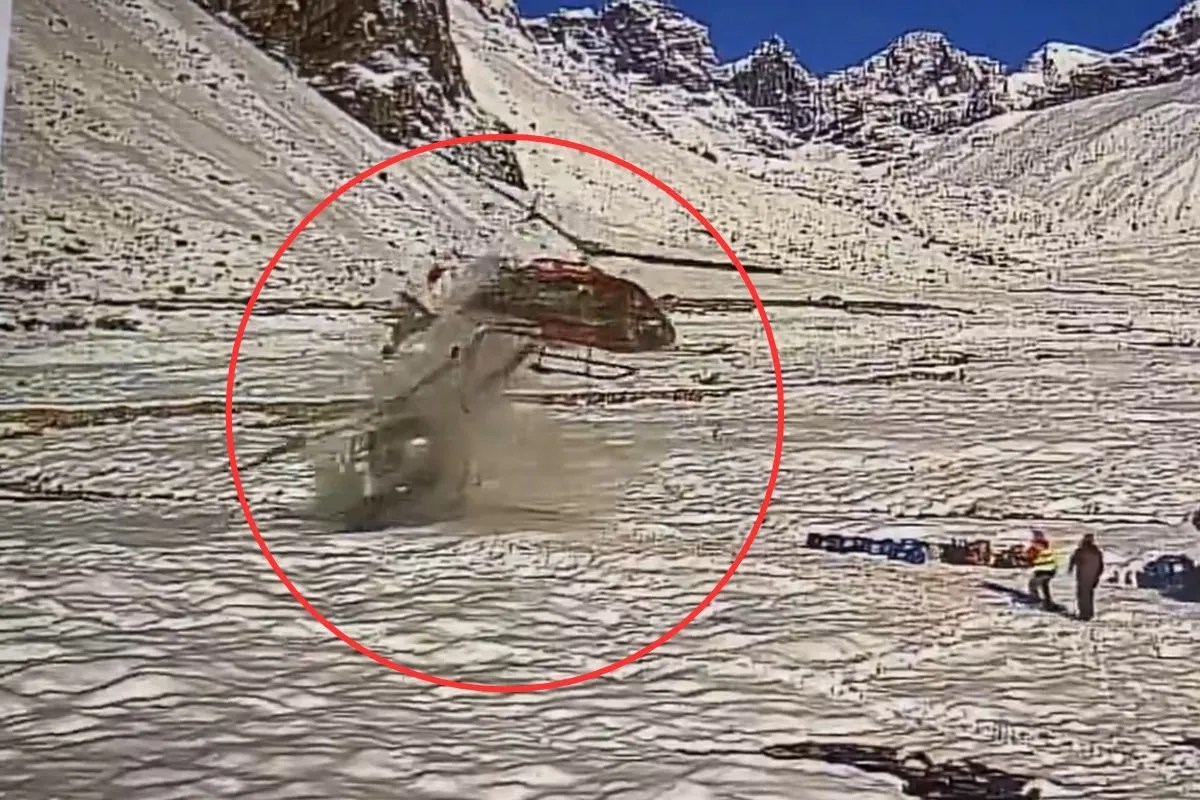
Two helicopters operated by Fishtail Air and Air Dynasty collided near the Pheriche helipad in Nepal's Solukhumbu district on the morning of November 3, 2026, killing 47-year-old Indian tourist Vasanth Kumar Balaramudu and injuring three others. Video footage of the impact circulated rapidly online, turning a familiar tragedy in the Everest region into another flashpoint over air traffic coordination, commercial pressure, and thin regulatory oversight in high-altitude mountain aviation.
The crash happened just after 8:11 a.m. in the Khumbu region, the primary corridor for trekkers, evacuations, and high-value sightseeing flights bound toward Mount Everest. Preliminary reports indicated that weather conditions around the landing zone were clear, without heavy snow or severe wind gusts blocking the approach. That detail makes the collision harder to dismiss as an act of mountain weather alone. When two rotorcraft come together near a busy high-altitude pad on a clear morning, the conversation shifts immediately from bad luck to system design.
Why Clear Skies Still Produce High-Altitude Collisions
People who rarely look at mountain flight operations tend to blame Himalayan weather for every crash. Wind shear, sudden fog, and thin air are real hazards in the Khumbu valley, and high density altitude reduces rotor lift and leaves narrow margins for error. Still, clear visibility removes the simplest excuse.
In tight alpine valleys, airspace is compressed. Multiple operators fly overlapping routes into a small number of landing sites during peak morning windows, when air is cooler and smoother before midday winds build. Pilots operating visual flight rules rely heavily on see-and-avoid techniques, radio calls, and local discipline rather than dense radar vectoring across every high-altitude pad.
When commercial demand clusters dozens of flights into the same morning window over narrow terrain, even a brief breakdown in separation or landing sequence leaves almost zero room for recovery.
A collision during landing is especially unforgiving. Approach speeds are low, pilot attention is divided between ground reference points, terrain clearance, and traffic, and rotor discs leave no forgiving buffer if two aircraft converge at the same altitude. Video clips shared after the Pheriche crash drew massive attention because viewers could see the suddenness of a mid-air or near-ground strike in a place tourists associate with bucket-list adventure.
The Commercial Rush Above the Khumbu
Helicopters in Nepal do far more than carry wealthy sightseers over glaciers. They evacuate injured or altitude-sick trekkers, haul cargo, support expeditions, and link remote settlements to medical care. Because trekking seasons funnel thousands of travelers into the same valleys at the same time, commercial incentives pull flights toward peak hours.
Industry observers have long pointed out that a huge share of Nepal's helicopter business concentrates around the Everest and Khumbu corridor. High ticket prices for scenic hops and urgent charters create strong pressure to turn aircraft around quickly. When schedules run tight, small friction points compound:
- Congested landing windows: Multiple helicopters arriving near the same high-altitude pad within minutes of one another increase traffic density in confined terrain.
- Split attention: Mountain pilots juggle thin air performance, wire and slope hazards, passenger safety, and radio coordination simultaneously.
- Commercial tempo: High seasonal demand rewards speed and availability, sometimes testing conservative spacing buffers.
None of that excuses sloppy airmanship or poor coordination. Yet blaming individual pilots after every tragedy misses the structural environment in which they fly. Pilots carry the immediate physical risk, but operators and regulators shape the operating rules, scheduling tempo, and ground oversight.
Regulatory Gaps and Unfinished Safety Reforms
The Civil Aviation Authority of Nepal (CAAN) oversees safety regulations, accident investigations, and aviation safety plans aligned with international frameworks. On paper, safety management systems, hazard identification, and operational oversight exist. In practice, critics and aviation analysts argue that enforcement and on-the-ground monitoring in busy mountain hubs lag behind flight volume.
Repeated accidents in Nepal's rugged aviation sector have followed a grim pattern. An investigation opens. Headlines flare. Committees recommend tighter coordination, better oversight, or stricter operational controls. Then the next peak season arrives, and familiar vulnerabilities reappear.
There is also a fair counter-argument worth stating plainly. Regulating high-altitude aviation in Nepal is extraordinarily difficult. Terrain is extreme, communication dead zones exist in deep valleys, infrastructure at remote pads is basic, and emergency evacuation itself depends on helicopters flying into tough spots. Overly rigid rules that ground vital rescue or supply flights can create different harms for people stranded in remote mountains.
Even so, acknowledging real operational constraints is not the same as accepting avoidable mid-air conflicts at a landing site. Clear weather at Pheriche made the lack of clean separation stand out sharply to anyone watching the incident unfold.
What Travelers and Operators Need to Change
For travelers booking a helicopter ride near Everest, a dramatic video or a tragic headline often triggers a binary reaction: cancel everything or assume the operator will handle it. Neither response is very practical. A more grounded approach looks at risk realistically.
- Book conservative windows and vetted operators: Ask directly about flight routing, weight limits, and operational safety standards rather than picking purely on price or last-minute availability.
- Keep buffer days in trekking itineraries: Weather delays happen often in mountain regions, and tight return schedules push travelers toward risky last-minute flights.
- Respect ground and rotor discipline: High-altitude landing zones are chaotic environments where rotor wash, terrain, and incoming traffic demand strict adherence to crew instructions.
For regulators and helicopter companies, the real test is whether the Pheriche collision leads to enforceable landing sequencing, stricter traffic discipline at high-altitude pads, and real accountability rather than another round of forgotten recommendations. Until flight coordination keeps pace with commercial traffic in the Himalayas, clear skies will never guarantee a safe landing.