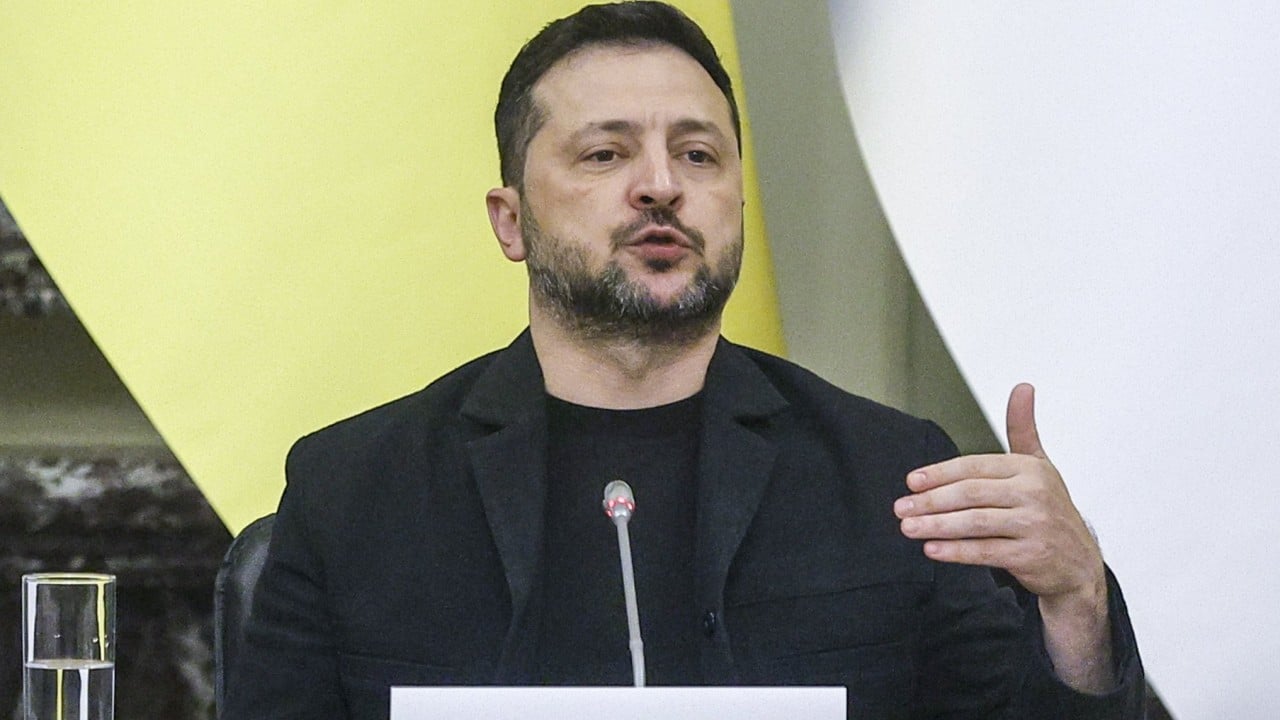
Every few months, a fresh wave of diplomatic wishful thinking washes over Western capitals and Kyiv. The latest iteration goes like this. Volodymyr Zelensky publicly expresses hope that Beijing will finally pick up the phone, lean on Vladimir Putin, and use its massive economic weight to halt the war in Ukraine. Pundits nod sagely. Foreign policy analysts write breathless op-eds about China’s "peace broker" potential.
It is a complete fantasy. Learn more on a connected issue: this related article.
The mainstream coverage of Kyiv’s outreach to Beijing relies on a single, fatally flawed assumption. Journalists treat China like a neutral superpower that just needs the right diplomatic nudge to become a responsible stakeholder in European security. They view Xi Jinping as a reluctant bystander who might step in if the reputational cost gets too high.
This is geopolitical illiteracy. China is not waiting to be persuaded to stop the war. Beijing is the primary geopolitical beneficiary of the conflict continuing at a slow, grinding boil. Asking Xi Jinping to end the war in Ukraine is like asking a casino owner to shut down the roulette tables because the players are losing too much money. Additional analysis by The Washington Post delves into similar views on the subject.
The Illusion of the "No Limits" Leash
To understand why Zelensky’s public appeals are dead on arrival, you have to dismantle the myth of Chinese leverage. Western commentators love to point out that Russia is now China’s junior partner. They cite bilateral trade figures that surged past $240 billion. They note that Russia depends on Chinese microelectronics, machine tools, and consumer goods to keep its war economy breathing.
All of those facts are true. The conclusion drawn from them is dead wrong.
Economic dependence does not automatically translate into political obedience, especially when the debtor holds nuclear weapons and a messianic complex. I have watched diplomatic teams waste entire years trying to map economic pressure points onto authoritarian regimes, assuming that because Country A buys 40 percent of Country B’s exports, Country A gets to dictate Country B’s foreign policy. It almost never works that way when regime survival is on the line.
Vladimir Putin views the subjugation of Ukraine as an existential necessity for his legacy and his grip on power. Xi Jinping views the preservation of a friendly, anti-Western regime in Moscow as an existential necessity for China’s northern border and its broader confrontation with the United States.
If Xi were to use his economic hammer to force Putin into a humiliating retreat in Ukraine, he would risk destabilizing the Kremlin. The absolute worst-case scenario for Zhongnanhai is not a prolonged war in Eastern Europe. The worst-case scenario is a collapsed, chaotic Russian Federation—or worse, a post-Putin Moscow that pivots back toward Washington to save its economy. Beijing will never pull the trigger on the kind of sanctions that would actually force Putin to stop fighting, because a broken Russia leaves China completely surrounded by American alliances in the Indo-Pacific.
Why a Forever War Suits Beijing
Look at the strategic ledger from Beijing’s perspective. Every single day that artillery shells fly in the Donbas, China wins without firing a shot.
First, there is the sheer distraction value. Before February 2022, the Pentagon’s entire institutional focus was shifting rapidly toward the Taiwan Strait and the South China Sea. Washington was pouring money, carriers, and diplomatic capital into containing China. Today, American defense industrial capacity is stretched thin trying to replenish 155mm shells, Patriot interceptors, and armored vehicles for a land war in Europe. Congress spent months paralyzed over Ukraine funding while Indo-Pacific deterrence sat in the waiting room.
Second, Russia is being systematically hollowed out and handed to China at a steep discount. Cut off from Western capital and European energy markets, Moscow has nowhere else to go. China buys Russian crude oil, natural gas, and coal at bargain-basement prices, paid in yuan. Russian Central Bank reserves are increasingly parked in renminbi. Chinese automakers have conquered the Russian domestic market overnight, filling the vacuum left by Volkswagen and Toyota. A weakened, isolated Russia is a compliant Russia—one that will quietly accept Chinese dominance in Central Asia and the Arctic without raising a fuss.
Third, the war acts as a real-time stress test of Western resolve. Beijing is watching closely to see how long European voters will tolerate high energy prices and inflation, and how easily American political polarization can choke off military aid to an ally. Every fracture in the NATO consensus is a data point for the People's Liberation Army as it calculates the potential cost of a future blockade or invasion of Taiwan.
Why on earth would Xi Jinping give up a strategic windfall of this magnitude just to earn a few polite thank-you notes from Brussels and Kyiv?
What Zelensky Is Actually Doing
If the geopolitical reality is so stark, why does Zelensky keep appealing to Beijing? Is Kyiv naive?
Hardly. Zelensky and his diplomatic corps are not stupid, and they certainly do not read Western newspaper editorials to form their strategy. When Zelensky publicly calls on China to use its influence over Moscow, he is not actually talking to Xi Jinping. He is executing a sophisticated information operation aimed at two completely different audiences.
The first audience is the Global South. Countries across Latin America, Africa, and Asia have largely refused to join Western sanctions against Russia. Many of them view the war as a distant European squabble, and they look to Beijing as a diplomatic bellwether. By repeatedly inviting China to peace summits and publicly framing Ukraine’s survival around the UN Charter’s principles of territorial integrity—principles China claims to hold sacred—Zelensky forces Beijing onto the defensive. When China boycotts a peace summit or offers hollow "twelve-point" position papers that reward Russian aggression, it exposes Beijing’s hypocrisy to the very developing nations China wants to lead.
The second audience is Washington and Brussels. Kyiv knows that Western support is fragile and prone to fatigue. By demonstrating that Ukraine has exhausted every conceivable diplomatic avenue—including reaching out to Moscow’s most powerful backer—Zelensky removes the excuse that Kyiv is stubbornly refusing to talk. It puts the moral burden squarely back on Western leaders to provide the weapons Ukraine needs to win on the battlefield, since the diplomatic backdoor through Beijing is demonstrably locked from the inside.
Dismantling the "Peace Plan" Fallacy
If you search for news on China and Ukraine, you will inevitably run into questions about China’s various "peace initiatives" and special envoys like Li Hui shuttling between European capitals. Analysts love to dissect the wording of these joint statements with Brazil or South Africa, searching for subtle shifts in Beijing’s tone.
Stop reading the tea leaves. They are poisoned.
China’s diplomatic proposals are not designed to produce a lasting peace. They are designed to freeze the conflict along the current lines of control. In Beijing’s lexicon, a "ceasefire" means Russia keeps the roughly 20 percent of Ukrainian territory it currently occupies, Western sanctions are lifted, and Ukraine is permanently barred from joining NATO.
Calling this a peace plan is an insult to the English language. Freezing the conflict without security guarantees simply gives the Russian military-industrial complex three to five years to rebuild its tank fleets, replenish its missile stockpiles, and fix its logistical nightmares before launching a third, far deadlier invasion.
Real diplomacy requires addressing the root cause of a war. The root cause of this war is not a border dispute or a misunderstanding over NATO expansion. It is the Russian state’s refusal to accept that Ukraine exists as an independent nation outside Moscow’s imperial orbit. Beijing has zero interest in challenging that Russian worldview because Beijing holds the exact same imperial worldview toward Taiwan.
The Dual-Use Lifeline Nobody Wants to Confront
While diplomats waste oxygen debating whether China will broker a ceasefire, the real story is happening in shipping containers crossing the Amur River and rail cars rolling through Kazakhstan.
China does not send tanks or artillery shells directly to the Russian front lines. Doing so would trigger immediate, devastating secondary sanctions from the United States and the European Union—a price China’s export-dependent economy cannot afford right now. Instead, Beijing plays a much smarter game.
Chinese firms supply the lifeblood of Russia’s war machine under the guise of civilian commerce. We are talking about CNC machine tools that mill precision parts for Russian artillery barrels. We are talking about nitrocellulose for propellant, optics for tanks, drone components, and millions of semiconductors. According to intelligence assessments cited by both Washington and NATO officials, China accounts for roughly 70 percent of Russia’s machine tool imports and 90 percent of its microelectronics imports.
Without this dual-use lifeline, Russia’s ability to regenerate its forces would have collapsed by the end of 2023. Putin’s war economy is surviving because Xi Jinping quietly decided to underwrite it while keeping his fingerprints off the trigger.
The weakness in my argument—and the hard truth Western policymakers have to swallow—is that confronting China directly over this dual-use trade carries massive economic blowback. Cutting major Chinese banks off from the SWIFT financial system or slapping sweeping tariffs on Chinese green tech would trigger immediate retaliation. It would spike inflation in the West, disrupt global supply chains from pharmaceuticals to electronics, and potentially push Beijing into providing overt lethal aid to Moscow out of pure spite. There are no painless buttons left to push on the console.
What Actually Moves the Needle
If begging Beijing for help is a dead end, and launching an all-out economic war against China risks global recession, what is the actual play?
Kyiv and its Western backers need to abandon the fantasy of Chinese mediation and focus entirely on altering the cost-benefit math in Beijing and Moscow simultaneously.
Target the specific financial plumbing, not the whole economy. Broad sanctions fail because they unite the target population and create too much collateral damage. Surgical secondary sanctions aimed at mid-sized Chinese regional banks and specific logistics shell companies moving dual-use tech to Russia work. Chinese megabanks like ICBC and Bank of China are terrified of losing access to the US dollar clearing system. When the US Treasury threatens targeted designations, those big banks quietly freeze Russian transactions on their own. That pressure needs to be relentless, automated, and expanded to the smaller financial institutions handling the shadow trade.
💡 You might also like: How India Dismantled Pakistan's Transboundary Flood AllegationsTie European market access directly to Russian neutrality. China’s economy is currently struggling with massive overcapacity, a deflationary real estate crisis, and sluggish domestic consumption. Xi Jinping desperately needs European consumers to buy Chinese electric vehicles, solar panels, and industrial goods. Brussels holds immense leverage here that it refuses to use. European leaders must make it brutally clear to Beijing that subsidizing a war on Europe’s eastern border will result in the systematic closure of European markets to Chinese exports. You do not get to fuel a fire in your neighbor's house while selling them fire extinguishers.
Arm Ukraine to make Russian victory physically impossible. Beijing’s entire strategy rests on the assumption that Russia will eventually grind Ukraine down through sheer mass and Western exhaustion. As long as Xi believes Putin will eventually win—or at least force a favorable stalemate—Beijing has every incentive to keep backing Moscow. The only thing that changes China’s calculus is watching the Russian army suffer irreversible, catastrophic losses on the battlefield. Dictators respect strength, and they abandon losers.
The diplomats will keep flying to Beijing. The joint communiqués will keep calling for "restraint" and "dialogue." Journalists will keep writing headlines about Zelensky’s hopes for Chinese intervention. Ignore all of it. Peace in Ukraine will never be negotiated in a conference room in Beijing, because China is making far too much money—and gaining far too much power—from the war continuing.