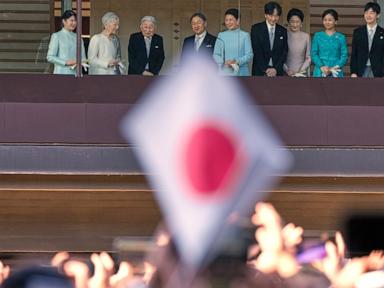
Western media loves a simple villain. Every time Tokyo makes a move regarding the Chrysanthemum Throne, editorial boards from New York to London dust off the exact same template. They frame Japan's newly enacted revision to the Imperial Household Law—which solidifies male-only succession by permitting the adoption of male descendants from former collateral branches—as a reactionary relic. They point to public opinion polls showing roughly 80 percent of Japanese citizens support a female emperor. They call the government out of touch, patriarchal, and doomed to irrelevance.
They are completely missing the point.
Having spent years analyzing Japanese constitutional law and institutional survival strategies in East Asia, I can tell you that the Western press is projecting modern liberal democracy onto an institution whose entire survival mechanism relies on being the exact opposite. If Japan had followed the lazy consensus and opened the throne to female-line succession, it would have signed the monarchy's death warrant within three generations.
The Fatal Flaw in the "Modernize to Survive" Myth
The standard argument goes like this: European monarchies modernized, embraced absolute primogeniture, and kept their approval ratings high. Japan should copy Sweden or the United Kingdom.
This comparison collapses the moment you look at the mechanics of legitimacy. European monarchies operate on a historical contract rooted in feudal land ownership, divine right, and eventual constitutional compromise. Their royal families are essentially ultra-wealthy, state-funded celebrity dynasties that perform diplomatic theater. When the British royal family changes its succession rules, it is updating a corporate charter.
The Japanese Imperial House is not a European royal family. It is the central ritual axis of Shintoism and the unbroken mythic continuity of the Japanese state. Under the 1947 Constitution, the Emperor has zero political power. He cannot veto laws, command troops, or influence policy. His sole currency is ken'i—pure, non-political authority derived entirely from an unbroken patrilineal bloodline stretching back over a millennium.
In Japanese statecraft, there is a strict, centuries-old firewall between kenryoku (raw political power) and ken'i (spiritual and cultural authority). Shoguns, warlords, and prime ministers held kenryoku. The Emperor held ken'i. The moment you alter the foundational rule of that lineage—the unbroken male line (bankei ikkei)—you strip the institution of the only thing separating it from a regular political family. If the rules of succession can be rewritten by a simple majority vote in the National Diet to match contemporary social trends, then the Emperor becomes a creature of the legislature. Once an institution depends on transient public polling for its core identity, it is just another government agency waiting to be defunded.
What the Opinion Polls Actually Measure
Critics love weaponizing that 80 percent approval number for a female emperor. They treat it as an indictment of the ruling Liberal Democratic Party (LDP).
Look closer at how those polls are conducted and what the respondents actually understand. When a casual voter in Tokyo is asked by a newspaper pollster if they support a "female emperor" (josei tenno), they picture Princess Aiko, the beloved, intelligent daughter of Emperor Naruhito. They think about gender equality in the workplace. They say yes.
They are not being asked about a "female-line emperor" (jokei tenno).
The distinction is massive, and ignoring it is journalistic malpractice. Japan has had eight reigning empresses in its history, including Empress Suiko and Empress Go-Sakuramachi. Not a single conservative scholar denies this. However, every single one of those eight women was a daughter of the male imperial line, and none of them passed the throne to children fathered by a man outside the imperial bloodline. They functioned as placeholders until a male heir of the paternal line came of age.
A female-line emperor—where a princess marries a commoner and her child takes the throne—breaks the patrilineal chain entirely. It introduces a new paternal bloodline, effectively ending the current dynasty and starting a new one. When Japanese pollsters actually explain the difference between a female emperor and a female-line emperor, public support fractures immediately. The "unpopular" law taking effect isn't ignoring the public; it is protecting the public from the unintended consequences of a poorly phrased survey question.
The Collateral Branch Solution Is Brutal—And Brilliant
The recent revision allows the Imperial House to adopt male heirs from the kyu-miyake—the eleven collateral branches of the imperial family that were stripped of their royal status by the American Occupation forces in 1947.
Detractors call this desperate. They mock the idea of plucking ordinary businessmen and university lecturers out of civilian life and turning them into imperial princes. "How can someone raised as a commoner embody a sacred lineage?" they ask.
Let's examine the reality of that critique. For over a thousand years, the Japanese imperial system survived precisely because it utilized collateral branches (sesshu shinnoke) as an insurance policy. Whenever the main line failed to produce a male heir—which happened frequently due to high infant mortality—the family pulled a male cousin from a cadet branch. Emperor Komei, the grandfather of Emperor Meiji, came from a collateral branch that was four generations removed from the main throne.
The current crisis—where only Prince Hisahito stands in the younger generation to inherit the throne—was not caused by an inherent flaw in male-only succession. It was an artificial bottleneck created in 1947 when General Douglas MacArthur's staff forced the abolition of the cadet branches to weaken the imperial institution. Tokyo's new law isn't inventing a bizarre workaround; it is simply undoing a foreign military occupation's deliberate sabotage of Japan's succession safety net.
The Mechanics of Dynastic Insurance
To understand why adopting from former branches works better than changing the bloodline rules, look at how long-lived institutions manage risk:
- Preserving the Core Asset: In any legacy organization, you never alter the foundational charter to solve a temporary staffing shortage. You expand the recruitment pool within the existing parameters.
- Eliminating Succession Wars: History proves that once you open succession to maternal lines in a system without absolute primogeniture, rival factions form around the husbands' families. Keeping strict patrilineal rules prevents outside political or corporate dynasties from marrying into the throne and hijacking its prestige.
- Separating Office from Individual: The Japanese model requires the individual to subsume their personal identity into the role. Bringing in a male descendant from a cadet branch reinforces the idea that the bloodline itself is the vessel, regardless of the man's upbringing.
Addressing the Questions Everyone Gets Wrong
Does this law violate Japan's constitutional commitment to gender equality?
Article 14 of the Japanese Constitution guarantees equality under the law, while Article 2 explicitly states that the Imperial Throne shall be dynastic and succeeded to in accordance with the Imperial Household Law. The Constitution itself creates a deliberate carve-out. The Emperor does not have fundamental human rights in the standard sense—he cannot vote, cannot hold a passport, cannot choose his own religion, and cannot divorce or abdicate without parliamentary approval. Applying modern employment equality standards to an office where the officeholder is essentially a gilded prisoner of state ritual is legally incoherent.
What happens if the men from the former collateral branches refuse to be adopted?
This is the genuine vulnerability of the law, and pretending it doesn't exist would be dishonest. These men have spent their entire lives enjoying the privacy, wealth, and freedom of upper-middle-class civilian life. Asking a thirty-year-old man to give up his career, submit his wife and children to relentless tabloid scrutiny, and spend his days memorizing archaic court rituals is a massive ask. Furthermore, the transition will be culturally jarring. A guy who spent his twenties drinking beer at izakayas and commuting on the Yamanote Line suddenly wearing silk robes at the Ise Grand Shrine will inevitably spark cynicism among younger Japanese citizens.
Wouldn't a female-line succession instantly solve the shortage of working royals?
In the short term, yes. Princess Aiko is wildly popular and already performs public duties at an elite level. Allowing her to retain her royal status after marriage and pass it to her children would immediately pad out the calendar of ribbon-cuttings and state banquets. However, you do not solve a shortage of ceremonial staff by destroying the philosophical foundation of the monarchy. If the Imperial Household Agency needs more people to attend charity galas, it can delegate those duties to non-royal cultural ambassadors. You don't rewrite a two-thousand-year-old succession code just to keep up with diplomatic scheduling.
The Real Threat Isn't Patriarchy—It's Irrelevance Through Assimilation
Imagine a scenario where Tokyo caved to international pressure and passed a law allowing female-line succession. Fast forward fifty years.
The reigning monarch is the child of a princess and a former Mitsubishi executive. The ancient taboos surrounding the unbroken paternal line are gone, dismissed by modern educators as outdated superstition. At that exact moment, a populist prime minister facing a severe economic downturn looks at the Imperial Household Agency's annual budget—tens of billions of yen spent maintaining palaces, funding staff, and hosting rituals.
That prime minister asks a devastatingly simple question: "If the Emperor is no longer the unbroken male descendant of the mythic founders, and he has zero political power, why are taxpayers funding a gloriously expensive welfare program for one lucky family?"
Without the strict, unyielding mystique of bankei ikkei, there is no logical answer to that question. The monarchy becomes just another wealthy family with a cool house. European royals survive this trap because they own massive private real estate portfolios (like the Duchy of Cornwall) and generate billions in tabloid-driven tourism. The Japanese Imperial Family owns almost nothing privately; all palace lands belong to the state. And the Imperial Household Agency strictly forbids the commercialization of the family's image. They cannot sell commemorative tea towels or license their brand to Netflix.
Their survival depends 100 percent on maintaining an aura of untouchable, ancient continuity that sits entirely outside modern political trends.
Stop Evaluating Tokyo Through a London Lens
The commentators bashing Japan's new law are judging a sacred ritual institution by the metrics of a progressive NGO. They want the Chrysanthemum Throne to be a symbol of modern inclusivity.
That is not its job. Its job is to be the anchor that doesn't move while the rest of society changes at breakneck speed. Japan went from feudalism to industrial superpower, suffered catastrophic defeat in World War II, rebuilt itself into an economic titan, and is now navigating a massive demographic collapse. Through every single upheaval, the unbroken male line of the Imperial House served as the psychological bedrock proving that Japan was still Japan.
Reinstating the collateral branches is messy. It will take years to integrate these men into palace life, and the public relations rollout will be clunky. It is an unapologetically conservative move in a world obsessed with rapid disruption.
And it is the only play on the board that keeps the Chrysanthemum Throne standing in the twenty-second century. Leave the rules alone, integrate the cadet branches, and let the Western editorial boards complain into the void.