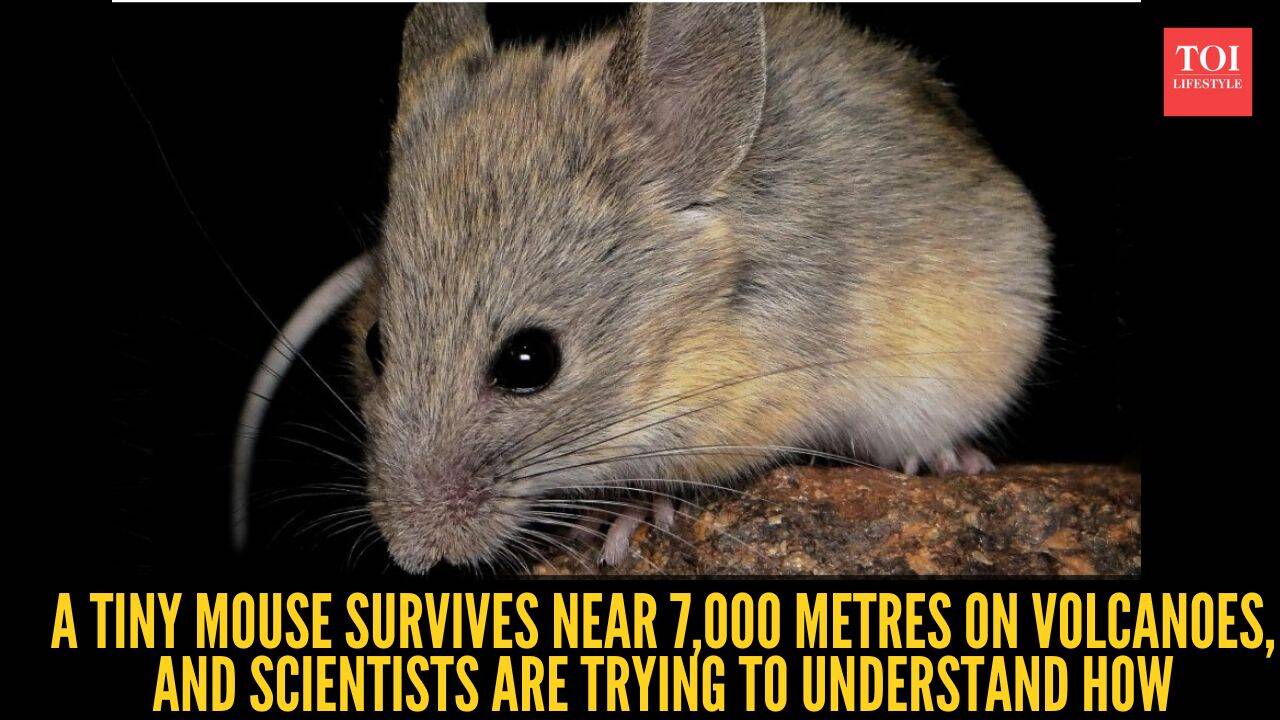
The capture of a live leaf-eared mouse (Phyllotis vaccarum, historically classified alongside Phyllotis xanthopygus) at the 6,739-meter summit of Volcán Llullaillaco invalidates long-standing models of mammalian metabolic constraints. At this altitude, atmospheric pressure drops to approximately 44% of sea-level values, reducing the partial pressure of oxygen ($P_{O_2}$) to a point that typically causes catastrophic cellular hypoxia and prevents heat retention in endotherms. Traditional evolutionary biology categorized extreme high-altitude survival as the domain of specialized morphotypes. However, genomic and physiological mapping reveals that this rodent maintains an identical genetic baseline from sea level to nearly 7,000 meters, representing the broadest altitudinal distribution ever recorded for any mammal.
Deconstructing this phenomenon requires moving past vague notions of animal endurance. Instead, the survival of the leaf-eared mouse must be analyzed through structural mechanics, metabolic input-output equations, and genomic plasticity frameworks. Meanwhile, you can explore similar stories here: Why Washing Your Vegetables Is A Food Safety Lie.
The Oxygen Cascade Bottleneck: Overcoming Severe Hypoxia
To sustain cellular respiration under a 56% reduction in ambient oxygen, the leaf-eared mouse must optimize every stage of the oxygen cascade—the sequential path of oxygen from the atmosphere to the mitochondria. In non-adapted mammals, acute exposure to 6,739 meters causes a breakdown in this cascade, leading to pulmonary edema, cognitive failure, and systemic metabolic collapse.
[Ambient Air] -> [Alveolar Ventilation] -> [Arterial Diffusion] -> [Hemoglobin Binding] -> [Tissue Delivery]
The mouse circumvents this systemic breakdown via two primary physiological vectors: To see the complete picture, check out the detailed article by Healthline.
Ventulatory and Cardiovascular Upscaling
To compensate for a low ambient $P_{O_2}$, the animal scales its total ventilation rate. This is achieved through an increased tidal volume and hyperventilation, which maximizes the convective transport of oxygen into the alveoli. This respiratory adjustment matches structural alterations in the cardiovascular architecture: a higher density of capillaries in skeletal and cardiac muscle tissues minimizes the diffusion distance between blood vessels and myocyte mitochondria.
Hemoglobin-Oxygen Affinity Optimization
The primary molecular lever for surviving high-altitude hypoxia lies in the oxygen-binding curve of hemoglobin. The leaf-eared mouse exhibits specific amino acid substitutions in its hemoglobin subunits that shift the oxygen-dissociation curve to the left. This structural adjustment increases hemoglobin-oxygen affinity under low partial pressures, ensuring high arterial oxygen saturation within the pulmonary capillaries despite the depleted ambient air.
The Thermoregulatory Cost Function
At 6,739 meters, environmental temperatures frequently fall below -60°C. For a small mammal weighing approximately 55 grams, the surface-area-to-volume ratio is exceptionally high, creating an aggressive rate of passive thermal energy loss. Maintaining a stable core body temperature under these conditions demands a highly efficient thermoregulatory system.
The thermal balance of the organism is governed by the energetic equilibrium equation:
$$\Delta H_c = M - H_L$$
Where:
- $\Delta H_c$ is the change in core heat storage (which must remain at 0 for survival).
- $M$ is metabolic heat production.
- $H_L$ is environmental heat loss via conduction, convection, and radiation.
Because $H_L$ is continuously elevated due to extreme wind speeds and low ambient temperatures on the volcanic summit, $M$ must scale up without exhausting the animal's limited internal fuel reserves. The mouse resolves this energy crisis by utilizing non-shivering thermogenesis (NST) mediated by brown adipose tissue (BAT).
Within the mitochondria of the BAT, uncoupling protein 1 (UCP1) uncouples the electron transport chain from ATP synthesis. Instead of generating chemical energy, the proton electrochemical gradient is dissipated directly as thermal energy. This pathway provides a highly efficient heat-generation mechanism that bypasses the mechanical inefficiencies and high oxygen costs associated with muscular shivering.
Trophic Outliers: Resolving the Absolute Food Deficit
Volcán Llullaillaco sits at the edge of the Atacama Desert, one of the most hyper-arid zones on Earth. Above the structural tree line (roughly 4,500 to 5,000 meters), macro-vegetation is entirely absent. The summit environment offers no obvious primary productivity to sustain a mammalian herbivore or omnivore.
The presence of reproducing populations at 6,739 meters indicates a complete shift in diet. Without green plants, the primary caloric input of the leaf-eared mouse relies on an alternative food chain:
- Autotrophic Lichens: High-altitude lichens capable of surviving extreme UV radiation and sub-zero temperatures provide a consistent, though nutrient-poor, carbohydrate baseline.
- Arthropod Fallout: Wind currents moving upward from lower elevations transport insects and spiders, depositing them onto the snowfields and rocky outcrops of the upper summit. This creates a hyper-localized accumulation of high-protein, high-fat biomass.
To capitalize on these sparse, unselective food sources, the genus Phyllotis possesses aradicular incisors that grow continuously throughout their lifecycle. This allows them to process abrasive food matter like lichens without suffering catastrophic dental wear that would lead to starvation.
Genomic Plasticity vs. Local Adaptation
A key question for evolutionary biologists was whether the summit-dwelling rodents represented an isolated, genetically distinct subspecies adapted specifically to extreme altitudes over millennia. Genomic sequencing of the mitochondrial cytochrome b (cytb) gene invalidated this hypothesis.
[Pacific Coast Population] <--- (Identical Haplotype) ---> [Llullaillaco Summit Population]
DNA analysis shows that individuals captured at the volcanic summit share identical cytb haplotypes with conspecific individuals living at sea level along the Pacific coast. This structural reality eliminates the possibility that the summit population relies on a fixed, localized gene pool unique to high altitudes. Instead, the species utilizes a highly sophisticated suite of phenotypic plasticity.
The same genome that operates under standard sea-level pressures can dynamically recalibrate its regulatory networks to alter gene expression profiles for metabolic enzymes, capillary growth factors, and respiratory rates when exposed to hypobaric stress.
Strategic Applications in Aerospace and Critical Care Medicine
The mechanisms used by Phyllotis vaccarum offer direct insights for human medical and technological frameworks. The ability of a mammalian genome to maintain cellular integrity under severe hypoxia without tissue degradation provides an empirical blueprint for managing ischemic injuries and acute respiratory distress.
Mapping the specific transcription factors and epigenetic switches that allow these mice to upregulate non-shivering thermogenesis and alter hemoglobin kinetics can guide the development of advanced metabolic therapies. In critical care medicine, simulating these cellular survival pathways could extend the viability window for organs during transport or preserve tissue function during profound systemic shock.
Similarly, in aerospace engineering and deep-space life support design, understanding how a complex biological organism self-regulates its oxygen demands under a 56% atmospheric deficit provides foundational data for optimizing low-pressure environments and emergency hypoxia mitigation protocols.
Unlocking these cellular mechanisms requires shifting research from basic field observation to targeted functional genomics. Isolating the specific regulatory pathways that govern the animal's tissue-specific oxygen utilization is the next step toward translating this high-altitude survival strategy into actionable human therapies.