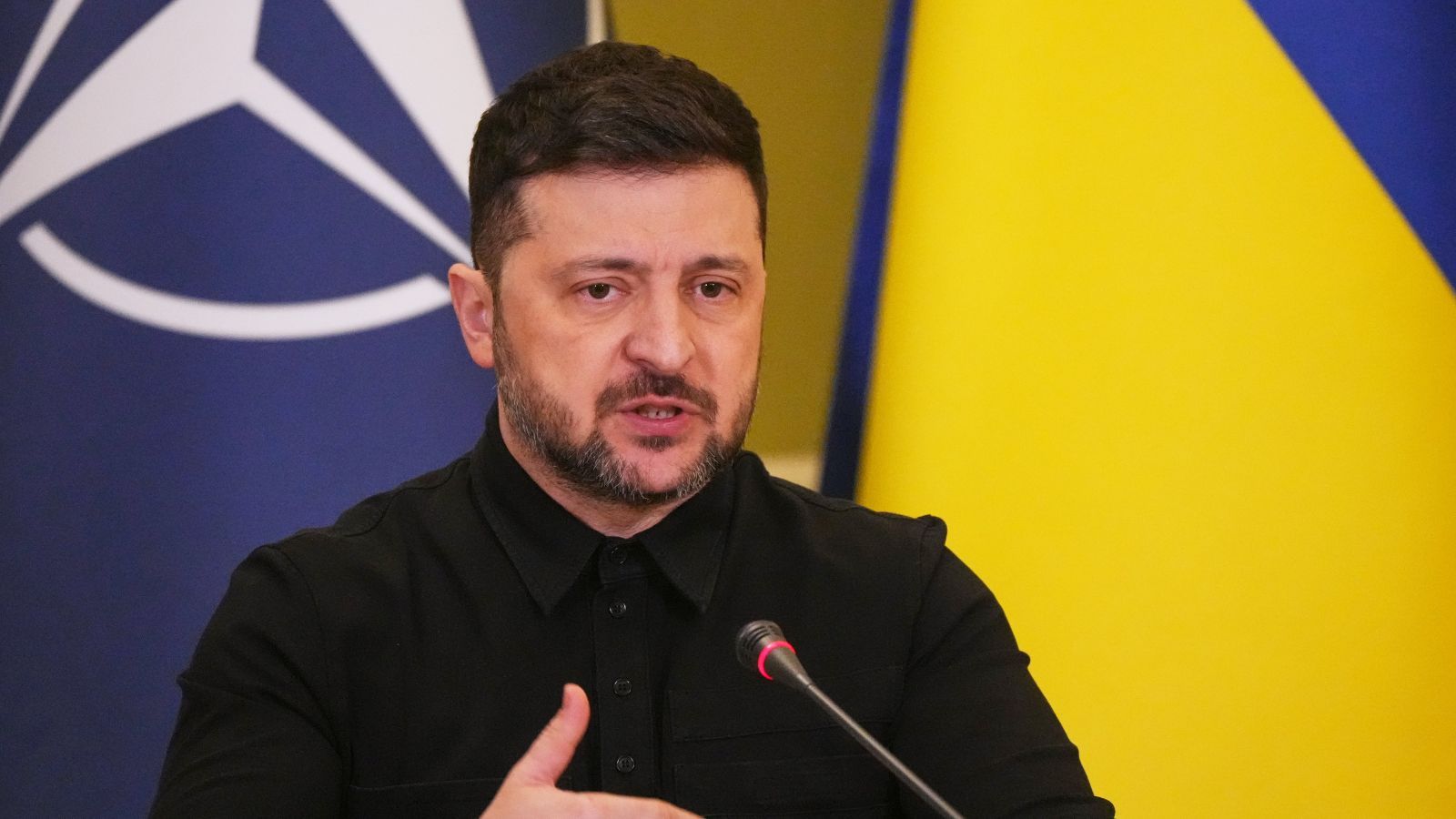
The mainstream media is stuck in a loop. Every time Russia intensifies its missile and drone strikes against Ukrainian infrastructure, the editorial narrative follows a predictable script: Volodymyr Zelenskyy appeals to Western allies, headlines declare that NATO air defense systems are the silver bullet, and pundits debate whether Washington or Berlin will send another Patriot battery.
This entire discourse is fundamentally flawed. It relies on a lazy consensus that modern air defense is a simple matter of supply, political will, and technological superiority. Expanding on this theme, you can find more in: The Real Reason Nigel Farage Resigned (And Why It Just Might Work).
It is not. The belief that NATO can simply scale up or deploy a protective umbrella over Ukraine to neutralize Russian aerial saturation tactics ignores the cold math of industrial warfare. Relying on Western multi-million-dollar interceptors to stop cheap, mass-produced drones is a strategy designed to fail. We are witnessing the limits of Western military doctrine when forced to confront a protracted, high-intensity attrition campaign.
The Mathematical Imbalance of Modern Air Defense
For decades, Western defense contractors focused on building highly advanced, exquisite systems designed for low-intensity conflicts or brief, decisive engagements. A Patriot system is a masterpiece of engineering. A National Advanced Surface-to-Air Missile System (NASAMS) offers incredible precision. But these systems were never built for a war of industrial endurance against a peer competitor. Observers at The Guardian have shared their thoughts on this trend.
Consider the cost-to-benefit ratio. A single Russian-built Shahed-136 kamikaze drone—often utilizing commercial components and simple engines—costs between $20,000 and $40,000 to manufacture. To down that single drone, Ukraine is frequently forced to fire an interceptor missile from a Western system like the NASAMS, which costs upwards of $1 million per shot. If they use a Patriot Advanced Capability-3 (PAC-3) missile, the price tag jumps to approximately $4 million.
This is not a sustainable defense strategy; it is financial and material liquidation. Russia is using cheap asymmetry to deplete Ukraine's highly finite stockpile of Western interceptors.
Imagine a scenario where an adversary fires a swarm of fifty low-cost drones alongside a handful of supersonic cruise missiles. If you fire fifty interceptors to guarantee a clean sweep, you have just expended tens of millions of dollars worth of ammunition that takes months, if not years, to replace. The adversary can repeat this cycle next week. You cannot.
The defense establishment treats this as a logistics hurdle. It is a structural trap.
The Production Reality the West Ignores
The narrative suggests that Western capitals are merely hoarding systems out of political timidity. The harsher reality is that the cupboard is dangerously bare.
The United States and its European allies do not possess vast warehouses filled with thousands of spare air defense missiles. Annual production rates for these complex interceptors are shockingly low compared to the consumption rates in an active theater of war. For example, Lockheed Martin has historically produced around 500 Patriot missiles per year, with plans to scale up to 650. In a high-intensity conflict where dozens of missiles can be expended in a single night of heavy bombardment, an entire year’s worth of global production can vanish in weeks.
Furthermore, these supply chains are fragile. They depend on highly specialized electronics, rare earth elements, and rocket motors that cannot be mass-produced overnight. Telling Ukraine that help is on the way via long-term defense contracts ignores the immediate tactical reality on the ground.
Why the Current Strategy is Failing
The core misunderstanding centers on what air defense can actually achieve. It is a localized shield, not an national dome.
A standard Patriot battery can effectively protect a specific high-value target—such as a government district, a critical power plant, or a military command node—within a limited radius. It cannot protect an entire oblast, let alone a nation as large as Ukraine. Attempting to spread these systems thinly across the country to protect every civilian population center leaves them isolated, vulnerable to being overwhelmed, and exposed to targeted suppression tactics by Russian anti-radiation missiles.
When Western leaders promise more air defense, they are offering tactical band-aids for a strategic hemorrhage.
The Uncomfortable Alternatives
If the current approach of begging for more Western missile systems is a dead end, what is the alternative? It requires shifting from a passive, defensive mindset to a proactive, disruptive strategy.
- Aggressive Left-of-Launch Operations: The most effective way to stop a missile or drone is to destroy it before it ever leaves the ground. This means targeting manufacturing facilities, supply depots, and launch platforms deep inside Russian territory. The Western prohibition on using long-range weapons for deep strikes inside Russia to avoid escalation has actively crippled Ukraine's ability to defend its skies.
- Mass Deployment of Low-Cost Interceptors: Ukraine needs to rely heavily on acoustic sensor networks coupled with mobile, truck-mounted anti-aircraft guns (like the German Gepard) and laser-guided rockets (like the Vampire system). These methods destroy cheap drones at a fraction of the cost, preserving high-end missiles for actual ballistic threats.
- Electronic Warfare Overhaul: The future of air defense lies in jamming, GPS spoofing, and breaking the command links of incoming projectiles. Investing heavily in localized electronic warfare capabilities yields a far higher return on investment than trying to buy more multi-million-dollar missiles that aren't being manufactured fast enough anyway.
The downside to this shift is obvious: it demands a level of direct escalation and industrial reallocation that Western politicians are terrified to authorize. It requires admitting that the current aid model is failing.
Stop looking to NATO for a magical shield. The skies above Ukraine will not be saved by the next delivery of Western batteries, but by a brutal, realistic assessment of the industrial math governing modern warfare.