The sound did not come from the street. It came from the marrow of the building.
It was a low, mechanical shudder, less of a noise and more of a vibration that traveled through the soles of sneakers and into the shins of anyone standing still on the forty-second floor. For Marcus Vance, a structural engineer who happened to be visiting his daughter’s Midtown apartment on a Tuesday afternoon, that vibration was a physical hand gripping his throat.
Buildings breathe. They sway. They expand in the August heat and contract when the January winds whip off the Hudson River. But they are never supposed to groan.
Within three hours, the mayor would stand behind a thicket of microphones, his face pale under the harsh television lights, declaring an emergency. He would speak of structural anomalies, localized shifting, and precautionary zones. He would use the sanitized, bloodless vocabulary of bureaucracy to describe a nightmare: a seventy-story glass-and-steel needle in the heart of Manhattan was buckling.
But before the press conferences, before the sirens choked the avenues, there was only the quiet terror of ten thousand people realizing that the ground beneath their feet was no longer solid.
The Weight of the Sky
To understand why a skyscraper fails, you have to understand the sheer, terrifying math of keeping things up. We look at the Manhattan skyline and see a monument to human ambition. We see wealth, progress, and architectural triumphs. What we rarely see is the brutal, unending war against gravity.
Every square inch of a high-rise is engaged in a silent wrestling match. The weight of the concrete, the steel, the Italian marble countertops, the grand pianos, and the thousands of human beings living inside pushes down with millions of pounds of force. This is the dead load and the live load. The building pushes back through its core, its outriggers, and its subterranean pillars driven deep into the bedrock of the island.
When a building is healthy, this struggle is invisible. When something goes wrong, the physics become agonizingly apparent.
Consider a simple plastic ruler. If you press down on the top of it while holding the bottom firmly on a desk, it will stay straight for a moment. Press a little harder, and it bows outward in a sudden, violent curve. That is buckling. In a plastic ruler, it is a playground physics trick. In a seventy-story tower weighing hundreds of thousands of tons, it is a catastrophic displacement of energy.
The initial reports from the city’s department of buildings suggested a failure in the transfer trusses—the massive steel structures that distribute the weight of the upper floors around open spaces like lobbies or mechanical zones. Think of it like a human knee. If the knee cartilage suddenly degrades, the weight of the entire body shifts onto bones that were never meant to touch. The joint deforms. The leg gives way.
By 4:00 PM, the structural deformity in the tower's midsection was visible to the naked eye from the street below. A slight, sickening protrusion. A belly in the glass.
The Great Disruption
The evacuation of a single city block in New York is not a matter of turning a key and walking away. It is a logistical amputation.
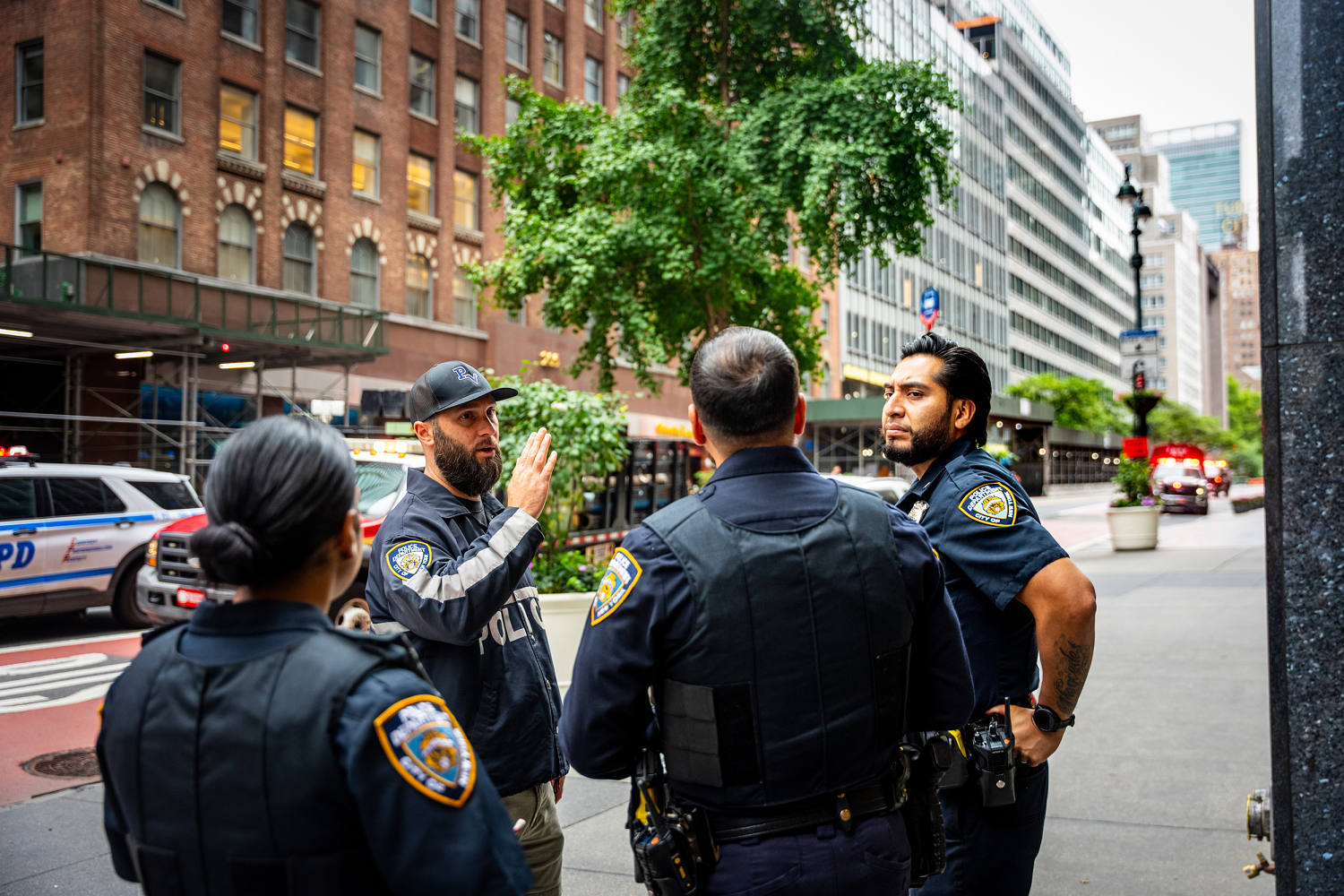
When the sirens began, they didn't stop. Police officers established a four-block perimeter, pushing back onlookers, delivery drivers, and tourists. The subways underneath the structure were halted, their third rails cut, leaving thousands of commuters stranded in the dark, subterranean tunnels of the midtown lines, forced to walk along the tracks to the nearest station.
Imagine being told you have five minutes to leave your life. You cannot grab the family photos. You cannot find the cat hiding under the bed. You take your wallet, your phone, and the shoes on your feet, and you walk down forty flights of stairs because the elevators have been deactivated for safety.
The stairwells became human rivers. In the descent, socioeconomic barriers dissolved. Wealthy hedge fund managers rubbed shoulders with the night-shift custodial staff, all of them moving in a silent, rhythmic cadence toward the street. The air in the concrete enclosures grew hot and thick with panic, but it was a disciplined panic. New Yorkers know how to march away from disaster.
On the street, the scene was surreal. The afternoon sun caught the facade of the tilting building, casting a long, distorted shadow across Bryant Park. Businesses were abandoned mid-transaction. Coffee cups sat steaming on cafe tables; cash registers remained open.
The city that never sleeps had ground to a terrifying, motionless halt.
The Sins of the Subsurface
How does this happen in a city with some of the strictest building codes in the world? The answer is often found not in the design, but in the unseen compromises made during construction, or the unforeseen shifts in the environment.
Manhattan is built on schist—a dense, incredibly strong bedrock that has allowed the city to grow vertically in ways other municipalities can only dream of. But bedrock is not uniform. It has fissures, faults, and subterranean water veins.
In recent years, the massive boom in supertall construction has altered the underground topography of the city. Deep foundations for new towers displace groundwater, forcing it into new channels. When water finds a new path, it can slowly erode the surrounding earth, creating minute voids. If the foundation of an older or adjacent building shifts by even a fraction of an inch, the geometry of the entire structure changes.
A one-inch tilt at the base of a seven-hundred-foot tower translates to a massive, unstable lean at the summit. The leverage exerted on the structural steel becomes immense, multiplying the stress on every bolt, weld, and column.
There is also the question of material integrity. Concrete is a living substance. It cures over decades, changing chemically as it ages. If a batch of concrete mixed fifteen years ago had a slightly higher water-to-cement ratio than specified, or if the aggregate used contained impurities, the material can suffer from a phenomenon known as "creep." Under sustained, heavy loads, the concrete slowly deforms over time, losing its structural rigidity until, without warning, it reaches its breaking point.
The engineers tasked with entering the basement of the unstable tower were walking into a chamber of horrors. They wore laser levels and acoustic monitoring equipment, listening for the microscopic pops of snapping steel cables inside the concrete columns. Every sound was a warning. Every measurement was a countdown.
The Unseen Cascade
The immediate crisis of an unstable building is obvious: the threat of collapse. But the secondary and tertiary effects are what keep city planners awake at night. A tower does not exist in a vacuum. It is plugged into a complex, interdependent grid of infrastructure.
If the building were to experience a partial collapse, the kinetic energy released would shatter the water mains running beneath the avenue, flooding the subway system and potentially destabilizing the foundations of neighboring structures. The natural gas lines feeding the block would rupture, creating an immediate risk of an uncontrollable inferno.
Then there is the economic masonry. The area surrounding the tower represents billions of dollars in real estate value, commercial revenue, and tax income. A prolonged closure of a major midtown artery ripples through the entire city's economy. Businesses close permanently. Insurance markets panic. The cost of insuring any high-rise in the city skyrockets, a expense that eventually trickles down to every tenant renting a two-bedroom apartment in Queens or Brooklyn.
This is the fragility of modern urban density. We live stacked on top of one another, relying on the assumption that the engineering works perfectly every single second of every single day. We trust the invisible calculations of people we will never meet.
The Long Night
As midnight approached, the perimeter grew wider. The initial chaos subsided into a tense, watchful waiting. The klieg lights of the emergency services illuminated the side of the tower, casting long, dramatic shadows against the sky.
The building stood silent, a dark monument against the stars, completely devoid of the internal lights that usually made it look like a vertical constellation. It looked less like a triumph of human ingenuity and more like a warning.
Engineers worked in shifts, analyzing the data streaming from the sensors placed inside the structure's core. The telemetry was mixed. The shifting had slowed, but it hadn't stopped entirely. The building was still searching for its new equilibrium, a terrifying game of architectural roulette where the stakes were measured in human lives and millions of tons of debris.
Residents who had been evacuated sat on the curbs at the edge of the police lines, wrapped in red cross blankets, staring up at their windows. Their lives were up there—their passports, their wedding rings, the small, mundane objects that constitute a home. They were looking at a structure that might not survive the week, wondering if they would ever cross the threshold of their front doors again.
The city around them continued to hum, but it was a muted, anxious sound. The collective gaze of eight million people was fixed on a single point in the sky, watching a giant stumble, waiting to see if it would fall.