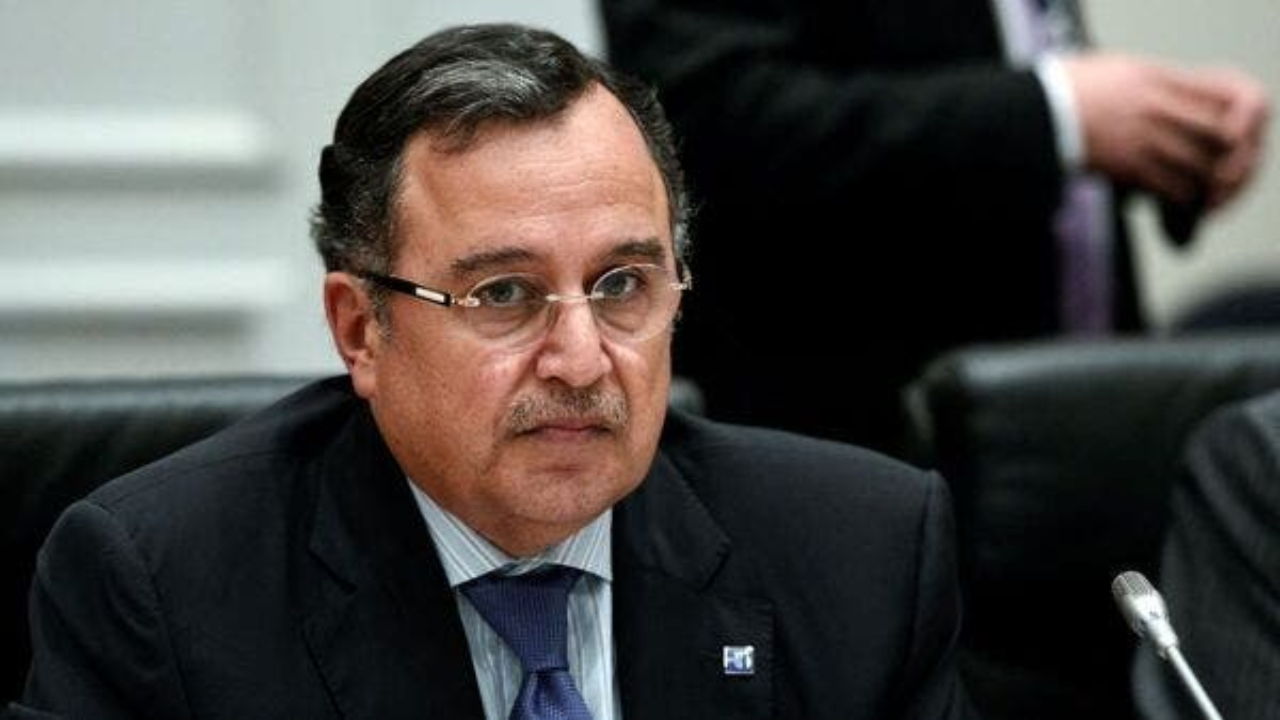
The appointment of Nabil Fahmy as the next Secretary-General of the Arab League is not a change of guard. It is a calculated move to keep a crumbling institution from falling into total irrelevance. As the 22-member bloc faces internal fractures and external pressures that threaten its very existence, the selection of Egypt’s former Foreign Minister represents a desperate return to traditional diplomacy. Cairo has once again asserted its historical claim to the leadership of the League, but the road ahead for Fahmy is littered with the debris of failed peace initiatives and shifting regional loyalties that no longer center on the Nile.
Fahmy takes the helm at a moment when the Arab League is struggling to find its voice. For decades, the organization has been criticized as a "talking shop"—a venue for fiery rhetoric that rarely translates into collective action. The transition from Ahmed Aboul Gheit to Fahmy marks a continuation of Egyptian dominance over the Secretary-General’s office, a tradition that has persisted since the League’s inception in 1945, with only one brief interruption. This continuity provides a veneer of stability, yet it masks a deep-seated crisis of identity within the Arab world.
The core challenge is simple. The regional power centers have moved. While Cairo remains the symbolic heart of Arab diplomacy, the financial and political weight has shifted decisively to the Gulf. Riyadh, Abu Dhabi, and Doha now dictate the pace of regional intervention, from the normalization of ties with Israel to the management of the Syrian conflict and the stabilization of North Africa. Fahmy, a career diplomat with deep roots in the international system, must now bridge the gap between Egypt’s institutional memory and the Gulf’s assertive new vision for the Middle East.
The Egyptian Monopoly and the Cost of Continuity
Since the League moved back to Cairo from Tunis in 1990, the Secretary-General post has become a de facto Egyptian appointment. This arrangement is built on an unwritten agreement that Egypt provides the diplomatic infrastructure while the wealthy oil monarchies provide the funding. Fahmy’s selection confirms that this bargain still holds, but the terms are changing.
Egypt views the Arab League as its primary instrument for regional influence. By installing Fahmy—a man who served as the founding dean of the School of Global Affairs and Public Policy at the American University in Cairo—Egypt is signaling a desire for a more sophisticated, intellectually rigorous approach to the bloc's problems. Fahmy is not merely a bureaucrat. He is an architect of disarmament policy and a veteran of the Washington-Cairo diplomatic circuit. His presence suggests that the League wants to be taken seriously on the world stage again, rather than being dismissed as a relic of the Pan-Arabist era.
However, this monopoly on the leadership creates resentment. Other member states, particularly those in the Maghreb and the smaller Gulf states, often feel that the League serves Egyptian national interests first and the collective Arab interest second. If Fahmy cannot project an image of impartiality, he will find his initiatives blocked by the very members he needs to lead. The organization cannot afford another five years of stagnation disguised as "stability."
Navigating the Gulf Power Shift
To understand why Fahmy was the choice, one must look at the shifting alliances in the Levant and the Gulf. The Arab League is no longer the primary forum for resolving disputes. Instead, minilateralism has taken over. Small groups of powerful states meet behind closed doors to decide the fate of the region, often leaving the League’s formal sessions to rubber-stamp decisions that have already been made.
Fahmy’s greatest hurdle will be asserting the League’s relevance in a world of bilateral deals. The Abraham Accords fundamentally changed the regional security framework, creating a divide between states that have normalized relations with Israel and those that remain committed to the 2002 Arab Peace Initiative. The League has been largely sidelined in this process. Fahmy, known for his nuanced understanding of international law and security, will have to find a way to reconcile these two realities.
He faces a fragmented landscape where:
- Saudi Arabia is focused on its Vision 2030 and regional leadership through economic dominance.
- The UAE is pursuing a hyper-active foreign policy that often bypasses traditional multilateral institutions.
- Qatar maintains its role as a mediator with ties to diverse political actors, including those the League has historically shunned.
If Fahmy focuses solely on the "Arab cause" in the traditional sense, he risks being ignored by the modernizers in Riyadh and Abu Dhabi. His task is to prove that a unified Arab stance still carries weight in a multipolar world where China, Russia, and the United States are all competing for influence.
The Syrian Dilemma and the Limits of Sovereignty
One of the most pressing issues on Fahmy’s desk is the ongoing reintegration of Syria into the Arab fold. The decision to readmit Damascus was a recognition of reality over idealism, but it has not led to a cohesive strategy for rebuilding the country or addressing the refugee crisis. The League remains divided on how to deal with Bashar al-Assad, with some members pushing for full normalization and others demanding concessions on political reform.
Fahmy’s background in high-stakes diplomacy will be put to the test here. He knows that the League’s charter, which emphasizes the sovereignty of member states and non-interference in internal affairs, is both its greatest strength and its most significant weakness. This principle has allowed dictators to operate with impunity, but it is also the only thing keeping the diverse and often antagonistic members at the same table.
The Syrian case illustrates the League's impotence when faced with civil war. Without a standing military force or a mechanism for economic sanctions that all members adhere to, the Secretary-General’s power is purely rhetorical. Fahmy must decide if he will be the man who finally pushes for a reform of the League’s charter—a task that has defeated every one of his predecessors—or if he will continue the policy of managing decline.
Reforming a Broken Bureaucracy
Inside the League's headquarters in Tahrir Square, the problems are as much administrative as they are political. The organization is bloated, underfunded by members who are behind on their dues, and plagued by a lack of technical expertise in modern policy areas like climate change, food security, and digital sovereignty.
Fahmy has a reputation for institutional building. At the American University in Cairo, he created a world-class policy school from the ground up. He understands that for the Arab League to survive, it must offer more than just political summits. It must become a hub for regional cooperation on issues that actually affect the lives of the 450 million people living in the Arab world.
This means moving beyond the obsession with high politics and focusing on:
- Water Security: The Nile, the Tigris, and the Euphrates are all under threat. The League is the only body that can theoretically negotiate a pan-Arab response to upstream damming.
- Economic Integration: The Greater Arab Free Trade Area (GAFTA) exists on paper but is hampered by bureaucratic red tape and protectionism.
- Youth Unemployment: With one of the youngest populations in the world, the region is a powder keg. The League needs to coordinate regional labor markets to prevent the next wave of mass unrest.
If Fahmy treats the Secretary-General role as a prestigious retirement post, the League will continue its slide into a historical footnote. If he treats it as a reform project, he will face immediate pushback from the very governments that appointed him.
The Shadow of the Great Powers
Fahmy also inherits a relationship with the West that is at an all-time low in terms of trust. The perceived withdrawal of the United States from its traditional role as a regional guarantor has left a vacuum that Russia and China are eager to fill. The Arab League has historically been a pro-Western bloc, but the rise of "strategic autonomy" among Gulf states means that Fahmy will have to navigate a far more complex international environment than his predecessors.
He is uniquely qualified for this. Having served as Egypt’s Ambassador to both Tokyo and Washington, he understands the language of the global North and the rising powers of the East. He knows that the Arab world can no longer rely on a single patron. However, the League has yet to develop a collective policy toward China’s Belt and Road Initiative or Russia’s security interventions. Without a unified front, individual Arab states are being picked off and integrated into foreign spheres of influence, further weakening the collective "Arab" identity that the League is supposed to represent.
Diplomacy as a Zero-Sum Game
The appointment of Nabil Fahmy is a signal that Egypt is not ready to give up its role as the region's diplomatic anchor. But diplomacy in the modern Middle East is increasingly a zero-sum game. Every gain for one regional actor is seen as a loss for another. The Secretary-General’s office has traditionally functioned by avoiding conflict—by finding the lowest common denominator that everyone can agree on.
This approach is no longer sustainable. The problems facing the region—failed states, extremist ideologies, and economic collapse—cannot be solved by vague communiqués. Fahmy’s tenure will be judged by his ability to move the League from a posture of "non-interference" to one of "collective responsibility." It is a massive shift, and one that many member states will resist with every tool at their disposal.
Fahmy is a man of the old school, a believer in the power of the state and the sanctity of the diplomatic process. In a region that is increasingly defined by non-state actors, paramilitary groups, and digital influence campaigns, his traditionalism is his biggest gamble. He is betting that the formal structures of the 20th century can still contain the chaos of the 21st.
The appointment is official, the ceremonies are over, and the briefings have begun. Nabil Fahmy has the credentials, the intellect, and the lineage to lead. What he lacks is a unified mandate from a group of nations that agree on almost nothing. His success depends on convincing 22 different leaders that their survival is linked to the survival of the institution he now leads. It is a tall order for a man entering the twilight of his career, but in the halls of the Arab League, hope has always been a matter of survival.
Fahmy must now transform the League from a monument to the past into a functional tool for the future. If he fails, he will not just be the last Egyptian Secretary-General of a relevant Arab League; he will be the curator of its final collapse. The era of empty gestures is over. The era of hard choices has arrived.