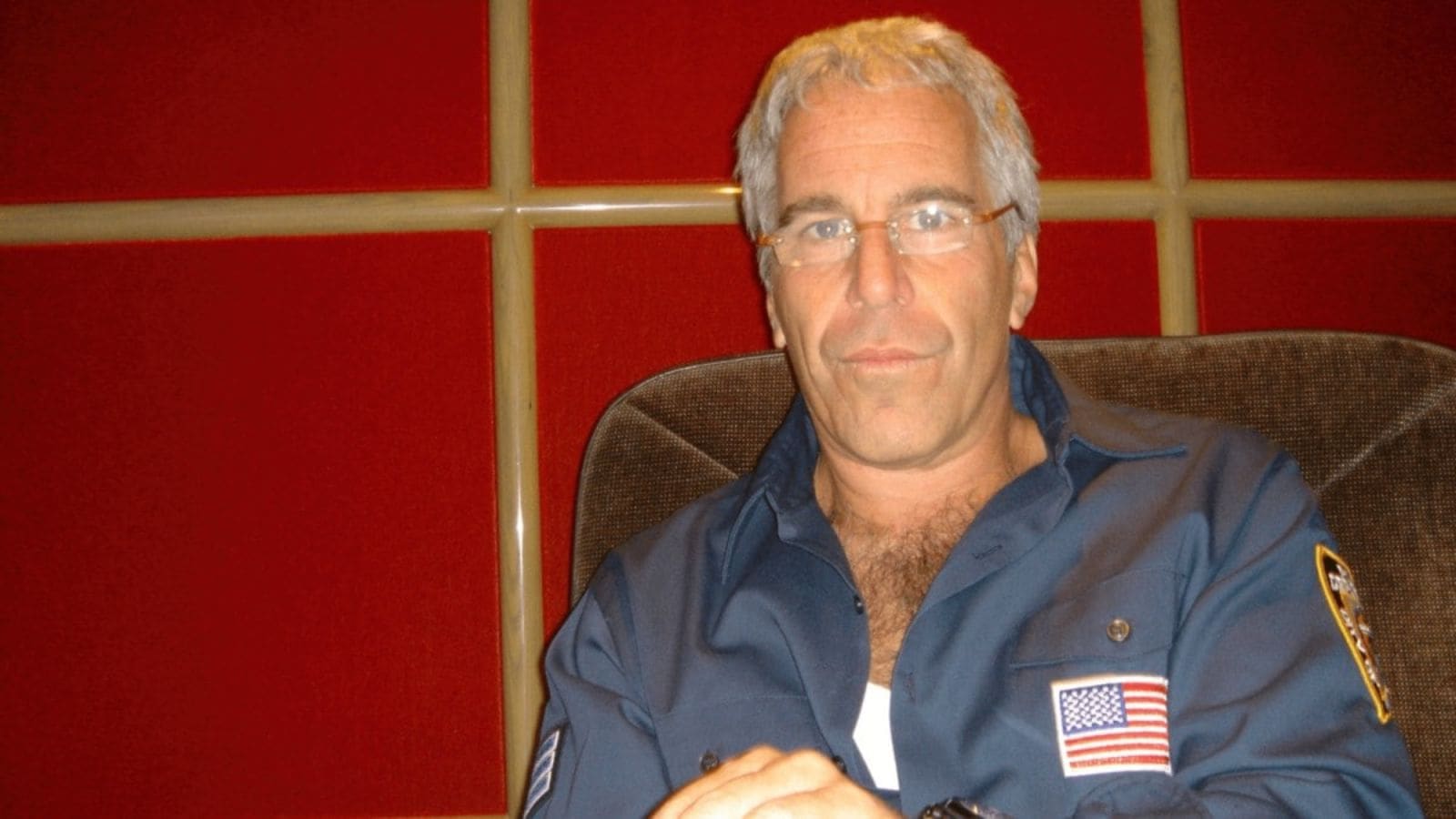
The official ruling on Jeffrey Epstein’s death is suicide by hanging, yet a persistent forensic counter-narrative argues the physical evidence inside his Manhattan jail cell points toward homicidal strangulation.
That dispute centers on three fractures found in the neck of the 66-year-old financier after guards discovered him unresponsive in the Metropolitan Correctional Center on August 10, 2019. Dr. Michael Baden, a veteran forensic pathologist hired by Epstein’s brother to observe the autopsy, publicly challenged the New York City Office of Chief Medical Examiner’s conclusion. Baden argued that multiple fractures—specifically two breaks on the left and right sides of the thyroid cartilage and one on the left hyoid bone—are rarely seen in suicidal hangings and occur far more frequently in cases of manual or ligature strangulation. Recently making waves in this space: How Puerto Rico Is Actually Keeping the Lights On Despite Constant Power Outages.
The medical examiner’s office stood firm. Chief Medical Examiner Barbara Sampson maintained that no single finding in a neck examination automatically proves homicide over suicide, emphasizing that context, scene investigation, and toxicology must be weighed alongside bone fractures.
The Anatomy of a Contested Autopsy
To understand why two seasoned forensic experts looked at the exact same body and reached opposite conclusions, you have to understand how the human neck reacts to violent force. Additional details into this topic are detailed by Al Jazeera.
The hyoid bone is a small, horseshoe-shaped structure sitting just above the Adam's apple. Unlike almost every other bone in the body, it does not articulate directly with any other bone; it is suspended by muscles and ligaments. Because it is somewhat mobile, younger individuals rarely break it during a hanging. As people age, however, the cartilage in the hyoid and the neighboring thyroid cartilage undergoes ossification, turning from flexible tissue into brittle bone.
Epstein was 66. At that age, calcified neck structures snap under pressures that would merely bend the cartilage of a twenty-something.
Baden’s core argument relies on statistical probability built over five decades of examining thousands of deaths. In his experience, a single fracture of the hyoid bone happens occasionally in older suicide victims, particularly when the body drops from a height or hangs for an extended period. Three distinct fractures across two separate anatomical structures, however, raised immediate red flags for him. In homicidal strangulation, an assailant applies erratic, crushing, and squeezing force from multiple angles, which readily shatters brittle neck cartilage.
Yet mainstream forensic pathology literature tells a more complicated story. Peer-reviewed studies examining hundreds of confirmed suicidal hangings show that hyoid and thyroid cartilage fractures occur in anywhere from 20 to 60 percent of cases involving older adults. A 2010 study published in the Journal of Forensic Sciences documented multiple simultaneous fractures in confirmed self-hangings, particularly when the ligature knot is positioned asymmetrically or when the deceased falls forward from a seated or kneeling position—a method known as incomplete suspension.
In Epstein’s cell, the ligature was reportedly fashioned from torn strips of an orange bedsheet tied to the top bunk. Incomplete suspension is entirely consistent with the physical layout of a standard federal jail cell, where ceiling heights prevent a full drop. When a person leans their body weight forward into a low-hanging noose, the concentrated downward force presses the ligature directly against the upper neck, compressing the hyoid and thyroid cartilage against the cervical spine.
What the Cell Floor Revealed
Forensic pathology never happens in a vacuum. When an autopsy produces ambiguous skeletal trauma, investigators turn to the surrounding environment for answers.
In a manual strangulation scenario, the victim almost always fights back. Even an older man caught off guard will instinctively claw at the attacker’s hands or forearms, leaving defensive wounds—broken fingernails, skin under the nails, or bruising on the wrists and knuckles. According to official reports and leaked autopsy summaries, Epstein’s hands and nails showed no signs of a physical struggle.
Petechial hemorrhages offer another critical clue. These tiny red spots appear in the whites of the eyes, eyelids, and inner lips when blood vessels rupture under intense pressure. They occur when jugular veins are compressed—preventing blood from draining out of the head—while carotid arteries continue pumping blood into it.
While petechiae are classic hallmarks of manual strangulation, they also appear in partial hangings where the weight of the body is not fully suspended, preventing complete arterial cutoff. Reports indicated petechiae were present in Epstein’s eyes, a finding both sides interpreted through their own lens. To Baden, they reinforced the suspicion of manual compression; to the medical examiner’s office, they aligned with a low-suspension hanging where carotid flow was only partially obstructed.
Then there is the ligature mark itself. A strangulation ligature typically leaves a horizontal furrow wrapping completely around the neck at or below the level of the thyroid cartilage, because an attacker pulls straight back or tightens a cord evenly. A hanging furrow usually angles upward toward a single suspension point—an inverted "V" shape behind the ear or at the back of the head—leaving an area of unmarked skin where the knot pulled away from the flesh.
Photographs from the autopsy have never been released to the public, leaving independent analysts to rely on conflicting descriptions of the furrow’s angle and depth. That lack of transparency fueled intense public skepticism, turning a technical medical disagreement into an international conspiracy flashpoint.
Institutional Failure Versus Targeted Assassination
When people hear that cameras malfunctioned outside Epstein’s cell and that guards slept through mandatory checks, the leap to foul play feels effortless. A billionaire financier with documented ties to presidents, royals, and intelligence figures dies in federal custody weeks before facing sex trafficking charges that threatened to expose powerful associates.
If you were writing a political thriller, an assassin slipping into the Special Housing Unit would be the obvious plot point. Real-world federal prisons, however, operate with far less cinematic precision and far more bureaucratic decay.
The Metropolitan Correctional Center (MCC) in Lower Manhattan was notorious among defense attorneys and federal judges long before August 2019. Chronic understaffing forced correctional officers to work mandatory double and triple shifts. Rats infested the tiers, plumbing routinely failed, and basic security infrastructure was falling apart.
In November 2019, federal prosecutors indicted the two guards assigned to Epstein’s unit, Tova Noel and Michael Thomas, for falsifying prison records. Surveillance footage showed the officers sitting at their desks, browsing the internet for furniture and motorcycle sales, and sleeping for hours instead of conducting required 30-minute checks. Neither officer entered the locked tier housing Epstein’s cell between 10:30 p.m. and 6:30 a.m.
Crucially, the cameras inside the common area outside Epstein’s tier worked fine—and they showed nobody entering or exiting the locked hallway all night. The broken cameras cited in early media reports were located in a different area of the facility, a detail frequently blurred in online speculation.
To pull off a murder inside the MCC under those conditions, an assassin would have needed to bypass multiple locked steel doors without triggering electronic logs, evade the working cameras covering the tier entrance, subdue a six-foot-tall man in a concrete box without leaving a single defensive scratch, stage a hanging using torn bedsheets, and vanish without waking the sleeping guards seated fifteen feet away from the tier door.
The Psychology of the Special Housing Unit
To understand why Epstein took his own life, look at the abrupt collapse of his reality.
For decades, Epstein operated inside an insulated bubble of extreme wealth, private islands, and legal impunity. Even during his 2008 conviction in Florida, he secured an unprecedented non-prosecution agreement and served thirteen months in a county stockade with work-release privileges that allowed him to leave the facility twelve hours a day, six days a week.
July 2019 shattered that world permanently. Denied bail by a federal judge in Manhattan, Epstein was stripped of his tailored suits, placed in an orange jumpsuit, and locked inside a windowless concrete cell in the MCC’s Special Housing Unit (SHU).
The SHU is solitary confinement by another name. Inmates spend 23 hours a day locked behind heavy steel doors. Human contact is minimal, sensory deprivation is acute, and the psychological shock on first-time federal inmates accustomed to total control is devastating.
On July 23, 2019—less than three weeks before his death—guards found Epstein semi-conscious on his cell floor with marks around his neck. He was placed on suicide watch, stripped of his regular clothes, put in a tear-resistant smock, and monitored continuously. At the time, Epstein claimed his cellmate, former police officer Nicholas Tartaglione, had attacked him, though prison investigators found no evidence to support the allegation.
Six days later, psychiatric staff removed Epstein from suicide watch and returned him to the SHU. Under strict Bureau of Prisons protocols, he was supposed to have a cellmate at all times and receive wellness checks every half hour. On August 9, Epstein’s cellmate was transferred out of the facility. Nobody assigned a replacement.
That same day, a federal appeals court unsealed more than 2,000 pages of documents from a settled defamation lawsuit brought by accuser Virginia Giuffre, exposing explicit details of Epstein’s trafficking network to the global press. Hours later, Epstein met with his lawyers in an attorney conference room—a common tactic used by wealthy inmates to escape the misery of the SHU for several hours a day—before returning to his solitary cell for the night.
Why Forensic Uncertainty Persists
The Department of Justice Office of the Inspector General (OIG) released a comprehensive 128-page report in June 2023 examining every facet of Epstein’s custody and death. The investigation corroborated the FBI’s finding that no criminal foul play occurred, detailing a cascading series of operational failures by the Bureau of Prisons.
Staff left Epstein alone in a cell with extra bedsheets despite his recent suicide watch history. Supervisors failed to ensure a new cellmate was assigned. Exhausted guards forged logs rather than walk the tier.
Yet Dr. Baden’s critique refuses to fade, largely because forensic pathology itself contains inherent gray areas that cannot be resolved with mathematical certainty. Unlike DNA sequencing or ballistics matching, determining the manner of death in asphyxial cases relies heavily on interpretation.
A forensic pathologist cannot look under a microscope and tell whether a fracture in a 66-year-old thyroid cartilage was caused by a human thumb or a twisted bedsheet. Both mechanisms apply blunt compression to the exact same anatomical structures. When Baden pointed out that three neck fractures are unusual in suicides, he was stating an accurate observation from his own casework. When the medical examiner’s office ruled the death a suicide anyway, they were applying the broader rule of forensic investigation: anatomical anomalies do not override an entire body of corroborating physical, circumstantial, and surveillance evidence.
The public appetite for a homicide narrative stems from a deeply understandable distrust of institutions that repeatedly failed Epstein’s victims. People watched powerful prosecutors cut him a sweetheart deal in 2008, watched elite universities and financial institutions accept his money long after his conviction, and then watched the federal prison system fail at its most basic duty—keeping a high-profile detainee alive to stand trial.
When an institution proves itself this negligent, citizens naturally suspect malice where incompetence is actually the culprit.
The forensic debate over Epstein’s neck fractures highlights a sobering truth about criminal investigations. Even with modern medical science, an autopsy rarely delivers a cinematic smoking gun; it delivers probabilities that must be weighed against locked doors, working cameras, and the devastating human reality of a man who realized his money could no longer buy his way out of a concrete box.