Red clay stains everything in Mississippi. It gets under your fingernails, cakes onto the treads of your boots, and turns white cotton socks a permanent, rusty orange after a single walk through the tall grass. When the summer heat settles over the pine woods, the air grows thick enough to chew, carrying the sweet, rotting scent of magnolia blossoms and damp earth.
It is a land of heavy memories. Nothing here ever truly disappears. It just sinks into the soil and waits.
So when a Black woman is found hanging from a tree in Mississippi, the shockwaves do not travel along modern fiber-optic cables. They travel through bloodlines. They vibrate in the floorboards of front porches from the Delta to the Gulf Coast, waking up a terror that generations of families tried to put to sleep.
Tomorrow, a man walks into a fluorescent-lit courtroom to face charges for her killing. On a police blotter, the event is reduced to dates, statutes, and cold procedural milestones. A suspect arrested. A bond hearing scheduled. A docket number assigned.
That sterile paperwork is a lie. Not because the facts are wrong, but because the paperwork pretends this is an isolated crime happening in a vacuum. It ignores the suffocating weight of the tree itself.
The Architecture of a Headline
Think about how we consume tragedy today. You scroll past a headline on your phone while waiting for your coffee to brew. Man charged in killing of a Black woman found hanging from a Mississippi tree is due in court. You pause for three seconds. Your stomach tightens. Maybe you feel a flash of anger, a wave of exhaustion, or a quiet, helpless grief. Then the barista calls your name, and the algorithm feeds you a video of a golden retriever.
I know that reflex because I have lived inside the communities where those headlines are born. I have sat in the folding chairs of crowded county courthouses in the Deep South, watching the ceiling fans spin lazily while families hold their breath, waiting to see if the law will recognize their humanity. In those rooms, time moves differently. Every squeak of a leather shoe on linoleum sounds like a gunshot. Every whispered conference between lawyers feels like a negotiation over whether a life had value.
When a Black person is found suspended from a branch in the American South, the immediate, frantic question from officials is almost always the same. Was it suicide?
For decades, that single word has acted as a magic eraser. Local authorities rush to close the book before the ink is even dry, declaring a tragedy self-inflicted before the crime scene tape is rolled up. They look at a rope and see a closed case. Black families look at the same rope and see a weapon of war that was never fully decommissioned.
In this case, the narrative shifted. A man was arrested. Prosecutors stepped forward with homicide charges, dragging the case out of the shadows of "unexplained death" and into the harsh glare of criminal accountability. That arrest alone separates this moment from thousands of buried histories. Yet, as the defendant prepares to stand before a judge, the real trial is happening far outside the courtroom walls.
What the Woods Remember
To understand why a court date in a rural Mississippi county carries the gravity of a national reckoning, you have to understand the geography of fear.
Picture a hypothetical woman—let’s call her Clara—driving home from a late shift at a distribution center. Her headlights cut through the pitch-black tunnel of a two-lane county road lined with loblolly pines and live oaks draped in Spanish moss. In the daylight, those trees are breathtaking, featured on postcards and tourism brochures. At two in the morning, with no streetlights for ten miles and cell service dropping to a single bar, the woods become a wall.
Clara knows the unspoken rules of that road. She keeps both hands at ten and two. She checks her speedometer obsessively, making sure she isn't going two miles over the limit. When headlights appear in her rearview mirror, her shoulders rise toward her ears until the truck passes. This hyper-vigilance isn't paranoia. It is inherited survival instinct, passed down like a family Bible from grandmothers who remembered when sundown meant getting off the streets or risking your life.
Between 1877 and 1950, historians documented more than 4,400 racial terror lynchings across the United States. Mississippi led the nation with over 650. Those weren't secret, back-alley murders. They were public spectacles, often advertised in local newspapers, where crowds gathered to watch Black men and women tortured and hanged from courthouse squares and country trees. The message was unmistakable: your body does not belong to you, and the law will not protect you.
You cannot saturate the soil with that kind of violence for a century and expect the grass to grow back normal.
Even when the official era of lynching faded, the imagery remained potent. A noose is not just a knot. In American history, it is a signature. When a killer chooses a tree, or when an investigation stalls in the face of obvious brutality, the past reaches forward and grabs the present by the throat.
The Anatomy of Doubt
Consider what happens next when a body is discovered in the woods.
In a standard homicide investigation, the scene tells a story through physical evidence. Forensic pathologists look at the angle of ligature marks, the presence of defensive wounds under fingernails, signs of a struggle in the dirt, or the toxicology of the victim. A hanging that is staged to look like a suicide almost always leaves behind contradictions. Gravity leaves specific fingerprints. A body dragged across pine needles disturbs the forest floor in ways a walking person never could.
Yet, when the victim is a Black woman, those forensic realities often collide with an invisible wall of institutional apathy.
Nationally, Black women and girls face a quiet crisis of erasure. According to data from the National Crime Information Center, Black women account for a wildly disproportionate share of missing persons cases, yet their disappearances rarely trigger the wall-to-wall media coverage reserved for white victims. Sociologists call it "missing white woman syndrome." Families in Mississippi call it being invisible until you are dead—and sometimes even after.
When a Black woman’s life is treated as marginal while she is breathing, the system struggles to summon urgency when she stops. Investigators might miss crucial early hours. Witnesses might stay silent out of a deep, earned distrust of local law enforcement. And if a family demands an independent autopsy, they are often forced to crowdfund thousands of dollars while grieving, fighting just to prove their loved one didn't take their own life.
That is why the upcoming court appearance matters so deeply. Every motion filed, every piece of evidence entered into the record, is a direct challenge to a history that routinely dismissed Black women's pain.
Inside the Cold Room
Courtrooms are designed to strip away emotion. The wood paneling is polished to a dull sheen. The bailiff speaks in a flat monotone. The attorneys use clinical language—decedent, perpetrator, forensic pathology, probable cause—that acts like surgical gloves, keeping everyone at a safe distance from the blood and terror of the actual event.
I remember watching a mother sit in the second row of a Southern courtroom during a preliminary hearing years ago. She didn't cry. She didn't shout. She sat completely still, clutching a folded tissue in her lap so tightly her knuckles turned pale, staring at the back of the defendant’s head. Beside her, a cousin whispered quietly into her ear, grounding her every time the prosecutor described a detail from the medical examiner’s report.
That is the invisible architecture of a court date. On one side of the aisle sits the machinery of the state, slowly grinding through statutes and precedents. On the other side sit the people who actually knew the woman—who knew how she laughed, what she cooked on Sundays, how she braided her daughter's hair, and the exact sound of her voice when she called to say she made it home safe.
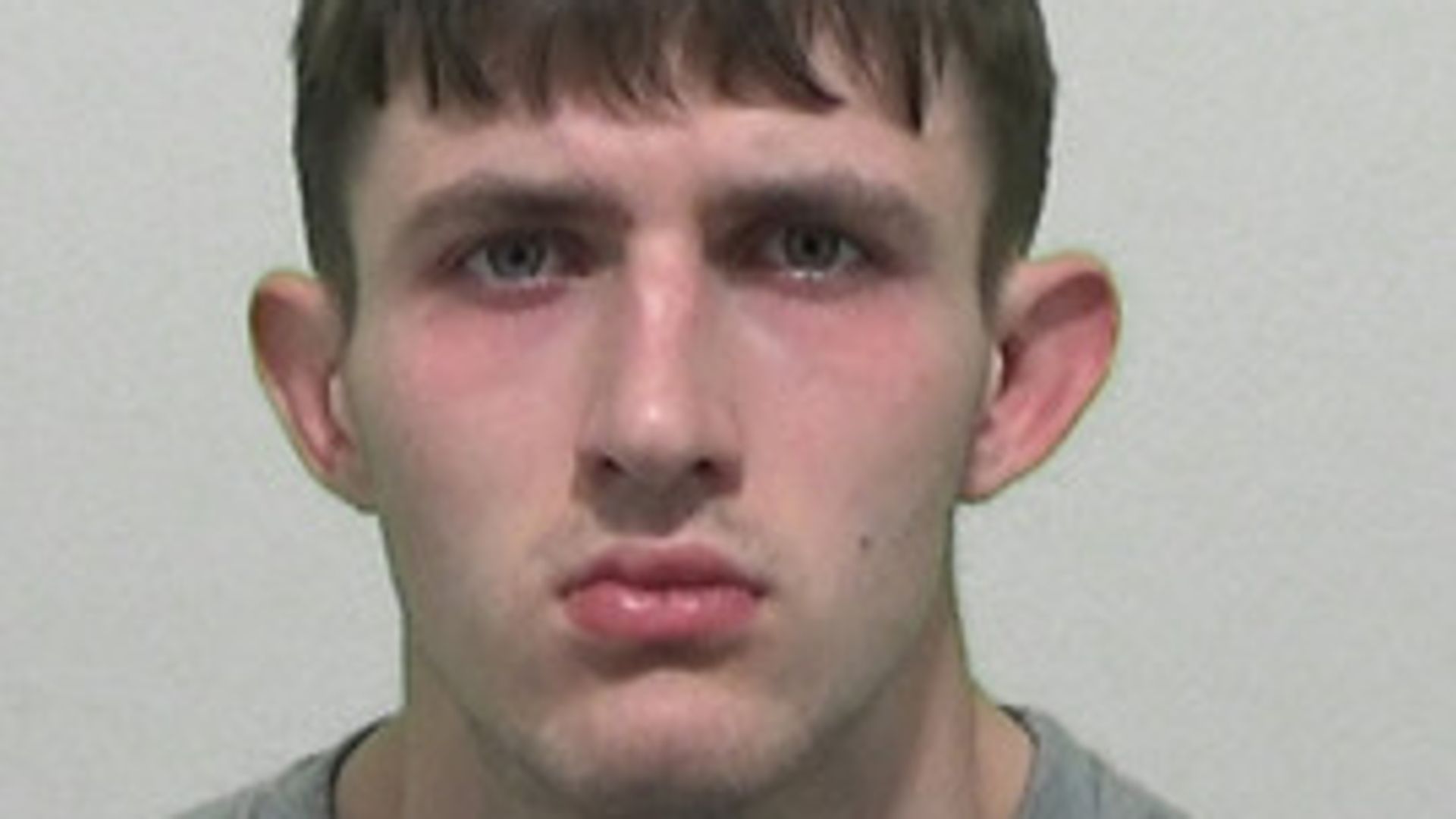
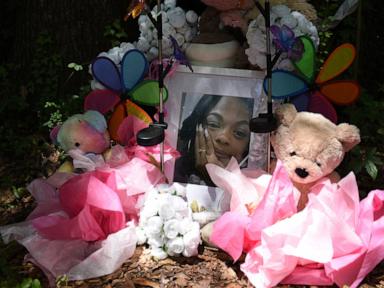
When the media reports that a suspect is "due in court," it frames the story around the accused. We learn his name, his age, his mugshot, and the specific charges he faces. The victim, too often, becomes a static symbol—a photograph taken at a family reunion years ago, frozen in time while the legal system debates her final moments.
To truly understand the stakes of this hearing, we have to refuse that erasure. We have to hold two truths at the same time: the strict constitutional demand for due process, and the undeniable historical weight of the crime itself.
Why Proof Feels So Fragile
Let’s be honest about something most commentators won't admit: watching these cases unfold is terrifying because the outcome is never guaranteed.
Even when prosecutors bring charges, the path from an arrest to a conviction in a rural jurisdiction is a minefield. Juries are pulled from local voter rolls, bringing all the unspoken biases, shared histories, and neighborhood loyalties of a small town into the deliberation room. Defense attorneys will inevitably try to muddy the waters, questioning timelines, challenging forensic interpretations, or subtly shifting scrutiny onto the victim's own life and choices.
It is exhausting. It makes you want to look away.
Think of the legal system like a bridge built over a deep ravine. On paper, the engineering is sound. The beams are steel; the bolts are tightened to regulation. You are told you can walk across safely. But if your family has watched that bridge collapse three times in the past century, you don't step onto the planks with confidence. You test every inch with your weight, listening for the groan of metal, waiting for the drop.
That skepticism isn't cynicism. It is pattern recognition.
When the defendant steps before the judge, observers won't just be watching for a plea or a bail ruling. They will be watching the prosecutor's posture. They will be listening to the tone of the judge's voice. They will be scanning the room to see if this case is being treated with the relentless, uncompromising rigor that a capital murder demands, or if it is being quietly managed toward a lesser outcome out of the public eye.
The Ripple Beyond the County Line
It would be easy for someone living in Chicago, Seattle, or New York to read about a court hearing in Mississippi and treat it as a regional pathology—a relic of a backward place that has nothing to do with their daily life.
That comfort is an illusion.
Mississippi is not an island; it is a mirror. The same systemic blind spots that allow violence against Black women to go unexamined in the rural South operate in urban precincts, suburban hospitals, and corporate boardrooms across the country. The geography changes, the accents shift, and the weapons look different, but the underlying calculus—whose safety is urgent and whose suffering is negotiable—remains stubbornly intact.
When a community in Mississippi demands accountability, they aren't just fighting for one woman's memory. They are testing whether the social contract actually applies to everyone, or if it still comes with fine print written in invisible ink.
Every time a family refuses to accept a rushed conclusion, every time local activists pack a courtroom gallery so the judge sees dozens of eyes watching every ruling, they force the system to work as advertised. Pressure creates accountability. Light disinfects.
The Silence After the Gavel
Soon, the courtroom doors will swing open. The bailiff will call the room to order. The defendant will stand beside his counsel, and the clerk will read the charges into the official record—a permanent, indisputable acknowledgment that a crime occurred and someone must answer for it.
The cameras outside will capture thirty seconds of footage for the evening broadcast. Reporters will file their updates, noting the next scheduled hearing date months down the line, and the news cycle will move on to the next crisis, the next scandal, the next distraction.
But back in the community, the quiet will return.
A mother will still walk past an empty bedroom. A friend will still reach for her phone to share a joke before remembering there is no one on the other end to answer. And down a stretch of two-lane highway, the wind will move through the Spanish moss, swaying softly in the dark, while the red clay holds onto everything it has ever been given.