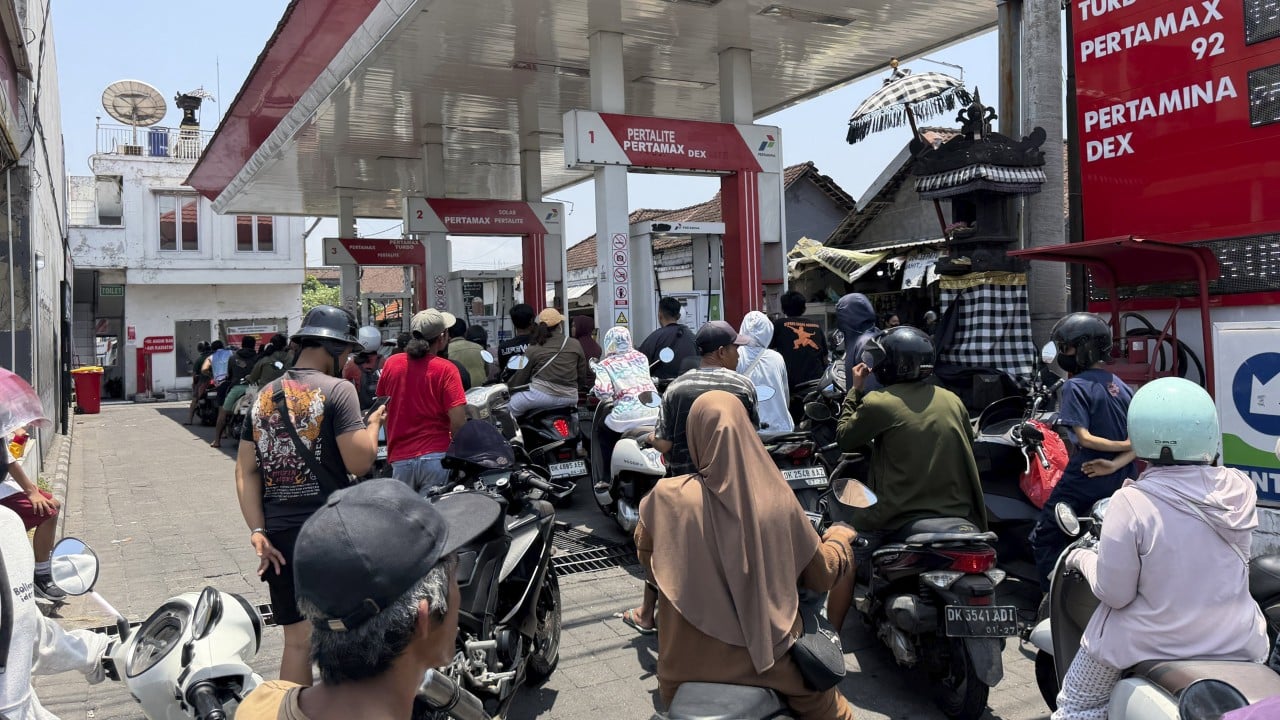
Long queues outside petrol stations in Bali during October 2026 were not caused by the island running out of gasoline, nor were they merely a fluke of bad weather and a stuck tanker anchor. They exposed a brittle supply chain built on subsidized pricing distortions, zero local refining capacity, congested island roads, and global shipping shocks.
Watch enough travel dispatches and you get the same simplified story. A ship had anchor trouble. Rain slowed things down. Scooters lined up around the block. That version of events fits neatly onto a social media caption, and it lets everyone off the hook too easily. Anyone who has spent years tracking energy logistics across Southeast Asia knows that when a single mechanical hiccup or a few hours of rough sea knocks an entire province sideways, the real failure happened long before the anchor jammed.
Bali sits at the end of a long, unforgiving maritime and road chain. Every drop of gasoline sold on the island has to arrive by sea—primarily through terminals at Sanggaran (also referred to as Pesanggaran) near Denpasar and Manggis in Karangasem—before moving overland by tanker truck to retail stations. When crude oil prices surged past $100 a barrel and geopolitical tensions rattled Middle Eastern shipping lanes in the autumn of 2026, the margin for error shrank to almost nothing. A delay that might be absorbed effortlessly in a well-buffered market immediately rippled across Denpasar, Badung, Tabanan, Jembrana, Gianyar, and Karangasem.
Why a Single Bottleneck Crippled the Island
Bali has no oil refinery of its own. That structural fact is easy to overlook until pumps run dry in Kuta, South Kuta, Ubud, or near Ngurah Rai Airport.
When fuel arrives at a coastal terminal, storage capacity and berthing schedules dictate how fast product moves. If a vessel runs into an anchor malfunction or adverse weather delays unloading, the buffer between incoming marine supply and outbound truck dispatch tightens fast. Even if reserves at the terminal level do not hit zero, retail stations can empty out rapidly when daily turnover is measured in thousands of kiloliters—with Pertamina Patra Niaga noting Pertalite consumption around 2,200 kiloliters a day across Bali.
Once trucks leave the terminal, they face another old enemy. Bali's road network was never built for the sheer volume of motorbikes, tour vans, delivery riders, and private cars crowding its arteries today. A fuel truck inching through gridlock in South Bali or around Denpasar is not just burning time; it is losing delivery cycles per shift. Fewer cycles per day mean fewer topped-up underground tanks by evening, especially when stations are trying to keep pace with commuter and tourism traffic simultaneously.
Officials moved quickly to bring in extra tanker shipments—tens of millions of liters across multiple waves—and expanded 24-hour operations at dozens of stations while reorganizing delivery routes toward the hardest-hit queues. Those emergency moves helped stabilize the immediate crunch. Yet emergency tanker surges treat symptoms rather than redesigning an island logistics model that relies on tight timing and narrow chokepoints.
The Subsidy Trap Behind the Queues
Supply chain friction alone rarely creates multi-hour or overnight waits unless price signals are pulling demand in one direction. That is where state fuel policy enters the picture.
In Indonesia, Pertalite (RON 90) carries government subsidies, making it substantially cheaper at the pump than non-subsidized grades like Pertamax. When global oil markets tighten and non-subsidized fuel prices climb or feel out of reach for everyday budgets, price-sensitive motorists naturally gravitate toward subsidized fuel. Higher-income drivers, commercial operators, and tourists renting scooters or cars all feel the pull of cheaper fuel when costs elsewhere are rising.
Subsidies are politically popular for a reason. They cushion households and small businesses against global price spikes.
They also distort behavior. When a subsidized product is priced below its true replacement cost during a tight global market, demand expands right when supply is most constrained. Instead of price acting as a natural brake that rations scarce barrels, queues become the rationing mechanism. People wait eighty minutes—or since the night before in places like Bangli—not because fuel is nonexistent, but because the price gap makes waiting worthwhile.
A subsidized fuel price fixes the cost at the pump, but it does not fix the physics of ships, trucks, and storage tanks.
Once rationing happens by queue rather than price, panic buying takes over. Motorists who normally refuel at a quarter-tank start topping off at half-tank "just in case". Delivery drivers and gig workers whose livelihoods depend on staying on the road have every rational incentive to line up early. A manageable dip in deliveries turns into a self-reinforcing rush that drains stations faster than dispatchers can rebalance routes.
Rationing, Hoarding, and Street-Level Fallout
When queues spill onto main roads and stations run dry, authorities are forced into blunt administrative fixes. During the October 2026 crunch, officials rolled out an odd-even license plate rule for buying subsidized Pertalite on specific dates, paired with purchase caps—such as limits of three liters for motorcycles and 20 liters for cars—alongside police escorts for fuel trucks and military support.
On paper, odd-even restrictions and volume caps look orderly. In practice on the ground, enforcement is messy. Drivers with two vehicles or flexible schedules adjust their timing, stations face confusion at the pump, and motorists who miss their assigned day still need to get to work, school, or client meetings. When an official station runs out or restricts volume, an informal shadow market inevitably tries to fill the gap.
During the disruption, police cracked down on individuals reselling Pertalite in plastic bottles—including listings on Facebook Marketplace at steep markups—and moved against hoarding of subsidized fuel. Street-side bottle sales, known locally as bensin eceran, are a familiar sight across Indonesia, but during a shortage they become a flashpoint for price gouging, safety hazards, and frustration among residents who see scarce subsidized stock diverted out of normal retail channels.
- Commuters and gig workers absorb the sharpest daily hit because skipping a shift or waiting hours in line directly cuts income.
- Small businesses and delivery services face missed windows and higher operating friction when transport slows down.
- Tourists and rental operators feel the disruption through slower transfers, longer transit times, and occasional pump closures, even when hotels and attractions themselves remain open.
- Traffic safety deteriorates when long lines of scooters and cars jut out beside moving traffic on narrow roads.
Provincial authorities even went so far as to order temporary shifts to remote work and online classes for several days to take pressure off roads and fuel demand. That step underscores how quickly a fuel bottleneck turns into a broad civic and economic slowdown on an island where road transport carries almost everything.
What Everyone Misses About Bali's Vulnerability
Much of the commentary around the shortage framed it as a temporary blip or a simple test of island logistics. Both readings miss deeper structural tensions playing out across Indonesia's energy sector.
First, energy policy in Jakarta is constantly balancing fiscal restraint, import procurement rules, and domestic stability. Shifts in fuel import oversight and procurement mechanisms—such as moves to revamp energy import roles and tighten oversight ahead of peak holiday travel—show how actively policymakers are wrestling with supply security and subsidy costs. When global markets swing, provincial terminals like Sanggaran and Manggis sit right at the receiving end of national supply allocations and maritime scheduling.
Second, Bali's growth model concentrates massive seasonal and year-round mobility onto a compact landmass. Every visitor who rents a scooter, books a private car, or orders food delivery adds incremental load to a fuel and road system that already runs hot. A supply chain tuned for "normal" average demand has very little slack when tourism picks up, holidays approach, or weather kicks up swells in surrounding waters.
Third, alternative transport is often pitched as an easy long-term escape hatch, whether through electric motorcycles or cleaner fuels. Electric two-wheelers and broader clean-energy initiatives are moving forward in policy circles, yet electrifying millions of daily trips on a congested island requires grid reliability, charging infrastructure, and consumer affordability that do not appear overnight. Until fleet electrification reaches real scale, liquid fuels—and specifically affordable gasoline—remain the lifeblood of Bali's daily movement.
Where the Pressure Points Remain
Even after emergency tankers arrive and queues shorten, the underlying pressure points do not vanish. Weather in the archipelago remains unpredictable, maritime routes carry geopolitical and operational risks, and holiday travel surges test distribution discipline every single year.
Tighter oversight of gas station operators, anti-hoarding enforcement, and better coordination between terminal dispatchers and traffic authorities can smooth out future spikes. None of those measures, however, changes the core arithmetic of an import-dependent island subsidizing high-demand fuel while roads stay choked.
For residents, business owners, and travelers watching Bali's pumps, the real lesson of the crisis is straightforward: never treat a full tank or an open station as guaranteed during supply shocks or peak travel windows. Refuel early rather than running on fumes, keep an eye on official distribution updates rather than viral queue videos, and recognize that on an island without a refinery, a small kink at sea can turn into a big jam on land.