Nobody is actually "in charge" when the pope is unconscious. That sounds like a plot twist, right? Yet canon law leaves almost zero room for a vice-pope or a formal regent when a living pontiff loses consciousness or becomes medically incapacitated.
Unlike a president or prime minister who hands powers to a deputy during surgery, the papacy isn't a delegable corporate office with an acting CEO waiting in the wings. Supreme authority over the Catholic Church and absolute sovereign power over Vatican City State belong personally to the Bishop of Rome until death or a valid resignation. When a pope is unconscious and unable to govern, the Church enters a legal and practical gray zone that makes many canon lawyers sweat.
Look at the upper windows of the Apostolic Palace from Saint Peter's Square, and you're looking at the nerve center of a global institution with over a billion baptized Catholics and a tiny sovereign city-state. When illness strikes behind those walls, routine administration keeps moving through top aides, while big decisions simply freeze.
Why There Is No Acting Pope in Canon Law
People constantly assume the Cardinal Secretary of State or the Camerlengo steps in whenever the pope can't speak, sign decrees, or make appearances. Honestly, that's a myth born from TV thrillers and confused comparisons with secular governments.
Under Catholic canon law, the papacy is tied directly to the person holding the office. There is no constitutional provision for "acting" supreme papal power while the pope is still alive. A cardinal can't wake up after a sudden stroke or an anesthesia-heavy operation and start issuing apostolic constitutions in the pope's name.
Why? Because canonical authority is viewed as personal to the Roman Pontiff. If you let an aide exercise full supreme jurisdiction on behalf of an unconscious pope, you blur the line between ordinary administrative execution and supreme governance. Canonists have debated this tension for centuries, and the church has deliberately avoided creating a permanent "deputy pope" who might rival papal authority.
In day-to-day reality, though, things don't come to a complete standstill. Let's separate three distinct layers that people usually mash together:
- Supreme Church governance: Decisions reserved to the pope personally—such as appointing bishops, canonizing saints, changing major discipline, or issuing encyclicals—are effectively paused unless the pope has already put specific instructions or prior approvals in place.
- Vatican City State administration: Routine governance of Vatican City's laws, public services, and civil operations is handled by Vatican officials under established norms, yet major sovereign acts tied to the pontiff wait.
- Curial routines: Heads of dicasteries—the Vatican departments—keep ordinary daily business running within their existing mandates, without making major policy shifts on their own.
Notice how messy that gets during a prolonged coma or cognitive decline. If a pope isn't dead and hasn't resigned, the throne isn't vacant (sede vacante), so the emergency rules for electing a new pope don't trigger. Yet the pope isn't actively governing either.
What Popes Actually Did When Illness Struck
History gives us real examples of how popes and their inner circles handled severe illness, hospital stays, and incapacity. Theory only gets you so far; real crises expose every friction point.
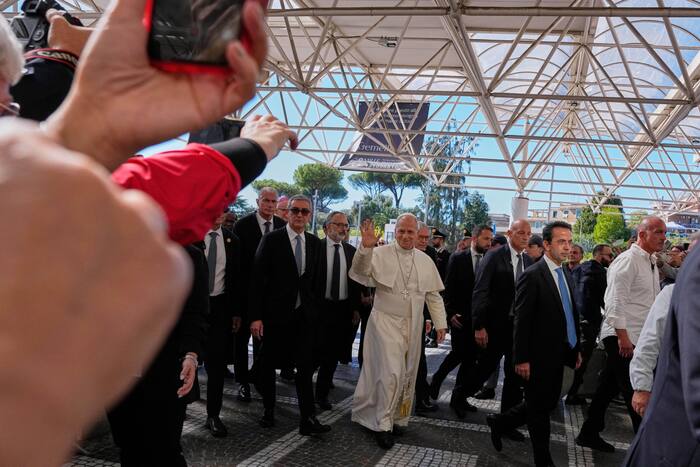
In 1981, after surviving an assassination attempt and undergoing major abdominal surgery at Rome's Gemelli Hospital, Pope John Paul II faced recovery and hospital care while millions watched. Later in his pontificate, especially in his final years marked by Parkinson's disease and declining health, public appearances grew shorter, aides read prepared remarks, and schedules narrowed sharply. Even then, the Vatican insisted the pope remained in charge and resisted speculation about incapacity.
Earlier, Pope John XXIII's final illness in 1963 showed how intense public scrutiny becomes when a pontiff is gravely ill inside the Apostolic Palace. Medical bulletins, prayers in St. Peter's Square, and quiet administrative continuity defined the days before his death.
What's the biggest mistake observers make during these moments? Assuming secrecy equals a coup or a secret regency. Usually, what looks like intrigue from the outside is a mix of medical privacy, strict protocol, and bureaucratic caution. Senior officials are terrified of overstepping their authority, so they tend to defer major calls rather than invent new powers.
Still, historians and canon lawyers have pointed out a real vulnerability when a pope experiences gradual cognitive decline or sudden unconsciousness without clear medical transparency. Who decides whether a statement or signature truly reflects the pope's free, informed will? Canon law sets high standards for valid acts—especially a resignation, which must be completely free and properly manifested—so ambiguity around mental clarity is no small matter.
Key Officials People Confuse With a Regent
When headlines ask who runs the Vatican during a health scare, three names pop up almost every time. Each has an important role, and none of them is a temporary pope.
The Cardinal Secretary of State
Think of the Secretary of State as the pope's chief diplomatic and political coordinator, not a prime minister with independent supreme power. During a pope's illness, this cardinal coordinates communication, manages diplomatic channels, and keeps Vatican offices aligned on routine matters. He doesn't inherit papal supremacy when the pope is unconscious.
The Camerlengo of the Holy Roman Church
Many folks think the Camerlengo takes over whenever the pope is incapacitated. Wrong. The Camerlengo's signature moment comes after the pope dies (or when the papacy becomes vacant), when he officially verifies the death and oversees the administration of Church property and temporal goods during the sede vacante. While the pope is alive but unconscious, the Camerlengo isn't running the show.
The Pope's Personal Secretary and Doctors
In practical terms, the people closest to the bedside—personal secretaries, physicians, and trusted aides—control access, information flow, and daily logistics. That doesn't give them legal authority over the Church, of course. Yet in any high-stakes illness, controlling access and timing of public updates shapes how the outside world perceives what is happening.
Where Canon Law Feels Incomplete
If you're looking for a neat, modern "25th Amendment" style rulebook inside the Code of Canon Law for an unconscious pope, you won't find one. Canon law provides clear rules for a sede impedita—a situation where a diocesan bishop is prevented by captivity, banishment, or incapacity from exercising his office—but the Roman Pontiff sits in a unique legal category.
That gap has sparked serious discussion among canonists over the years. What if a pope suffers severe brain injury and remains unconscious for months or years? Resignation requires personal consent; you can't force a pope to resign, and an unconscious person can't freely sign a resignation. Leaving governance in limbo for an extended period tests both legal precision and pastoral practicalities.
At the same time, changing the rules carries its own risks. Create a formal mechanism to declare a living pope unfit or transfer his powers, and critics worry it could turn medical diagnoses into political weapons inside the Curia. That's why reform proposals remain cautious and debated rather than settled law.
How to Follow Vatican Health News Without Falling for Rumors
If you follow news from Rome during a papal hospitalization or health scare, a few practical habits will save you from bad takes and sensational rumors:
- Check the official source first: Look at official dispatches from the Holy See Press Office rather than anonymous social media accounts claiming inside leaks from the Apostolic Palace.
- Watch the exact legal language: Notice whether bulletins describe routine recovery, temporary rest, or actual inability to carry out engagements, and remember that sede vacante applies only when the see is vacant, not merely when the pope is unwell.
- Separate routine operations from supreme acts: Expect Vatican offices and embassies to keep functioning normally while major papal decisions—like appointments or decrees—may simply wait.
- Read canon law commentary carefully: When commentators debate incapacity or resignation, check whether they're citing actual provisions of the Code of Canon Law or speculating on hypotheticals.