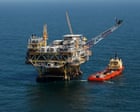
The Trump administration is moving to trigger a rare and aggressive legal mechanism known as the Endangered Species Committee—better known in Washington circles as the "God Squad"—to effectively sign a death warrant for the Rice’s whale. By invoking national security as a justification for unfettered oil and gas expansion in the Gulf of Mexico, the White House is attempting to bypass decades of environmental law that currently forces energy companies to slow their tankers and muffle their drills.
This is not a routine regulatory rollback. It is a calculated use of a 1978 amendment to the Endangered Species Act (ESA) that allows a high-level committee of cabinet officials to determine that the economic or security benefits of a project outweigh the very existence of a species. The Rice’s whale, a 60,000-pound leviathan found only in the Gulf, has an estimated population of just 51 individuals. Under current rules, the oil industry must navigate a "Vessel Slowdown Zone" at 10 knots to avoid lethal strikes. The administration’s new push argues that these precautions are an intolerable burden on energy independence during a period of global volatility. Don't forget to check out our previous post on this related article.
The Mechanics of Mandated Extinction
The "God Squad" consists of seven members, including the Secretaries of Agriculture, Interior, and the Army, along with the heads of the EPA and NOAA. For an exemption to pass, five of the seven must vote in favor. This committee has only been convened three times in the last 50 years. Usually, it is a last resort for specific, localized infrastructure like a dam or a timber harvest.
What makes the 2026 push different is the scale. Instead of seeking an exemption for a single oil rig or a specific pipeline, the Department of Justice is arguing for a blanket exemption for all federal oil and gas activities across the entire Gulf. This "God Squad" maneuver effectively seeks to "de-risk" the Gulf for the next 30 years of extraction by removing the legal standing of the whales and sea turtles that inhabit the lease blocks. If you want more about the background of this, NPR offers an in-depth breakdown.
The administration’s argument hinges on a specific, never-before-used clause: the national security exemption. Defense Secretary Pete Hegseth recently filed documents suggesting that any delay in Gulf energy production constitutes a threat to the nation’s defense readiness. Critics argue this is a legal "trojan horse." If the committee accepts that general energy production is a security matter, it creates a precedent where the ESA can be ignored for any industry deemed essential to the state.
The Science of the Strike
To understand why the oil industry wants this exemption, you have to look at the physics of a whale strike. Rice’s whales spend their nights hovering just below the surface in a state of rest. They are invisible to radar and often to the naked eye in heavy swells.
$$F = m \cdot a$$
When a 150,000-ton tanker moving at 20 knots hits a stationary 30-ton whale, the force is catastrophic. At 10 knots, a whale has a chance to dive, and a ship has a chance to maneuver. But in the world of high-stakes offshore logistics, time is money. A 50% reduction in speed across a 100-mile transit zone adds hours to every trip, compounding into millions of dollars in lost efficiency across a fleet.
Beyond the physical collisions, the industry is battling "acoustic masking." Seismic airguns used to find oil deposits blast the seafloor with sound pulses every ten seconds. These pulses can reach 250 decibels—louder than a jet engine at takeoff. For a species that relies entirely on low-frequency sound to find mates and food in the dark depths, this noise is the equivalent of living in a permanent construction zone.
The Economic Counter-Argument
While the administration frames this as a choice between "whales or the economy," the reality is a gray landscape of competing interests. The recreational boating and fishing industry, a $230 billion powerhouse, is also at the table. They fear that if the "God Squad" grants a total exemption to Big Oil, the burden of conservation will shift entirely to small boat owners.
- Commercial Shipping: Faces increased insurance premiums if collision risks aren't managed.
- Energy Sector: Claims that ESA "jeopardy" findings could freeze $5 billion in new ultra-deepwater projects.
- Tourism: Coastal economies in Florida and Alabama rely on the ecological health of the Gulf, which was nearly decimated by the 2010 Deepwater Horizon spill.
The administration’s strategy is to bypass the standard trial-like hearings presided over by administrative law judges. By fast-tracking the committee meeting to March 31, they are attempting to reach a verdict before environmental groups can complete their discovery in the D.C. District Court.
The Legal Deadlock
We are seeing a fundamental shift in how the executive branch interacts with the judiciary. For decades, the "God Squad" was seen as a "break glass in case of emergency" tool that was too politically toxic to use. By normalizing its use for broad industrial categories, the administration is effectively rewriting the ESA without going through Congress.
If the committee votes to exempt the Gulf, it will trigger an immediate and unprecedented constitutional challenge. The courts will have to decide if a cabinet-level committee can unilaterally decide that a species' extinction is a "reasonable" price for national security. This isn't just about 51 whales in the Gulf. It is about whether the law protects the environment, or merely manages its decline.
The meeting on March 31 will be livestreamed, a concession made to satisfy public-access requirements. However, the "national security" documents justifying the move remain classified. The public will see the vote, but they will not see the evidence.
Would you like me to track the specific voting records of the committee members following the March 31 hearing?