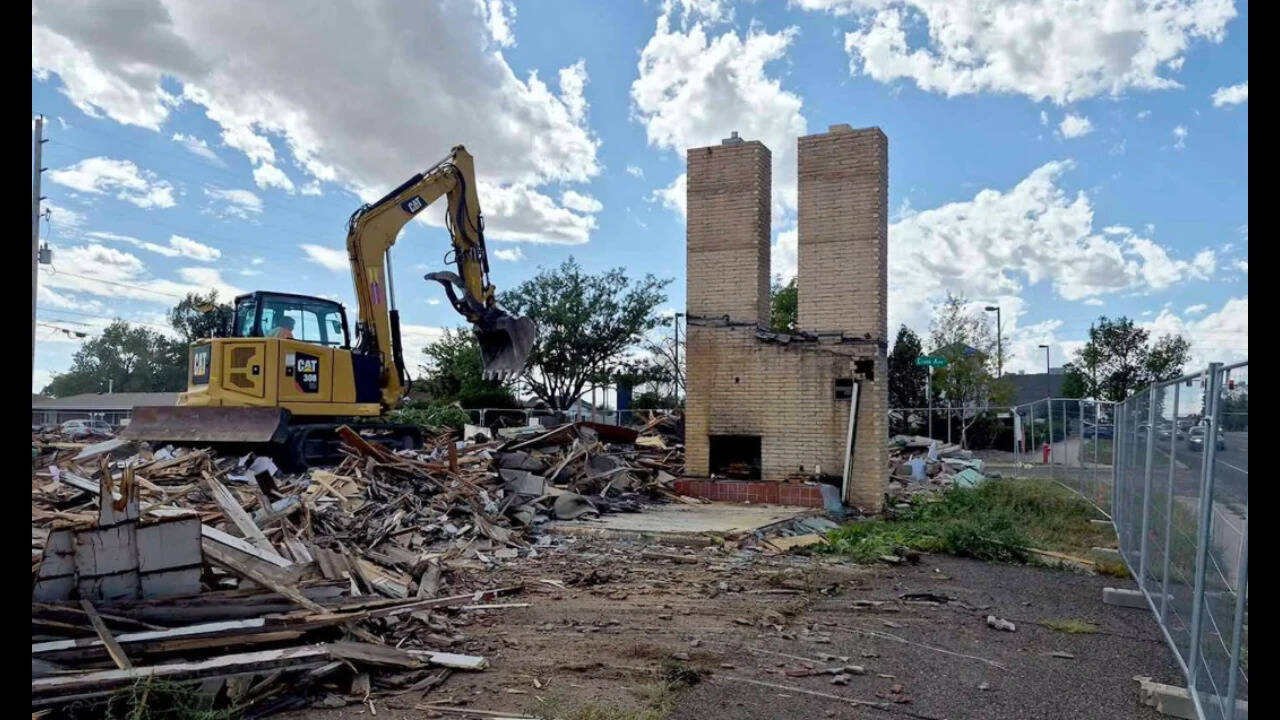
The demolition of Cheyenne’s historic Twin Chimneys Motor Court compressed nine decades of roadside architectural history into thirty seconds of heavy machinery work, clearing the lot for a high-speed corporate coffee drive-thru. While local preservationists lamented the loss of a physical marker tied to the historic Lincoln Highway, public sentiment routinely misdiagnoses these transformations as cultural failures. They are, instead, predictable outcomes of land-use economics. When urban real estate transitions from low-density hospitality assets to high-velocity retail footprints, it illustrates a strict economic calculus where sentimental value cannot compete with square-foot revenue optimization.
Analyzing the mechanics of this transformation requires breaking down the core drivers that dictate real estate obsolescence along legacy transit corridors.
The Revenue Velocity Gap
Traditional motor courts built along mid-century transit routes operated under a distinct economic model. They captured transient vehicular traffic seeking overnight lodging. Over decades, shifts in interstate highway placement, traveler speed, and hospitality standards rendered the physical layout of small-scale motor courts obsolete.
A drive-thru beverage kiosk operates on a fundamentally different revenue-per-square-foot metric than a legacy motel.
- High-volume retail models eliminate interior customer dwell time, maximizing transaction throughput per minute.
- The operational footprint requires minimal vertical structure, reducing long-term maintenance liabilities compared to multi-room lodging facilities.
- Corporate backing from private equity firms provides institutional capital that allows rapid site acquisition and immediate capital deployment.
When a property sits along an established commercial artery like East Lincolnway in Cheyenne, its assessed land value eventually eclipses the operating income generated by an aging, undercapitalized structure. The property owner faces a binary choice: inject massive capital into adaptive reuse or liquidate the asset to a commercial developer.
The Structural Limitations of Historic Preservation
Preservation advocacy groups frequently encounter systemic bottlenecks when attempting to protect roadside vernacular architecture. These limitations stem from procedural and financial asymmetries.
The first constraint is timing. Preservation initiatives typically mobilize only after a property has been designated for sale or demolition, often signaled by the arrival of perimeter fencing. By this stage, municipal zoning clearances have been secured, and commercial contracts are legally binding.
The second constraint is economic subsidization. While cultural landmarks generate non-monetary civic value, historic preservation lacks a self-sustaining funding mechanism for commercial corridors outside major tourist epicenters like Route 66. Without state or private grants dedicated to retrofitting mid-century motor courts into viable commercial spaces, owners shoulder the total financial burden of conservation. Expecting private landowners to absorb opportunity costs for the sake of public nostalgia ignores the basic realities of asset management.
The Macroeconomic Mechanics of Corridor Redevelopment
The replacement of the Twin Chimneys with a standardized retail beverage stand reflects a broader national trend: the homogenization of commercial corridors. As institutional capital enters the small-format retail sector, standardized prototypes replace idiosyncratic local architecture.
Standardized footprints minimize construction variance and regulatory friction. A modular drive-thru design can be engineered, permitted, and erected in a fraction of the time required to structurally rehabilitate a 1930s or 1950s motor court. The speed of execution reduces the holding costs for the developer, tilting the financial scales decisively away from preservation.
Furthermore, consumer behavior along commuter corridors prioritizes speed and convenience over historical aesthetics. The modern motorist demands frictionless transactions, a structural requirement that legacy physical plants cannot efficiently accommodate.
Strategic Outlook for Municipal Heritage Assets
Cities facing the continuous erosion of their mid-century and early automotive heritage must shift from reactive protest to proactive policy design if they intend to retain architectural diversity. Relying on emotional appeals after a demolition permit is filed guarantees failure.
Municipalities must establish transfer of development rights programs, historic overlay incentives, or density bonuses that make adaptive reuse economically competitive with ground-up commercial redevelopment. Unless structural financial incentives bridge the revenue gap between preservation and replacement, the economic logic of the marketplace will continue to favor the bulldozer.