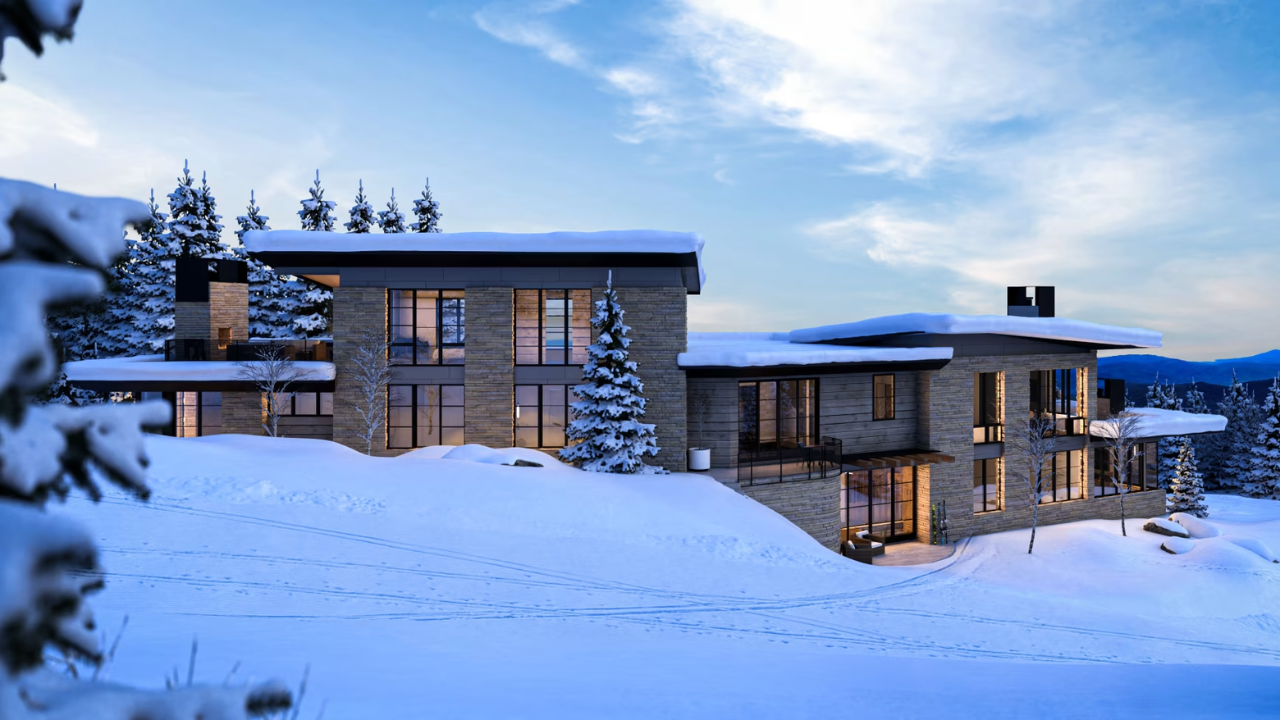
Everybody loves a good luxury real estate horror story. The headline writes itself. A developer drops six million bucks on a patch of dirt in Park City, spends four years dragging concrete up a mountain, and now everyone is clutching their pearls over the carrying costs, the supply chain delays, and the brutal reality of high-end mountain construction. The narrative is always the same. Greed meets gravity, the market bites back, and rich people lose sleep over cost overruns.
It is a comfortable story for people who do not understand balance sheets. It is also completely wrong.
Focusing on the sticker price of the land and the sweat of construction is a rookie mistake. I have watched developers blow millions on mountain infill projects because they treat luxury real estate like a standard residential flip with extra square footage. They fall in love with the view, ignore the municipality code enforcement, and miscalculate the carrying velocity of capital.
That six-million-dollar lot was never an investment. It was a liquidity trap disguised as a trophy.
The Myth of the Custom Build Premium
The mainstream financial press loves to talk about luxury construction costs as if they exist in a vacuum. They point to labor shortages, soaring material prices, and architectural vanity projects as the culprits behind bloated budgets. They treat these overruns as anomalies, bugs in an otherwise functional system.
They are features, not bugs.
When you buy raw land in a Tier One resort market like Park City, you are not purchasing a blank canvas. You are buying a regulatory obstacle course. Every month your architectural plans sit on a zoning board desk, your capital bleeds. At eight percent interest, a six-million-dollar land loan burns forty thousand dollars a month just in carrying costs before a single excavator touches the dirt. Add in architectural retainers, engineering surveys, and HOA compliance fees, and you are bleeding half a million dollars a year before pouring concrete.
The amateur developer thinks they are building a twelve-million-dollar masterpiece that will command a twenty-percent margin. The professional knows that custom residential construction is a bespoke manufacturing nightmare with zero economies of scale. You cannot assembly-line a custom cantilevered fireplace or source imported limestone without getting squeezed by specialty subcontractors who know you are trapped in the middle of a build.
Stop looking at the construction timeline as a measure of progress. Measure it as a measure of capital destruction.
Why Comps are a Dangerous Fiction
Appraisers rely on comparable sales to value property. In a normal subdivision with cookie-cutter tract homes, comps work. In high-end custom mountain real estate, comps are a fairy tale told to banks to justify reckless lending.
If a house two doors down sold for fifteen million dollars last year, it proves exactly one thing: someone with more money than sense paid fifteen million dollars for that specific collection of timber and glass at a specific moment in economic history. It does not mean your house, built with different floor plans, different views, and different structural engineering anomalies, is worth a single penny more or less.
Luxury real estate at this tier is an illiquid, highly idiosyncratic asset class. There is no public order book. There is no bid-ask spread you can check on a terminal. There is only a very small pool of ultra-high-net-worth buyers who care more about ego gratification than square-foot valuations.
When you build a custom spec home on a six-million-dollar lot, you are making a massive, unhedged directional bet on the psychological state of a dozen anonymous billionaires four years into the future. If macro liquidity tightens, if equity markets take a hit, or if tax laws shift, your buyer pool evaporates overnight. You are left holding an architectural monument that costs eighty thousand dollars a year just to heat and insure.
The Liquidity Premium Nobody Talks About
Liquidity is the oxygen of real estate. The moment you sink cash into raw dirt and four-year construction cycles, you are locking yourself out of every other productive asset class on earth.
Consider the opportunity cost. If you take six million dollars and deploy it into private equity, high-yield corporate debt, or even an aggressive equity portfolio, you generate predictable cash flow with zero project management overhead. Tie that same capital up in a mountain development project, and you are dealing with county inspectors, drywall shortages, and concrete truck scheduling conflicts.
The smart money figured this out decades ago. They do not buy raw land to build spec homes. They buy cash-flowing commercial assets or they purchase finished product at a discount when overextended developers are forced to liquidate.
The developer who bought that Park City lot didn't execute a masterclass in luxury development. They ran an expensive vanity project that locked up millions in dead equity while inflation and debt service slowly ate away at their margins.
If you want to win in high-end real estate, stop trying to build the most expensive house on the mountain. Find the person who already did, watch them panic as their liquidity dries up, and buy it from their lender for fifty cents on the dollar.