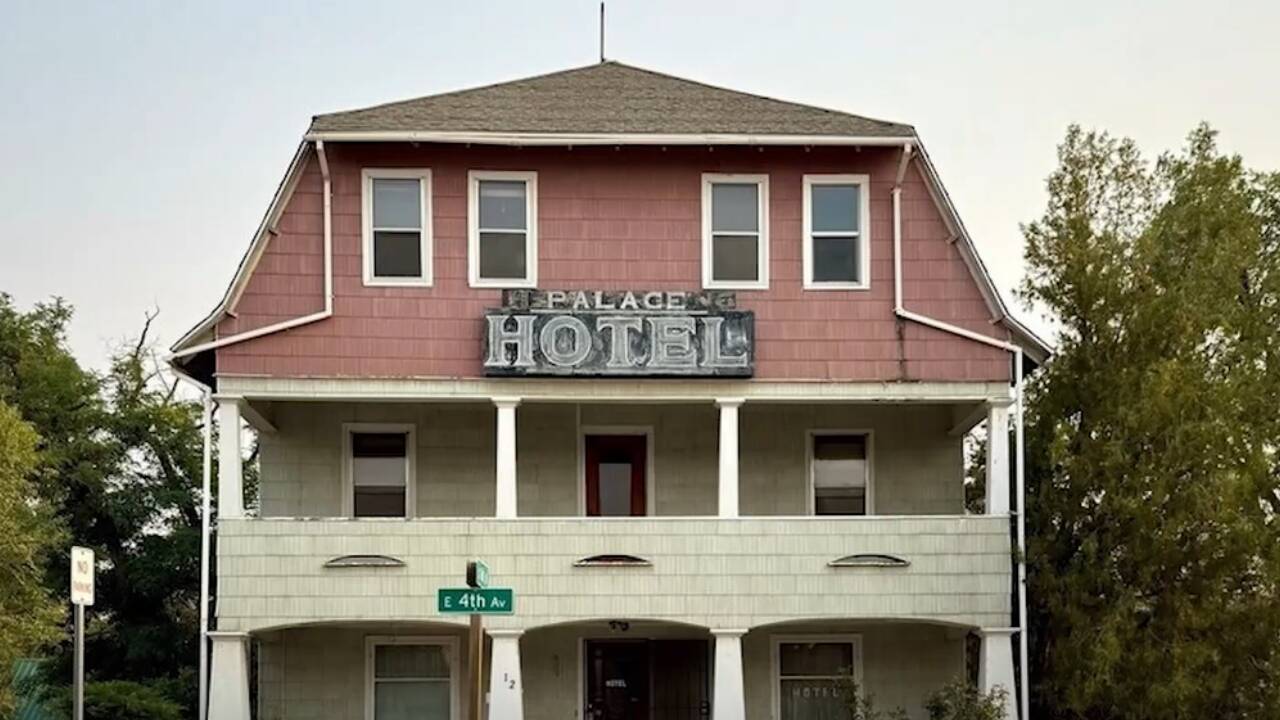
Commercial properties built prior to the First World War operate under a distinct economic paradigm characterized by escalating operational friction and inelastic capital requirements. When a twenty-two-room hotel constructed in 1917 enters the marketplace, prospective buyers evaluate the asset through a specialized lens that contrasts standard real estate underwriting with historical preservation overhead. The financial mechanics governing a century-old boutique property dictate that initial acquisition costs represent only a fraction of the total capital expenditure lifecycle.
The Capital Expenditure Matrix For an alternative view, check out: this related article.
Underwriting an institutional-grade historic asset requires mapping expenditures across three distinct vectors: structural remediation, regulatory compliance, and brand positioning.
- Structural Remediation: Centenarian buildings typically feature legacy materials, including knob-and-tube wiring, cast-iron plumbing mains, and uninsulated masonry envelopes. Replacing these components without violating historic preservation easements creates an immediate capital drain that standard contingency funds fail to cover.
- Regulatory Compliance: Modern building codes regarding fire suppression, Americans with Disabilities Act accessibility, and seismic retrofitting clash directly with the architectural constraints of 1917 construction. Adapting narrow egress stairwells and low-ceiling basements for modern HVAC ductwork demands bespoke engineering solutions.
- Brand Positioning: Operating twenty-two keys places an asset in a challenging operational band. It lacks the economies of scale inherent to large-format flags while bearing higher fixed administrative overhead per available room than independent micro-inns.
The Revenue Concentration Dilemma Further coverage on the subject has been shared by The Motley Fool.
Properties of this scale cannot rely on diversified revenue streams such as convention spaces or high-volume food and beverage operations. Instead, top-line performance depends entirely on Average Daily Rate optimization rather than high occupancy.
Operating a low-room-count historic property introduces severe revenue volatility. Seasonality impacts micro-hotels disproportionately because a single adverse weather event or localized economic downturn wipes out monthly margin. To insulate against this, operators must engineer an experience-driven brand that commands a nightly tariff high enough to absorb a thirty percent structural vacancy rate.
Operational Margins and Labor Constraints
The labor model of a vintage boutique hotel diverges sharply from automated modern flagships. Guest expectations for heritage properties run parallel to luxury service levels, necessitating high staff-to-guest ratios. Front desk management, concierge services, and specialized historic facility maintenance create a fixed labor cost floor.
When analyzing the net operating income of a 1917 asset, the primary value driver is not labor optimization, but asset yield management. Traditional hotel valuation relies on Revenue Per Available Room metrics, yet historical assets require tracking the Cost Per Square Foot of Remediation against lifetime yield. Deferred maintenance compounds exponentially; ignoring a crumbling terra-cotta cornice or water-damaged timber framing for three fiscal cycles shifts the asset from a cash-flow-positive venture into a liability.
Acquisition Strategy and Risk Mitigation
Acquiring a historic lodging asset requires shifting focus from standard net present value calculations to operational stress-testing. Buyers must execute a multi-phase due diligence protocol that isolates environmental hazards, zoning variances, and tax credit eligibility. Historic rehabilitation tax credits can offset up to twenty percent of qualified rehabilitation expenditures, serving as a critical financial lever to bridge the gap between acquisition debt service and capital expenditure realities.
The viability of a century-old hotel rests on disciplined asset management rather than sentimental preservation. Operators who treat the physical structure as a dynamic machine rather than a static museum piece survive the margin compression that inevitably follows vintage hospitality ownership.
Allocate capital reserves strictly toward invisible infrastructure upgrades before investing in guest-facing aesthetics, ensuring the building's physical longevity underwrites its commercial value for the next generation.