The phone rings at 3:00 AM in Atlanta, Georgia. It is a specific kind of ring—urgent, persistent, stripping away the fog of sleep before the receiver even touches the ear. On the other end of the line, a voice from the Centers for Disease Control and Prevention delivers a message that shifts the global map.
Ebola is no longer just a headline from a distant continent. It has touched American citizens.
For most of us, viral outbreaks exist as abstract concepts, numbers on a digital dashboard, or shaky camera footage from communities thousands of miles away. We read the statistics—the mortality rates that hover terrifyingly between 50% and 90%, the days of incubation, the geographic boundaries of the quarantine zones. But statistics are cold. They lack a pulse. They fail to capture the sudden, icy grip of panic in a family’s chest when a loved one’s temperature spikes after a transatlantic flight.
To understand what is happening right now, look at a map not through the lens of geopolitics, but through the lens of human connection.
Imagine a hypothetical epidemiologist named Sarah. She spends her days tracking pathogens, looking at data points that represent real human lives. When news breaks that Americans are among those affected by a fresh Ebola outbreak, Sarah does not just see a breach in containment. She sees the intricate web of global travel. A doctor volunteering in a crowded clinic overseas. An aid worker handing out clean water. A journalist documenting the crisis. They are driven by empathy, operating on the front lines of human suffering. Then, a needle slip occurs. Or a microscopic tear in a protective suit.
Suddenly, the firewall between safety and catastrophe vanishes.
The public reaction to infectious diseases usually follows a predictable, tragic script. First comes the distance—the comforting illusion that "it happens over there." We look at West Africa or the Democratic Republic of Congo and subconsciously treat the ocean as an impenetrable shield. But the modern world does not have shields. It has flight paths. It has interconnected supply chains.
When the C.D.C. confirms that American citizens have been exposed or infected, that comfortable distance collapses in an instant. The threat is suddenly inside the house, or at least sitting in an isolation ward at Emory University Hospital, just a few miles from suburban neighborhoods and bustling coffee shops.
Fear distorts reality. It makes us want to pull up the drawbridge, close the borders, and pretend we can isolate ourselves from the pain of the rest of the world. But history tells a completely different story.
During the major Ebola epidemic of 2014 to 2016, which claimed more than 11,000 lives across Liberia, Guinea, and Sierra Leone, the turning point did not come from isolationism. It came from confrontation. It came when global health organizations, backed by international governments, flooded the hot zones with resources, specialized personnel, and experimental treatments.
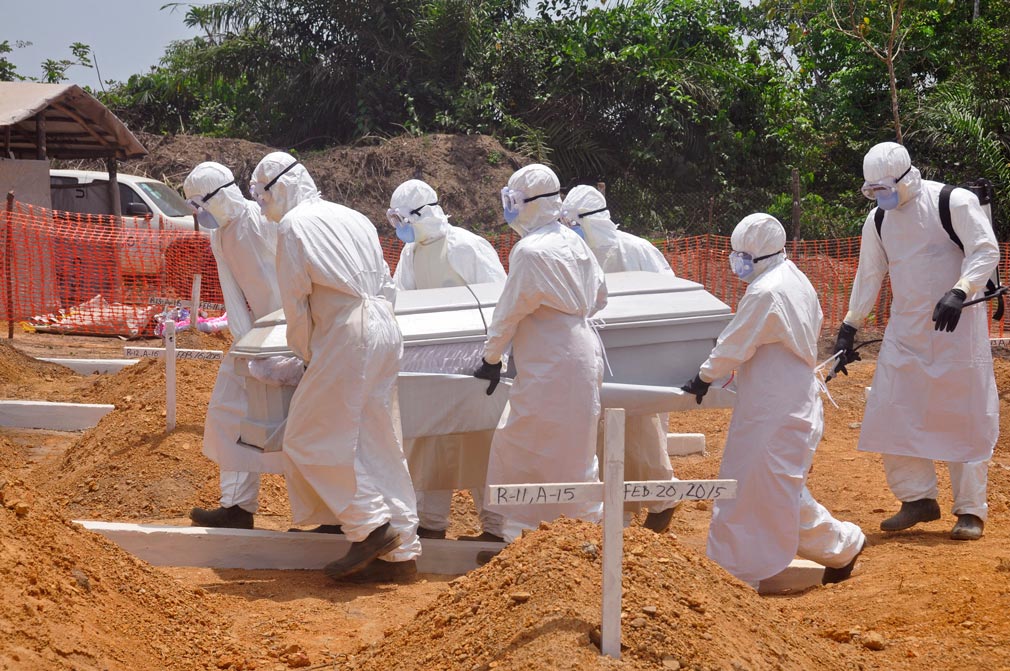
Consider the mechanics of the virus itself. Ebola is not an airborne phantom like influenza or the common cold. It does not drift through the ventilation system of a movie theater, waiting to infect hundreds of unsuspecting strangers. It requires direct contact with bodily fluids. It is a brutal, intimate predator. It exploits our most deeply human instincts—the urge to nurse a sick child, to comfort a dying parent, to wash the body of a deceased relative before burial.
That intimacy is precisely why the disease is so devastating to healthcare workers and families. The very act of caring becomes the vector of transmission.
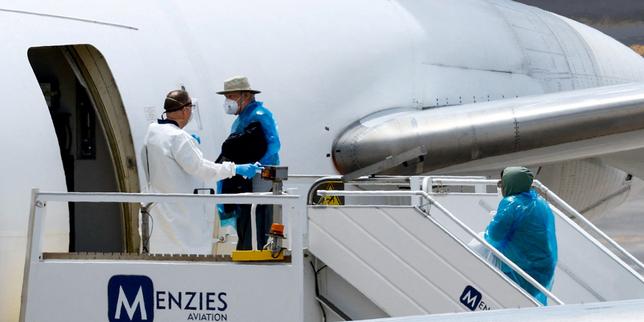
When an American doctor or nurse contracts the virus abroad and is medically evacuated back to United States soil, the logistics resemble a military operation. Specialized Gulfstream jets equipped with aeromedical biological containment systems touch down on isolated tarmacs. Teams clad in positive-pressure suits guide the patient into biocontainment units designed with negative air pressure and strict waste-management protocols.
Every single movement is calculated. Every breath is filtered.
This level of response exists because our public health infrastructure understands a fundamental truth that the general public often forgets: you cannot fight a global fire by only throwing water on your own roof.
The anxiety that bubbles up in the comment sections of news sites when these announcements are made is understandable. People ask the obvious questions. Are we safe? Could this spark an outbreak in Chicago, New York, or Dallas?
The short answer is no, a widespread outbreak in a country with advanced medical infrastructure is highly unlikely. The long answer is more complicated, requiring us to acknowledge the fragility of our collective security. Our safety relies entirely on the rigor of our institutions, the transparency of our government, and the willingness of individuals to report symptoms without fear of stigmatization or abandonment.
If we treat the infected as pariahs, they go into hiding. If they go into hiding, the virus wins.
The true danger of the C.D.C.’s announcement does not lie in the immediate threat of a domestic epidemic. The danger lies in our psychological reaction to it. If the narrative becomes one of "us versus them," we lose the empathy required to defeat the virus at its source. We forget that the American aid worker fighting for their life in an Atlanta hospital is suffering from the exact same agonizing symptoms as the teenager in a rural village outside of Monrovia. The virus does not care about national identity. It does not recognize passports.
We stand at a crossroads every time a headline like this breaks. We can choose the path of panic, demanding walls and travel bans that ultimately cripple the international response and worsen the crisis abroad. Or we can choose the path of clear-eyed solidarity, recognizing that protecting the health of people in distant corners of the earth is the only viable way to protect the health of our own families.
Late at night, inside the glass walls of a biocontainment ward, the machines beep steadily. Monitors track a failing pulse, a fluctuating temperature, the desperate battle between a human immune system and a primordial pathogen. The patient inside is an American, but in that quiet, sterile room, stripped of context, they are simply a human being fighting to see the sunrise.
The thin pair of rubber gloves separating the patient from the nurse is the only barrier left between life and the abyss.