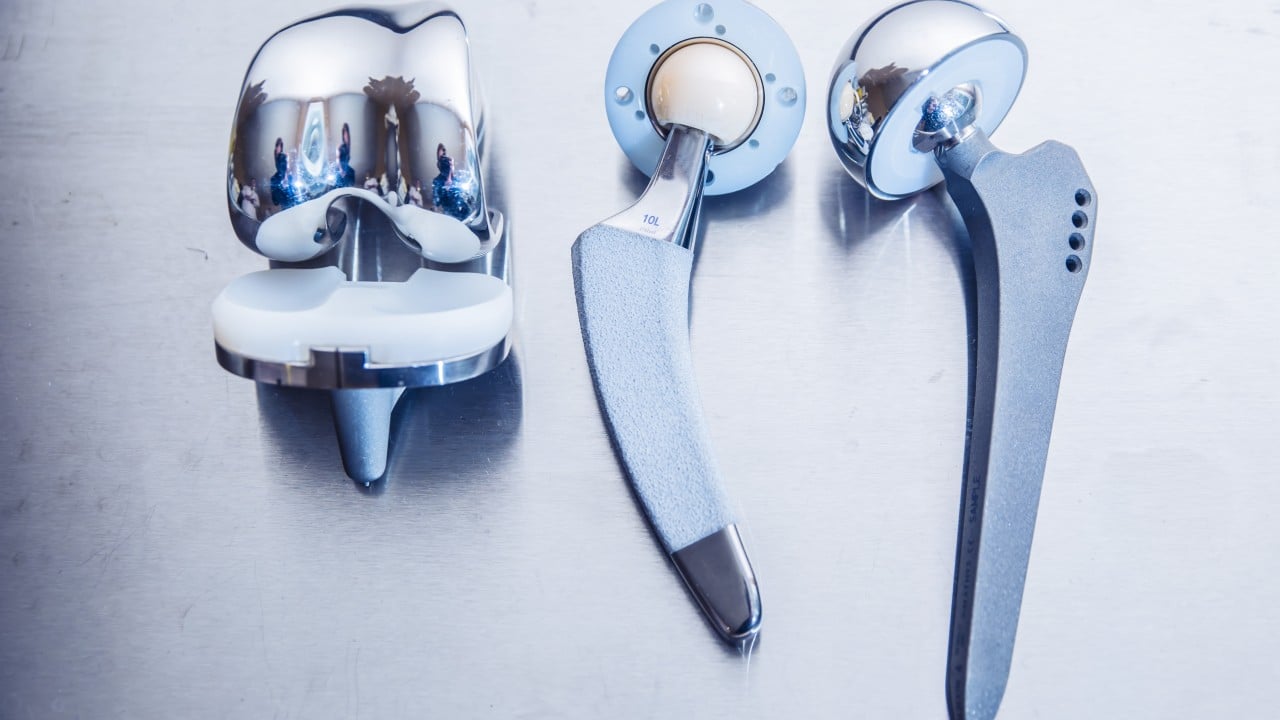
Biomedical implant failures are driven primarily by a singular, catastrophic event chain: bacterial adhesion, biofilm formation, and subsequent antibiotic-resistant infection. Traditional orthopedic and dental implants relying on commercially pure titanium or standard alloys (such as Ti-6Al-4V) possess inert surfaces that fail to actively deter bacterial colonization. When an implant surface becomes colonized, the resulting biofilm shields bacteria from systemic antibiotics and the host immune system, often necessitating surgical revision—a high-cost, high-morbidity outcome.
China’s recent development of a titanium-copper (Ti-Cu) sintered medical implant addresses this vulnerability not through surface coatings, but through fundamental bulk metallurgy. By integrating copper directly into the titanium matrix, the material leverages continuous, localized ion release to disrupt bacterial cell walls before a biofilm can anchor. This analysis deconstructs the thermodynamic, metallurgical, and biological mechanisms of this alloy, mapping its efficacy, systemic limitations, and commercial viability against current clinical standards.
The Tri-Layer Mechanism of Biofilm Prevention
To understand why a titanium-copper alloy outperforms standard materials, one must analyze the kinetics of the implant-tissue interface. The failure of traditional surface-treated implants lies in their vulnerability to wear; coatings flake or degrade over time. A homogenous Ti-Cu alloy introduces a self-renewing mechanism governed by three distinct layers of defense.
[Bulk Alloy: Ti-Cu Matrix] ──> [Controlled Ionization Pool] ──> [Active Cell Wall Disruption]
1. Thermodynamic Stability of the Passive Film
Titanium owes its biocompatibility to a naturally forming dioxide layer ($TiO_2$). When copper is alloyed into the matrix, it exists in two states: solid solution within the titanium grains and as intermetallic compounds ($Ti_2Cu$) precipitated along grain boundaries. Upon exposure to physiological fluids, the surface forms a modified passive film where copper ions ($Cu^{2+}$ and $Cu^+$) are micro-segregated. This configuration maintains the structural integrity of the corrosion-resistant titanium oxide layer while ensuring that copper ions are available at the outermost atomic layers.
2. The Controlled Ionization Pool
The primary failure mode of experimental copper-based medical devices has historically been cytotoxicity; excess copper kills healthy tissue. The Ti-Cu matrix solves this via controlled dissolution kinetics. The release rate of copper ions is dictated by the galvanic coupling between the alpha-titanium phases and the $Ti_2Cu$ precipitates. Because the precipitates are highly dispersed and sub-micron in scale, the galvanic current is minimized, forcing the release of copper ions to stay within a strict therapeutic window: high enough to kill microbes ($>0.1 \text{ ppm}$ locally) but below the threshold of human osteoblast toxicity ($<2.0 \text{ ppm}$).
3. Contact-Killing and Contactless Disruption
The antibacterial action operates via dual pathways:
- Direct Contact: Bacteria settling on the surface encounter exposed copper atoms. The positive charge of copper ions alters the negative electrochemical potential of the bacterial cell wall, causing physical rupture and cytoplasmic leakage.
- Micro-Environment Poisoning: Diffusing copper ions penetrate the bacterial cell membrane, generating localized Reactive Oxygen Species (ROS) via a Fenton-like reaction. These free radicals induce oxidative stress, lipid peroxidation of the membrane, and irreversible damage to bacterial DNA and RNA.
Metallurgical Engineering vs. Surface Coating Economics
The strategic advantage of this material is best understood through a structural cost-benefit framework comparing bulk alloys against traditional modification techniques like Plasma Electrolytic Oxidation (PEO) or Physical Vapor Deposition (PVD).
| Dimension | Bulk Ti-Cu Alloy | Surface-Coated Titanium (PVD/PEO) |
|---|---|---|
| Delamination Risk | Zero (Homogeneous material) | High (Shear stress at interface) |
| Manufacturing Complexity | High initial sintering, low post-processing | Low initial metallurgy, high secondary processing |
| Efficacy Lifespan | Indefinite (Proportional to wear) | Finite (Bounded by coating thickness) |
| Regulatory Path | Complex (New bulk material validation) | Moderate (Device modification framework) |
Surface coatings introduce a material discontinuity. The interface between a rigid titanium substrate and a modified surface layer represents a plane of high shear stress. During the mechanical loading of orthopedic implants—such as a femoral stem undergoing cyclic gait stresses—this interface is prone to micro-cracking and delamination. Once the coating delaminates, the underlying inert titanium is exposed, and the debris particles trigger osteolysis (bone loss).
The bulk Ti-Cu alloy eliminates this interface entirely. Because the antibacterial agent is distributed throughout the entire component, any mechanical wear or revision reshaping simply exposes a fresh, structurally identical layer of titanium-copper matrix with equivalent antibacterial potency.
The Biocompatibility Bottleneck: Quantifying the Cytotoxic Threshold
The deployment of a heavy metal alloy inside human bone marrow or dental arches requires strict adherence to metabolic limits. Copper is an essential trace element, metabolically managed by the liver via ceruloplasmin. However, local tissue tolerance is narrow.
The core challenge of the Ti-Cu implant design is optimizing the copper weight percentage. Studies indicate that a copper concentration below $3%$ by weight yields inconsistent antibacterial properties, particularly against virulent, biofilm-forming strains like Staphylococcus aureus and Pseudomonas aeruginosa. Conversely, concentrations exceeding $5%$ by weight alter the alpha-beta phase balance of the titanium alloy, increasing brittle intermetallic phases ($Ti_2Cu$) that reduce elongation-at-break and fatigue life.
Therefore, the mechanical-biological optimization function can be stated as:
$$\text{Optimize } \omega_{\text{Cu}} \quad \text{subject to} \quad \begin{cases} R_{\text{kill}} \ge 99% \ \text{Viability}{\text{osteoblast}} \ge 85% \ K{IC} \ge 50 \text{ MPa}\cdot\text{m}^{1/2} \end{cases}$$
Where $\omega_{\text{Cu}}$ is the weight fraction of copper, $R_{\text{kill}}$ is the bacterial reduction rate, $\text{Viability}{\text{osteoblast}}$ represents the survival rate of bone-forming cells, and $K{IC}$ is the fracture toughness of the alloy.
A failure to hit this metallurgical sweet spot results in one of two clinical failures: either an inert implant that permits infection, or a toxic implant that causes aseptic loosening due to osteoblast death.
Clinical Implementation Barriers and Regulatory Hurdles
While the material science of China's titanium-copper implant is sound, its path to global market dominance faces steep structural resistance.
Long-Term Galvanic Corrosion Profiles
Over a multi-decade lifecycle, the continuous micro-galvanic cell activity between the titanium matrix and copper precipitates risks accelerating the overall degradation of the implant. While initial tests show stable passivation, the behavior of this alloy under the cyclic fatigue of walking, combined with the acidic micro-environment created by localized inflammation (which drops pH from 7.4 down to 5.5), remains an unproven variable. Acidic environments accelerate copper ion dissolution, potentially spiking local concentrations into the cytotoxic zone.
The Regulatory Class III Classification Obstacle
Because this implant exerts a biological effect (antibacterial action via ion release), regulatory bodies like the FDA and EMA will likely evaluate it not merely as an osteoconductive device, but as a combination product or a Class III medical device requiring extensive human clinical trials. The regulatory pathway for a bulk change in implant chemistry is significantly more expensive and time-consuming than clearing an incremental modification of an existing alloy. This creates an adoption bottleneck that will delay commercial availability outside domestic markets for several years.
Strategic Recommendation for Orthopedic and Dental Manufacturers
The emergence of bulk antibacterial alloys shifts the competitive paradigm from post-manufacture surface modifications to fundamental metallurgical differentiation. To capitalize on this shift without incurring catastrophic regulatory or clinical risks, device manufacturers must execute a specific two-part strategy.
First, isolate the application of Ti-Cu alloys to high-risk, low-motion indications rather than load-bearing joint replacements. The initial deployment should target dental abutments and spinal fixation hardware (screws and rods). These applications benefit immensely from early-stage infection prevention, experience lower cyclic shear stresses than hip or knee prostheses, and minimize the volume of metal exposed to the bloodstream, mitigating systemic toxicity concerns.
Second, establish a dual-phase manufacturing pipeline. Rather than attempting traditional casting or forging—which causes macro-segregation of copper and degrades material toughness—utilize powder metallurgy and Selective Laser Melting (SLM) additive manufacturing. 3D printing allows for precise thermal management during cooling, enabling the creation of functionally graded implants. This architecture maintains a pure titanium core for maximum fatigue resistance while distributing the titanium-copper phases exclusively along the porous outer margins where bone ingrowth and bacterial competition occur. This targeted positioning reduces total copper mass while maintaining maximum anti-biofilm efficacy at the tissue interface.