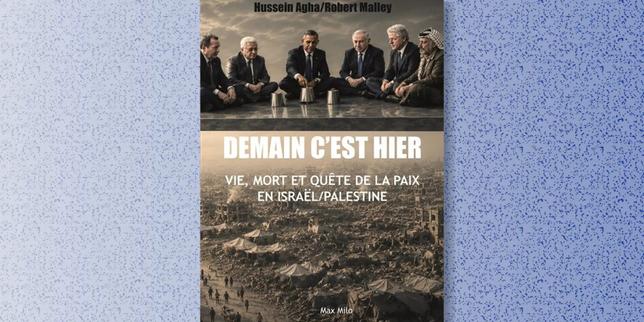
For three decades, the diplomatic architecture of the Middle East rested on a foundational fiction. Diplomats in Geneva, Washington, and Brussels routinely invoked the two-state solution as an inevitable destination, treating the peace process as a stalled engine that merely needed a jump-start rather than a total teardown. That language now reads like historical artifact. The events following October 7 shattered the diplomatic consensus that a sovereign Palestinian state could emerge alongside Israel through managed negotiations and phased security handovers.
The core premise of the partition model assumed that both societies shared a baseline desire for territorial compromise and administrative separation. That assumption ignored the structural realities hardening on the ground for years. Decades of settlement expansion across the West Bank carved up the contiguous territory required for a viable polity, while political fractures between the West Bank and Gaza created two separate governing realities. October 7 did not invent this deadlock; it demolished the polite fiction masking it. When veteran negotiators argue that the old paradigm is finished, they are acknowledging a permanent structural shift. The architecture of separation is gone, replaced by a de facto single-state reality defined by asymmetric control, permanent security management, and profound institutional entrenchment.
Understanding why the partition framework collapsed requires looking past the rhetoric of summits and communiqués to examine the mechanics of control. Over the past twenty years, the physical geography of the West Bank transformed from a provisional administrative zone into an irreversible web of bypass roads, municipal partitions, and regional councils. More than seven hundred thousand Israelis now live beyond the Green Line. This population footprint operates under a dual legal system where civilian Israeli law applies to settlers while military law governs the Palestinian population residing in the exact same geographic space.
This layout makes territorial withdrawal a logistical impossibility under any conceivable Israeli political coalition. To dismantle the infrastructure of the settlements would require displacing a demographic group too large for domestic political survival. At the same time, the Palestinian political landscape fractured beyond repair. The Palestinian Authority lost administrative legitimacy through years of corruption scandals, security coordination with Israel that the public views as collaboration, and the indefinite postponement of elections. Meanwhile, Hamas established a permanent military enclave in Gaza that rejected the diplomatic framework of Oslo entirely. When two populations occupy the same narrow strip of land between the Jordan River and the Mediterranean Sea under a single ultimate sovereign authority, the talk of two states becomes an exercise in diplomatic nostalgia.
This brings international observers to an uncomfortable analytical frontier. If the partition model is dead, what replaces it? The default trajectory points toward a permanent reality of unequal citizenship. In this scenario, one sovereign entity controls security, borders, and economic life from the river to the sea, while millions of residents remain stateless, lacking voting rights in the government that determines their daily existence.
Critics of this assessment argue that economic incentives or regional normalization agreements, such as the Abraham Accords, can bypass the Palestinian question entirely. That perspective misreads the region's core dynamics. Normalization deals between Israel and Gulf states bypassed the peace process precisely because Arab leaders concluded the old framework was dead, but those agreements did not resolve the core friction. They papered over it. The violence demonstrated that containment is not a strategy. Managing a conflict indefinitely while expanding the physical barriers to separation only guarantees periodic eruptions of catastrophic scale.
The international community remains trapped in a diplomatic time warp. Western capitals continue to issue ritualistic statements reaffirming commitment to a two-state solution because the alternative requires confronting a diplomatic vacuum. Admitting that partition is impossible forces governments to grapple with the legal and moral implications of a permanent one-state reality defined by systematic inequality. That conversation involves terms most diplomats prefer to avoid, including annexation, apartheid, and the complete restructuring of civil rights.
Change will not arrive through another Geneva conference or a recycled roadmap drafted by foreign envoys. The actors closest to the ground understand that the political geography must hit rock bottom before any new framework can emerge. Whether that new framework eventually takes the form of a binational confederation, a struggle for equal civil rights within a single democratic space, or an even darker era of permanent fragmentation depends entirely on decisions yet to be made in Jerusalem, Ramallah, and Gaza City. What remains certain is that the old map is gone, and no amount of diplomatic wishful thinking can redraw it.