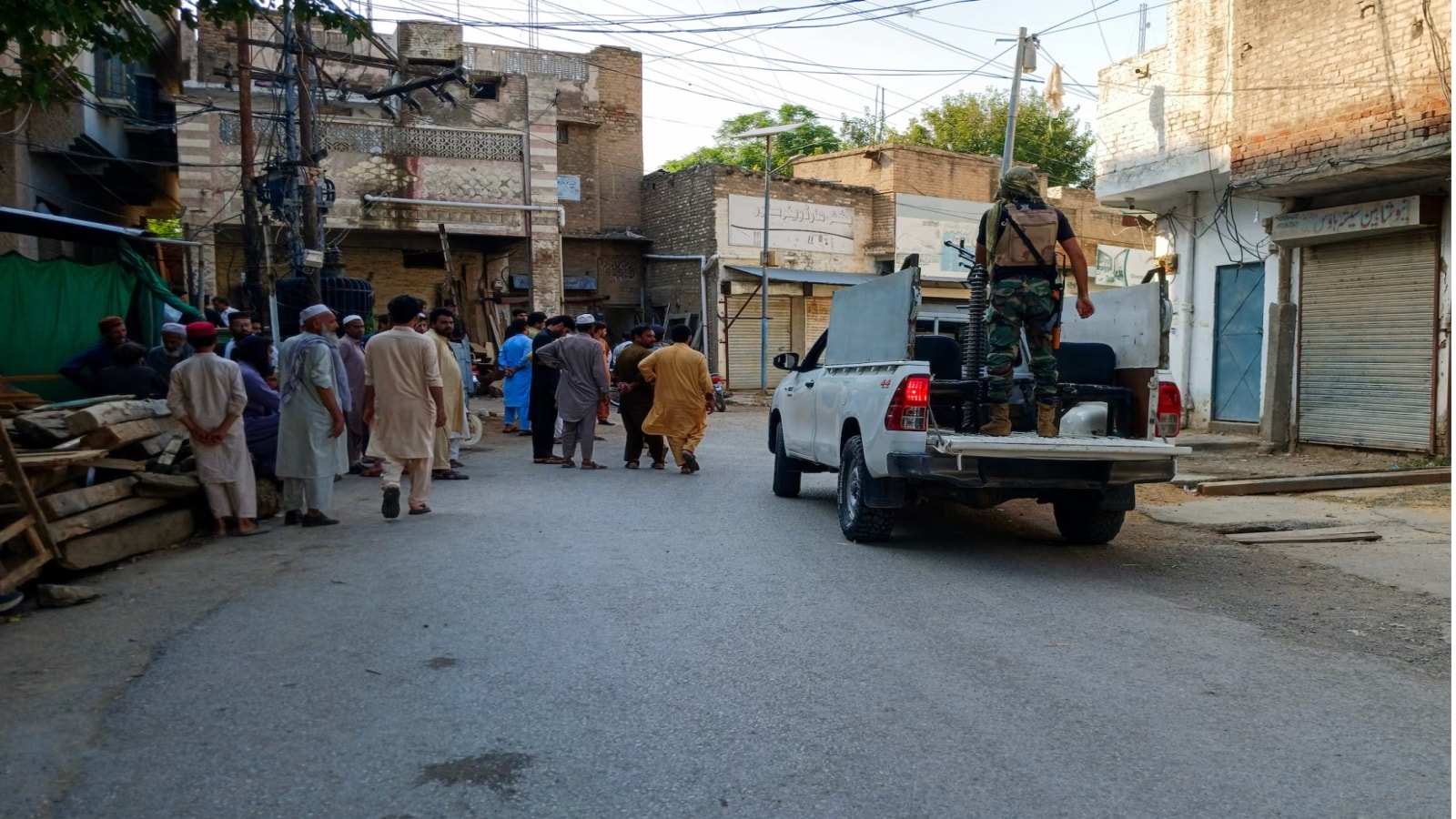
Sixteen lives ended abruptly inside a police compound near a mosque in northwest Pakistan, transforming a routine place of worship and law enforcement into a crime scene marked by shattered concrete and blood. A suicide attack of this magnitude is never an isolated anomaly. It is the violent manifestation of structural decay, intelligence gaps, and a resurgent militant network operating with impunity along the porous borderlands. When an explosive-laden vest detonates inside a heavily fortified zone, the baseline question shifts from how the bomber breached the perimeter to why the security architecture failed so catastrophically at its most fundamental level.
Khyber Pakhtunkhwa has long served as the crucible for Pakistan's internal security struggles. The terrain is rugged, the governance is strained, and the proximity to the Afghan border creates a continuous logistical highway for insurgent groups seeking to destabilize the state. Yet, blaming geography alone is a lazy analytical shortcut. Insurgencies survive on local complicity, administrative exhaustion, and intelligence blind spots. When local law enforcement compounds—facilities explicitly designed to withstand asymmetric threats—are penetrated, it signals a systemic failure in threat assessment and baseline protective security measures.
The Mechanics of Vulnerability
Security installations in frontline provinces operate under a state of permanent siege, or at least they are supposed to. In practice, resource constraints, institutional fatigue, and bureaucratic complacency often erode the rigor required to maintain impenetrable defenses. A police compound housing both administrative offices and operational personnel near a community space creates a complex security matrix. Every visitor, every vehicle, and every delivery represents a potential vector of infiltration.
When intelligence fails to intercept the operative before they reach the target, physical security must absorb the shock. If the perimeter fails, the cost is measured in human casualties among the rank-and-file officers and civilians gathered nearby. The attack near the mosque highlights a persistent vulnerability: the friction between community accessibility and tactical hardening. Mosques and public-facing police stations require a degree of openness that militant networks actively exploit. Striking this balance requires granular human intelligence rather than static checkpoints that can be bypassed or manipulated through bribery, coercion, or simple administrative negligence.
The Wider Geopolitical Context
To understand the blast in Khyber Pakhtunkhwa, one must look beyond the immediate provincial borders. The shifting dynamics in Kabul following the 2021 withdrawal created a permissive environment for regional militant factions, most notably the Tehrik-i-Taliban Pakistan. These groups view the Pakistani state as an illegitimate authority and have systematically targeted security personnel to fracture morale and project power.
The strategy is calculated. By launching high-profile assaults on police infrastructure, militants aim to overwhelm the institutional capacity of provincial forces who bear the brunt of counter-insurgency operations. The police are often outgunned, underequipped, and inadequately trained for urban warfare compared to specialized military units. When the front line of defense is brittle, the entire state apparatus in the region trembles.
Moving Past Reactionary Measures
The immediate aftermath of such violence follows a predictable, exhausting script. Condemnations are issued, emergency funds are promised, and temporary checkpoints are erected across major transit arteries. These measures offer a superficial illusion of safety while leaving the underlying vulnerabilities unaddressed. True structural reform requires a hard look at intelligence sharing between federal and provincial agencies, a massive upgrade in surveillance technology for sensitive compounds, and an uncompromising purge of corrupt elements within local administrative networks who turn a blind eye to illicit movement.
Without these foundational changes, the cycle will repeat. Another compound will be targeted, another community will mourn, and the state will once again find itself reacting to a crisis it should have prevented. The blood spilled near the mosque in northwest Pakistan is a grim reminder that security is not maintained by rhetoric, but by relentless, unglamorous operational vigilance that leaves no room for error.