Blisters don’t care about status. They don't care if you're wearing a limited-edition streetwear hoodie or three-dollar generic cotton socks. When your heel rubs against the stiff counter of a shoe for the forty-thousandth time in a single weekend, the skin tears just the same.
I learned this on the asphalt of Venice Boulevard, staring at a bottle of twenty-dollar hyper-oxygenated water. My feet were throbbing. My lower back felt like a rusted hinge. I was roughly forty miles into a self-inflicted pilgrimage across the sprawling, sun-bleached grid of Los Angeles, chasing an obsession that has come to define modern consumer culture.
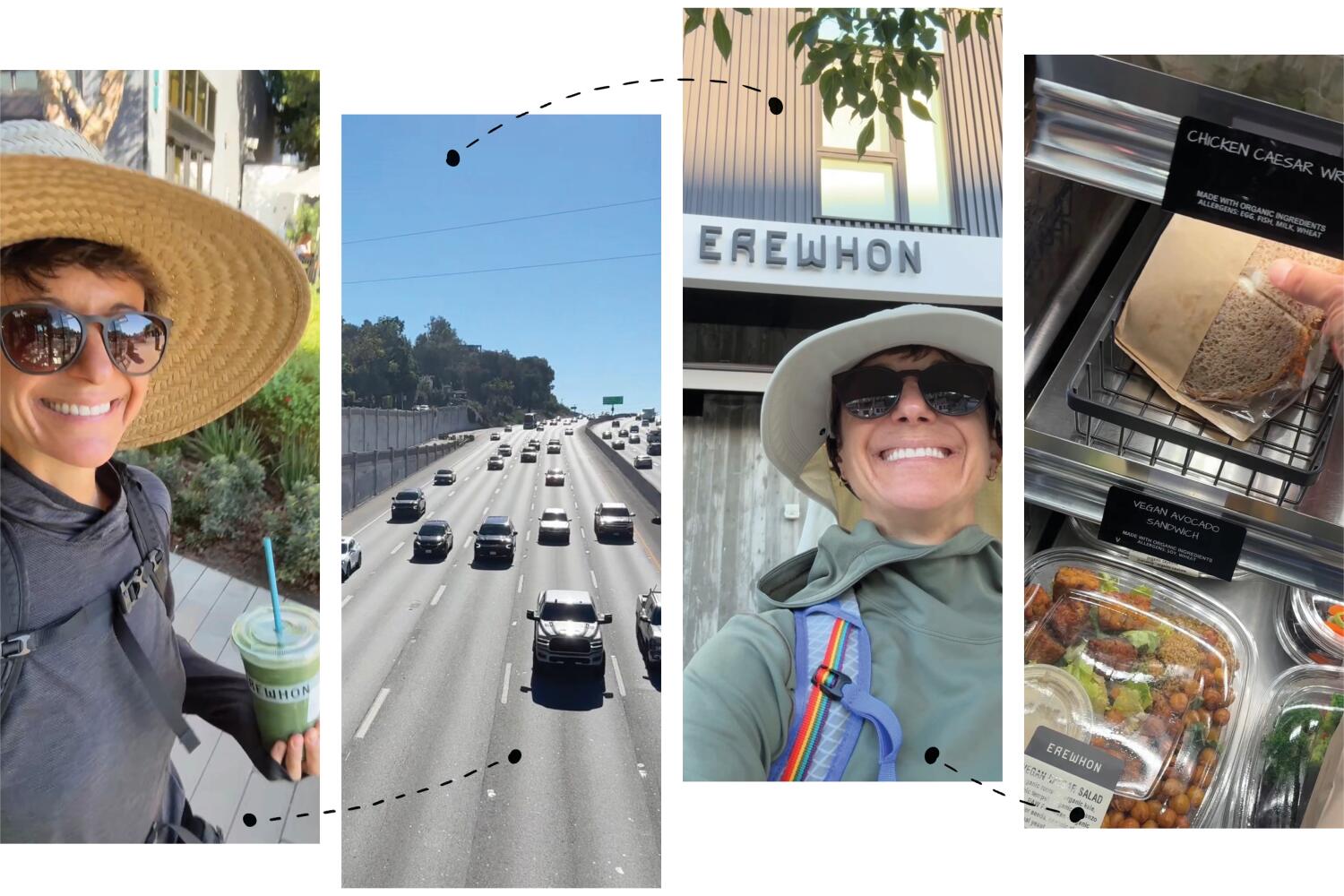
I walked to every single Erewhon Market in the city. All ten of them.
Erewhon is no longer just a grocery store. It is a cultural epicenter, a secular church for the wellness-obsessed, and a punchline for everyone else. It is a place where a single sea moss smoothie costs more than a sit-down lunch in most American towns. To the casual observer, walking 89 miles across L.A. just to visit ten upscale grocery stores sounds like a symptom of a psychological breakdown. Maybe it was. But beneath the absurd price tags and the celebrity-endorsed elixirs lies a deeper human truth about our desperate search for community, health, and identity in an increasingly fragmented world.
The Geography of Desire
Los Angeles is a city built to separate us. It is an endless web of freeways designed to keep people isolated in steel boxes, moving from private garages to private parking structures. To walk L.A. is to commit an act of rebellion against the architecture itself.
The journey began in Calabasas, the suburban fortress of reality TV royalty. The air there smells faintly of manicured lawns and exhaust fumes from luxury SUVs. Leaving that first store, the sheer scale of the map hit me. Eighty-nine miles on foot isn’t just a long walk. It is a brutal, eye-level inventory of a metropolis.
Consider the sheer physical transition from the pristine sidewalks of Santa Monica to the cracked, sun-baked pavement of central L.A. On foot, the changing demographics aren't a statistic on a screen; they are a shift in the air temperature, the smell of the street food, the texture of the concrete beneath your soles.
By the time I reached the Brentwood location, my legs were functioning on autopilot. I watched a woman step out of a black G-Wagen, her yoga mat tucked under her arm like a warrior’s shield. She glided past me into the air-conditioned sanctuary of the store. Inside, the lighting is calibrated to make every heirloom tomato look like a Dutch master’s painting.
That is the illusion of the modern wellness movement. It whispers that if you buy the right tonic, if you ingest the right powdered mushroom, you can buy your way out of mortality. You can insulate yourself from the chaos of the world outside those automatic glass doors.
But outside, the reality of the city waits.
The Invisible Stakes of the Tonic Bar
Why do we do this to ourselves? Why do we flock to spaces that charge a premium for basic sustenance?
To understand the phenomenon, you have to look past the superficial mockery. It’s easy to laugh at a twenty-dollar smoothie. It’s harder to look at the underlying anxiety that drives people to buy it. We live in an era where traditional structures of belonging—churches, community centers, local neighborhood joints—have largely evaporated. In their place, commerce has stepped in to provide a sense of identity.
Inside the Silver Lake Erewhon, the energy changes. It’s younger, edgier, draped in vintage leather rather than athleisure. Yet the ritual remains identical. People crowd around the tonic bar like parishioners waiting for communion.
They aren’t just buying nutrition. They are buying an identity. They are signaling to themselves and to the room that they care, deeply and expensively, about their own survival.
Let's look at the cold reality of what happens when you walk twenty miles a day through a city. Your body begins to consume itself. Your glycogen stores deplete. Your mind strips away the fluff. By day three, as I trudge toward the Studio City location, the socio-economic commentary fades into the background. I don’t care about the irony anymore. I don't care about the influencers filming tiktoks in the aisles.
I just need calories.
I bought an organic burrito that cost as much as a decent pair of flip-flops. Eating it on the curb outside, my back pressed against a warm brick wall, it tasted like the greatest culinary achievement in human history. Hunger is the ultimate equalizer. It strips away the pretense of the luxury brand and reduces the experience to its raw, biological essence.
The Long Road to Connection
The human body is an incredible machine, but it has strict boundaries. Between the Beverly Hills and Grove locations, my feet gave up the ghost. Every step felt like landing on a bed of hot nails.
I found myself leaning against a lamp post on Wilshire Boulevard, watching the evening traffic crawl toward the sunset. In that moment of utter exhaustion, the absurdity of the pilgrimage became painfully clear. I was walking the length of three marathons to visit grocery stores that all sold the exact same products, wrapped in the exact same pristine branding.
But the walk itself was doing something the stores never could. It was forcing me to interact with the actual fabric of the city.
When you drive through L.A., the unhoused population is a blur out the side window. When you walk, you share the sidewalk. You make eye contact. You hear the conversations, smell the reality of poverty right next to the reality of extreme wealth. The contrast is jarring, almost violent. You realize that the wellness utopia inside those ten locations is a fragile ecosystem, walled off from the very real struggles of the city it inhabits.
In a hypothetical world, we could build communities around shared public spaces, parks, and free communal gatherings. But in our actual world, we have built them around retail. The tragedy isn’t that people want to gather at a high-end grocery store; the tragedy is that for many, it’s one of the few places left that feels safe, clean, and alive.
The Final Miles
The tenth store was Pasadena.
Reaching it required crossing the Arroyo Seco, walking through neighborhoods where the trees grew thick and old, casting long shadows across the pavement. My joints were screaming. My skin was sunburnt despite three layers of block. I had walked through the wealthy enclaves, the industrial corridors, the gentrifying arts districts, and the neglected strip malls.
I walked into the final store smelling of three days of sweat, dust, and pavement. I was a ghost in the machine. A man in a pristine linen shirt subtly shifted his basket away from me as I waited in line for a black coffee.
I looked at the rows of perfectly aligned juices, the immaculate stacks of organic produce, the jars of raw honey gathered from remote mountainsides.
The entire journey crystallized in that final room. The 89-mile walk wasn't really about the groceries. It was an interrogation of a collective delusion. We are all searching for a way to feel whole in a world that feels broken. Some people find it in miles of pavement. Others find it in a glass bottle with a beautiful label.
I stepped back out into the cool Pasadena evening. The sun was dipping below the horizon, painting the sky in bruises of purple and gold. The cars roared on the distant freeway, a steady, rhythmic hum that sounded almost like the ocean. I didn't buy a smoothie. I just sat on the concrete curb, took off my shoes, and let my bare feet touch the cold, unvarnished earth.