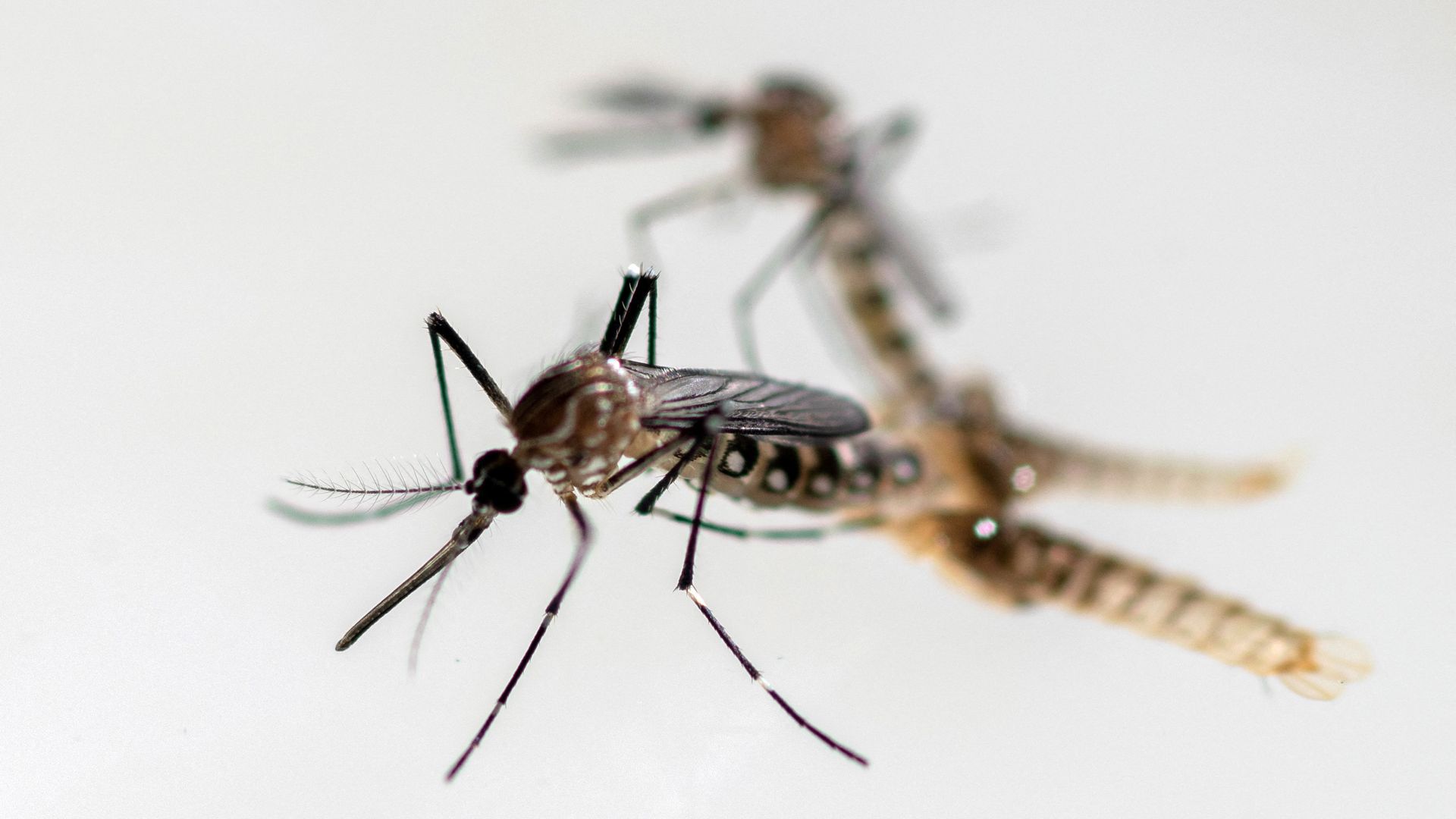
The detection of viable mosquito populations capable of vectoring the Zika virus within the United Kingdom marks a structural shift in epidemiological risk modeling. Traditional biosecurity frameworks built around rigid geographical boundaries and static climate baselines are failing. When tropical vectors establish residency in temperate zones, the governing mechanisms shift from isolated travel-associated containment to systemic domestic eradication economics.
Understanding this transition requires dismantling the core variables driving vector expansion, viral transmission efficiency, and the capital expenditure required to intercept a pathogen before it achieves endemicity.
The Triad of Vector Establishment
Vector-borne disease transmission relies on a strict biological chain. If any link in this chain breaks, the R0 value drops below unity, causing the transmission cycle to collapse. The presence of Aedes species in unexpected geographies represents the failure of the primary structural barrier: climate matching.
- Climatic Adaptation and Thermal Plasticity: Aedes albopictus and related vectors do not require tropical conditions to thrive; they require sufficient ambient temperatures for egg diapause survival and larval development. Urban heat islands, microclimates, and rising mean annual temperatures in northern latitudes provide an artificial thermal buffer. This allows vectors to complete their gonotrophic cycle faster than historical models predict.
- Anthropogenic Water Retention: Modern municipal infrastructure creates thousands of micro-habitats. Construction sites, blocked drainage systems, discarded containers, and subterranean utility vaults collect rainwater while remaining insulated from natural predators. This decoupling from natural aquatic ecosystems gives urban mosquito populations a survival advantage.
- Host Density and Feeding Behavior: Aedes mosquitoes are opportunistic day-biting anthropophiles. High human density in urban and suburban corridors ensures high contact rates. Unlike rural vectors that feed on livestock, urban populations feed almost exclusively on humans, maximizing the probability of pathogen amplification if an infected traveler introduces the virus.
The Vector-Pathogen Compatibility Matrix
Establishing a vector is a necessary condition for local transmission, but vector competence dictates whether an outbreak actually materializes. Vector competence refers to the intrinsic physiological ability of a mosquito to ingest, replicate, and transmit a pathogen.
The extrinsic incubation period is the duration required for the virus to travel from the mosquito's midgut to its salivary glands. In high ambient temperatures, this period compresses, allowing a single mosquito to infect multiple hosts over a shorter lifespan. When vector competence intersects with high population density, the velocity of viral spread increases exponentially rather than linearly.
Asymptomatic transmission accounts for approximately eighty percent of Zika cases. This biological reality distorts standard surveillance metrics. Traditional syndromic surveillance relies on patients seeking clinical care for acute symptoms such as fever, rash, and arthralgia. Because the vast majority of infections generate zero outward clinical indicators, public health agencies operate with a massive lag between viral introduction and localized detection. By the time diagnostic confirmation occurs via reverse transcription-polymerase chain reaction testing, the silent transmission chain has already completed multiple cycles within the local population.
Vertical Transmission and Persistence Economics
The epidemiological threat profile of Zika diverges sharply from other arboviruses like dengue or chikungunya due to vertical transmission routes and viral persistence in immunologically privileged sites.
- Transovarial Transmission: Infected female mosquitoes can pass the virus directly to their progeny via eggs. This mechanism allows the virus to survive unfavorable winter conditions or vector control interventions without relying on a human reservoir host. The pathogen overwinters inside the vector population itself.
- Sexual and Perinatal Transmission: The virus exhibits tropism for urogenital tissues and the central nervous system. Sexual transmission decouples the spread of the pathogen from vector presence, enabling secondary chains of infection in non-vector regions. Perinatal transmission introduces the risk of congenital Zika syndrome, characterized by microcephaly, ocular abnormalities, and profound neurological developmental delays.
- The Diagnostic Bottleneck: Cross-reactivity between flaviviruses, such as dengue, yellow fever, and Zika, creates serological diagnostic friction. Plaque reduction neutralization tests are required to confirm specificity, but these assays are labor-intensive, expensive, and constrained to reference laboratories. This analytical delay prevents real-time containment decisions.
The Cost Function of Eradication Versus Mitigation
Public health resource allocation operates under strict budgetary constraints. When a novel vector establishes presence in a temperate zone, policymakers face a bifurcated choice between aggressive containment and long-term suppression. Each path carries a distinct economic and operational cost function.
- Capital Intensity of Vector Eradication: Eradication requires localized source reduction, targeted larviciding with bacterial agents like Bacillus thuringiensis israelensis, and broad adulticiding measures. Because Aedes mosquitoes breed in concealed, private residential containers, vector control teams require legal authority to access private property. Public resistance, regulatory friction, and environmental concerns regarding chemical runoff severely limit the efficacy of eradication programs.
- The Friction of Surveillance Infrastructure: Effective early warning systems demand continuous ovitraps, molecular screening of pooled mosquito samples, and genomic sequencing to track lineage mutations. Most healthcare systems maintain reactive surveillance budgets designed for seasonal influenza rather than continuous arboviral monitoring. Redirecting capital toward proactive entomological surveillance creates immediate opportunity costs elsewhere in the clinical infrastructure.
Strategic Operational Playbook
Mitigating the domestic establishment of tropical arboviruses requires shifting from reactive clinical management to preemptive environmental engineering and automated vector surveillance.
Municipal planning departments must integrate mandatory anti-vector design principles into urban architecture. Subterranean drainage networks, stormwater retention basins, and private property landscaping codes must eliminate standing water pooling points. Building regulations should mandate sealed drainage systems and fine-mesh screening on all municipal ventilation and water storage infrastructure.
Public health agencies must deploy molecular surveillance networks utilizing high-throughput sequencing at international transit hubs and urban entry points. By sequencing viral genomes from incoming travelers and local vector pools simultaneously, epidemiologists can map transmission lineages in real-time, identifying localized amplification events before clinical cases overwhelm primary care networks.
Resource allocation must prioritize automated larviciding deployment in high-risk urban micro-zones, coupled with public compliance campaigns backed by municipal enforcement mechanisms. The window for preventing an established vector from transitioning into an endemic disease vector closes rapidly once local overwintering is confirmed. Public health strategies must abandon the assumption of geographical immunity and transition capital toward continuous biosecurity hardening.