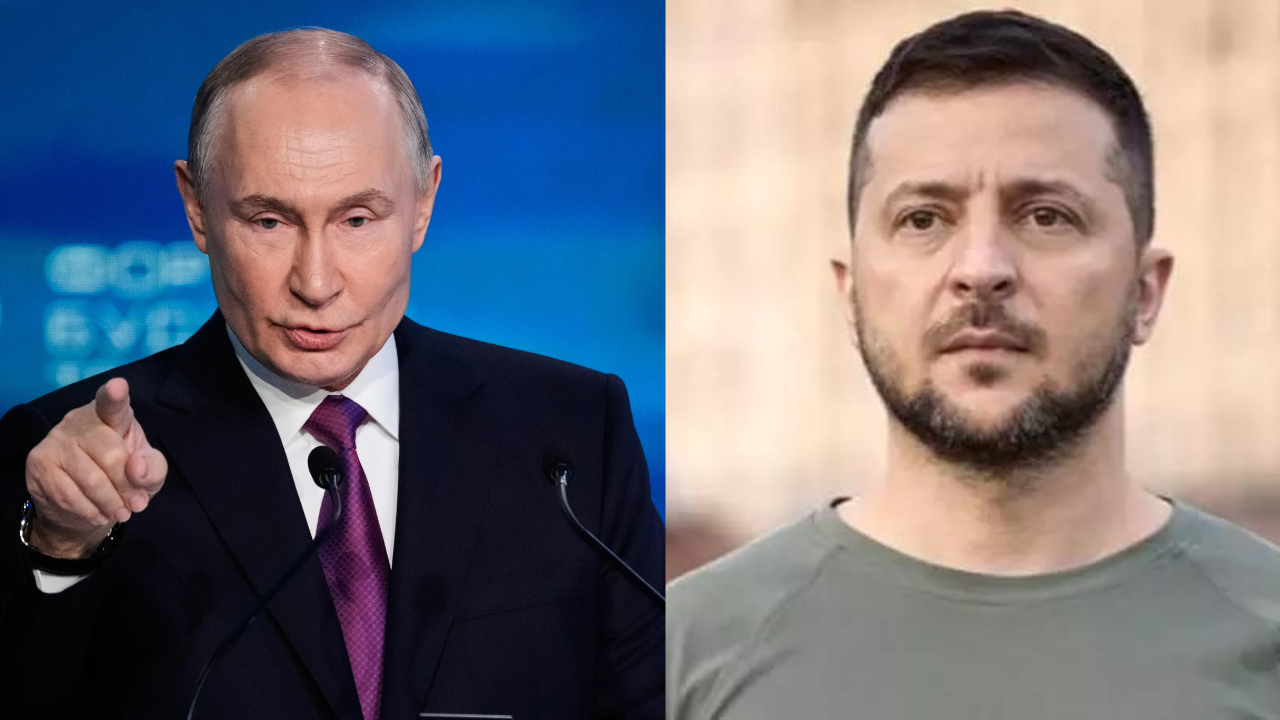
Foreign policy rarely boils down to a simple disagreement, but the recent public friction between Kyiv and Washington is getting pretty hard to ignore. Ukrainian President Volodymyr Zelenskyy didn't mince words when addressing the White House's sudden willingness to ease economic pressure on Moscow. His core argument is blunt: any relief given to the Kremlin right now acts as a direct reward, handing Vladimir Putin the economic breathing room he needs to keep the war engine running.
When the US administration decided to pause certain sanctions and explore energy deals—like the much-discussed diesel arrangements—the geopolitical chessboard shifted overnight. Washington argued these tactical pauses are meant to stabilize global markets or test diplomatic waters. But from Kyiv's perspective, easing up on a wartime economy doesn't build a bridge to peace. It builds a ramp for further aggression.
The Danger of Easing Economic Pressure
Let's look at what actually happens when sanctions are relaxed. Moscow relies heavily on foreign revenue to finance its military industrial base, from ballistic missiles to drone components. When restrictions loosen, financial oxygen flows right back into the state coffers.
Zelenskyy made it clear that his stance isn't about personal clashes with Donald Trump. It is a strategic calculation rooted in the reality on the ground. Whenever international pressure dips, Russian strikes on Ukrainian power grids and civilian infrastructure tend to intensify rather than taper off. The timing of these policy shifts often aligns painfully with fresh barrages against critical energy facilities, leaving millions in the cold and dark.
What the Washington Calculus Misses
Diplomatic envoys floating 60-day pauses or evaluating global energy prices are looking at spreadsheets and inflation metrics. They want quick wins or lower fuel costs for domestic voters.
However, dictatorships operate on a different timeline. Putin views concessions not as an invitation to compromise, but as a sign of fatigue in the West. If the coalition backing Ukraine starts chipping away at its own economic architecture out of impatience, the Kremlin interprets it as a strategic victory.
The Search for a Real Exit Strategy
Everyone claims they want a ceasefire, but the terms matter immensely. Zelenskyy has expressed readiness to explore diplomatic freezes or cessation of hostilities, provided there are ironclad security guarantees. A hollow ceasefire that leaves occupied territories unrecognized while allowing Russia to rearm is just a countdown to the next invasion.
The tension highlights a fundamental rift in strategy. The White House believes deal-making and personal rapport can pull adversaries to the table, sometimes pointing to minor prisoner releases as proof of humanitarian goodwill. Meanwhile, Ukraine faces a daily shortage of air defense interceptors and missile components while watching its power plants get targeted systematically.
If Western partners truly want to bring this war to an end, easing the financial squeeze on Moscow is backwards. True leverage comes from keeping the economic trap shut tightly until real, verifiable peace terms are on the table. Anything else is just buying temporary comfort at the expense of long-term security.