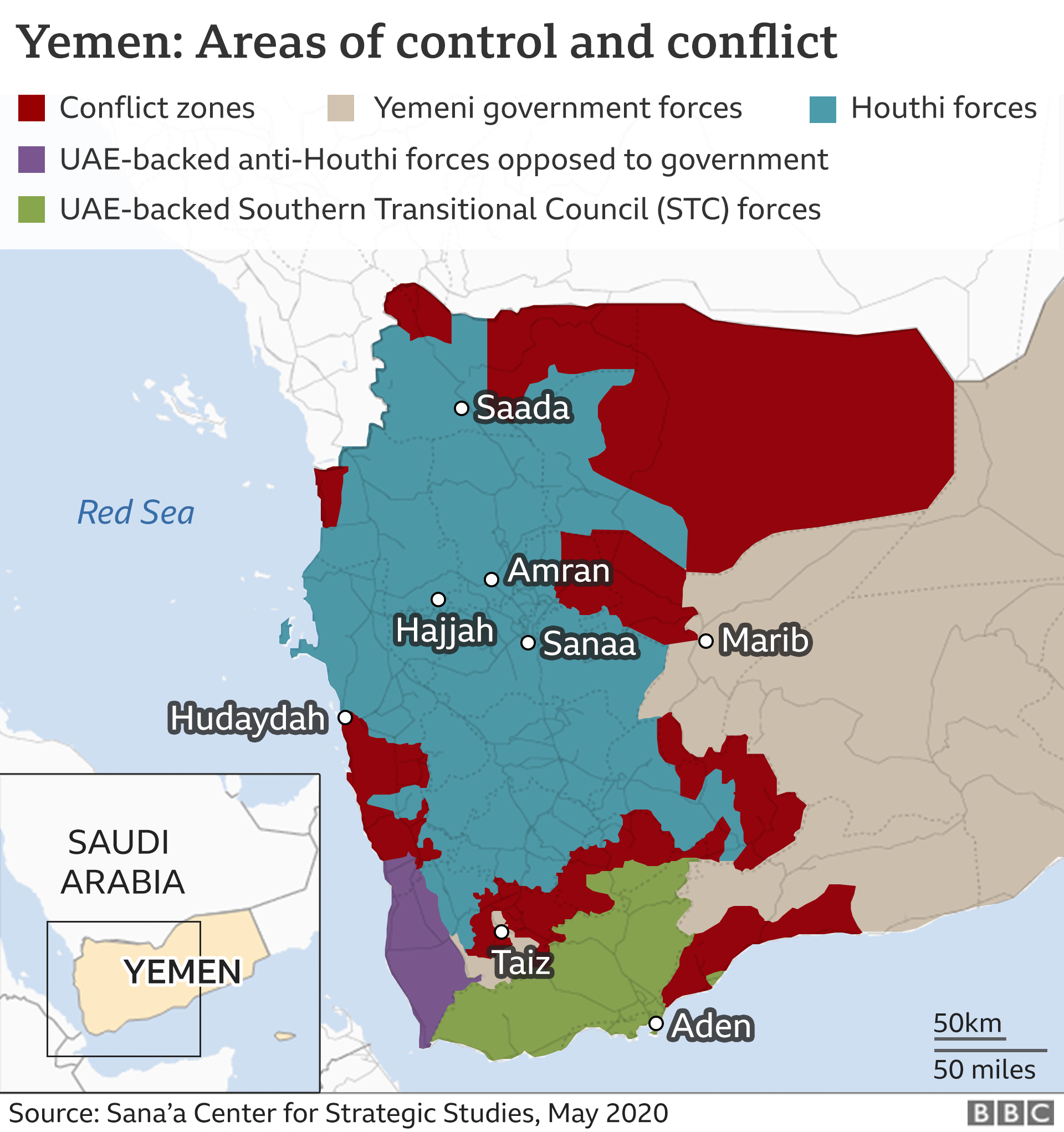
The fragile calm that held Yemen together for years is completely gone. If you look at the frontlines in Marib and Hadramout, you see a country hurtling straight back toward all-out war.
For years, people called it a frozen conflict. But quiet fronts don't mean permanent peace. The 2022 UN-brokered truce gave millions a brief sigh of relief, but it was always just a band-aid on a gaping wound. Now, trade attacks, ballistic missiles, and surging ground offensives have shattered any illusion of stability. Also making headlines lately: The Economics of Aquatic Eradication Why Traditional Conservation Fails Without Systems Thinking.
The Flashpoints Driving the New Escalation
Fighting hasn't just resumed; it has mutated into a deadlier, more high-tech confrontation. Both the Houthi movement and the Saudi-backed Internationally Recognized Government (IRG) are aggressively expanding their operations.
- The Marib and Hadramout Clashes: Government forces launched preemptive operations targeting supply routes, sparking ferocious Houthi responses. Coordinated drone and ballistic missile strikes hit military camps, leaving dozens dead in single-day spikes of violence.
- Red Sea and Port Strikes: Trade attacks remain a central weapon of choice. Houthi strikes targeting government-held ports like al-Makha and commercial shipping lanes have reignited severe maritime security threats.
- Cross-Border Retaliation: The violence isn't staying inside Yemen's borders. Houthi aerial campaigns hitting energy infrastructure and airports across Saudi Arabia mirror the wider regional spillover from the ongoing conflicts involving Iran and regional states.
Why the 2022 Truce Finally Collapsed
You can't understand the current violence without looking at how local military mobilizations merged with broader regional flashpoints. When regional tensions flared up due to wider international confrontations, both Yemeni factions started positioning themselves for a showdown. More details into this topic are covered by NBC News.
The government realized that waiting for a political breakthrough was a losing game. They chose preemptive military action to disrupt Houthi weapons-smuggling corridors. The Houthis responded with massive missile salvos and heavy drone swarms, proving that their aerial capabilities have only grown more lethal.
Civilians are paying the highest price for this renewed posturing. Displaced persons camps in Marib—sheltering millions who fled earlier years of fighting—find themselves directly in the line of fire.
What Happens When All-Out War Returns
The terrifying reality is that this next phase of the conflict might be much worse than what came before. Drones and precision munitions are no longer an asymmetric advantage held by just one side. Both factions have scaled up their arsenals, meaning any prolonged ground offensive will feature intense urban and desert attrition.
International mediators are scrambling, but their warnings are falling on deaf ears. When military commanders decide that offense is their only defense, diplomatic channels dry up fast.
The window to stop a total relapse into full-scale civil war is closing by the hour. If regional backers don't force a de-escalation, Yemen's fragile landscape will burn again.