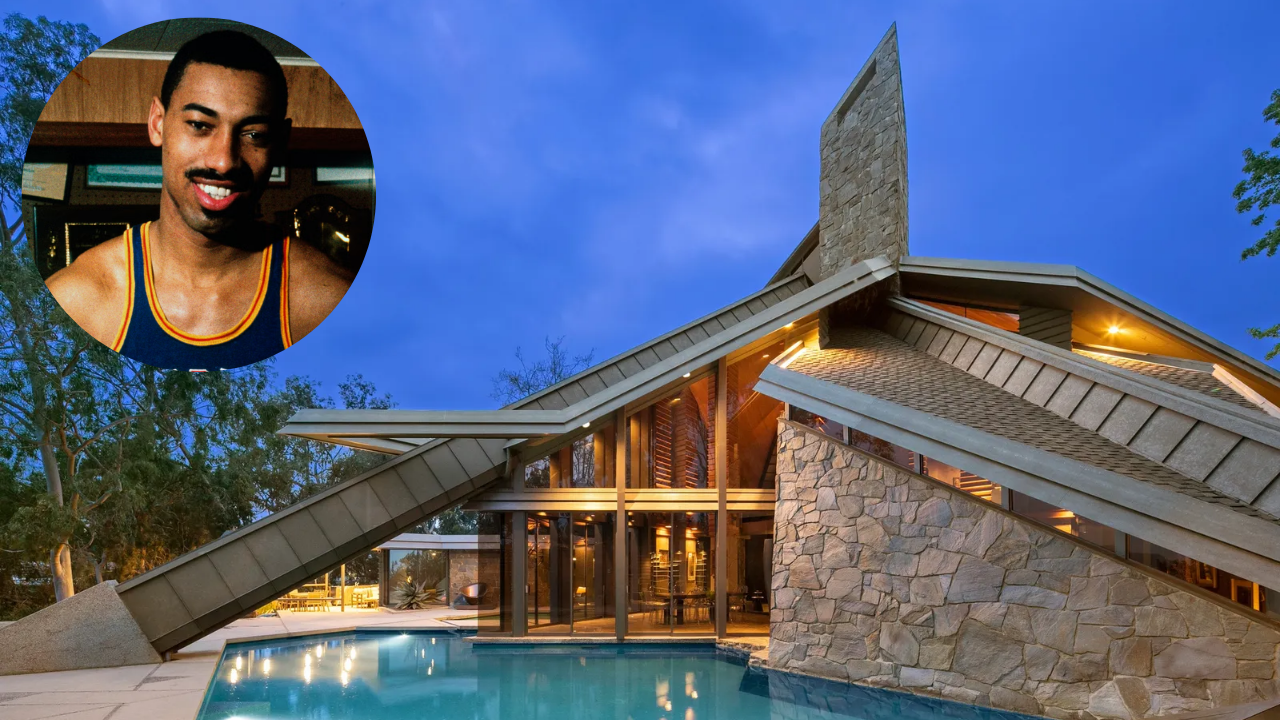
Wilt Chamberlain didn't build normal houses. Back in 1971, the NBA legend spent roughly $1 million to construct a sprawling, 9,395-square-foot bachelor pad on a private hilltop promontory in Bel Air. He named it Ursa Major, and it was as eccentric as you'd expect: a 15-foot-deep indoor-outdoor swimming pool, a sunken conversation pit, and a master bedroom featuring a mirrored ceiling and a floor-built waterbed.
Decades later, that same legendary property made headlines when it finally sold off-market for $9.675 million. If you followed the listing history, you know that number looks like a massive disappointment compared to its ambitious $18.99 million asking price from a few years prior. But the real estate reality behind this sale exposes how ultra-luxury properties actually function when architectural history clashes with modern buyer demands.
The Long, Expensive Road to a Sale
After Chamberlain passed away at the property in 1999, the estate traded hands and eventually landed with real estate investor Dmitri Novikov in 2008 for $6.55 million. Novikov embarked on an extensive, multi-year renovation to bring the mid-century relic into the twenty-first century.
The overhaul modernized the layout. Contractors updated the kitchen, added a private screening room, installed a professional gym with a redwood sauna, and reworked the primary suite to capture sweeping views of the Stone Canyon Reservoir and the ocean. They kept the architectural DNA—including the iconic pool that snakes its way toward the living room—while scrubbing away some of the more dated 1970s quirks.
When the home hit the market at nearly $19 million, reality hit hard. Buyers shopping at that price tier in Bel Air usually want brand-new, sterile glass boxes built by spec developers, not custom 1970s celebrity compounds that require specific tastes to appreciate. The house languished, bouncing on and off the market with progressive price cuts down to $14.9 million, then $11.99 million, before bottoming out near land value at just under $10 million.
Who Bought It and What It Means for the Lot
Cryptocurrency entrepreneur Erik Voorhees ultimately picked up the keys in the off-market deal. At $9.675 million for a 2.51-acre Bel Air hilltop parcel, the land itself does a lot of heavy lifting. In that zip code, privacy and acreage are the ultimate luxury commodities.
Real estate agents initially speculated that the property might face demolition because local zoning rules and the sheer value of prime dirt often make teardowns the default choice for buyers at this level. Yet, the structure survived. Whether Voorhees decides to preserve the historic footprint or eventually wipe the slate clean, the transaction marks the end of a long chapter for one of Los Angeles's wildest architectural anomalies.
Luxury real estate isn't just about square footage. It's about emotional resonance and finding the exact buyer who appreciates the pedigree. Ursa Major found its buyer, but it took a fifty-percent haircut to make the math work.