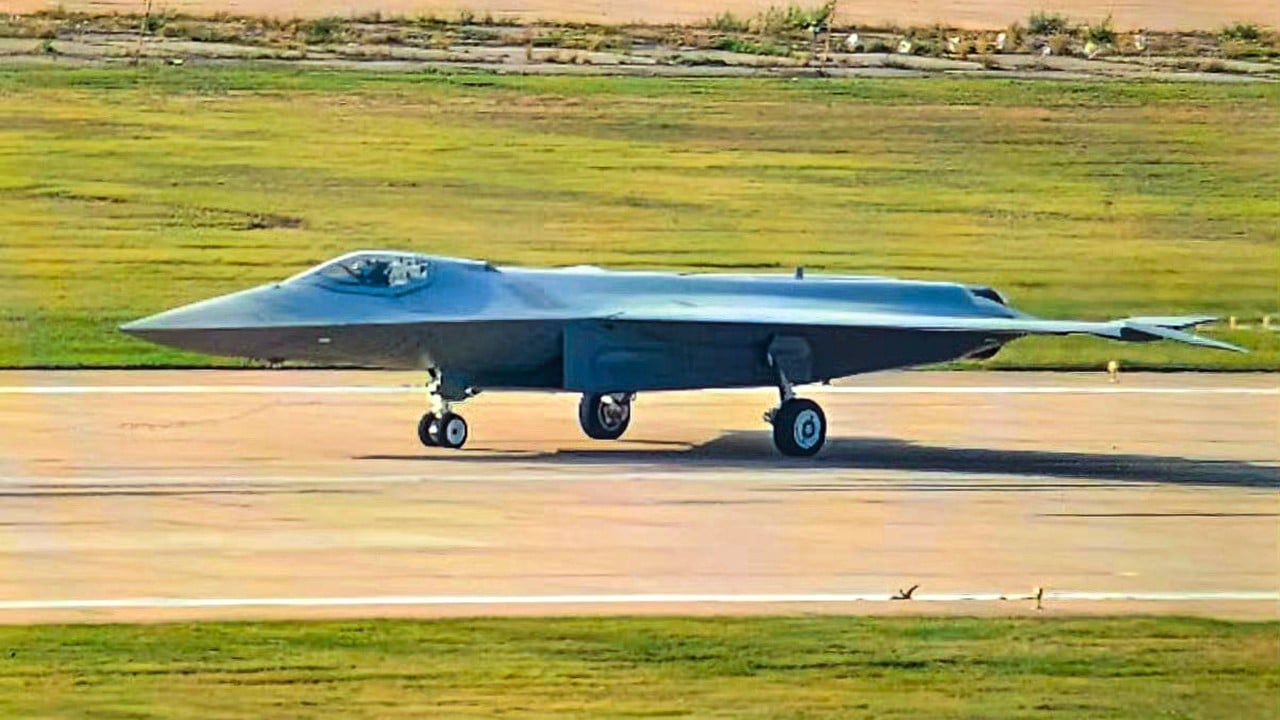
Everyone is popping champagne over the ground-breaking for new B-21 Raider infrastructure at Whiteman Air Force Base. Defense media treats every slab of poured concrete and steel arch like a tactical victory.
They are wrong. For a closer look into this area, we recommend: this related article.
Building more concrete cocoons in Missouri for a stealth bomber misses the structural reality of modern long-range aviation. I have spent two decades watching defense budgets turn into expensive monuments to yesterday's logistics. Pouring millions into fixed-base facilities while pretending the electronic warfare threat remains static is organizational malpractice.
Let us dismantle the lazy consensus surrounding these new hangars and look at the brutal mechanical truth of what it takes to project air power in a contested century. For broader information on this development, extensive reporting is available at CNET.
The Fixed-Base Fantasy
The standard narrative goes like this: Whiteman gets the hangar, the Raider moves in, and America maintains its global reach.
This argument relies on a dangerous baseline assumption. It assumes that fixed infrastructure will survive an opening salvo in a peer-level conflict. It assumes our adversaries are polite enough to wait for us to roll our billion-dollar low-observable assets out of climate-controlled garages before launching saturation missile strikes.
Let us define terms. A maintenance hangar is not a weapon. It is a stationary target with a geographic coordinate that has been locked into satellite constellations by opposing militaries for years.
When you concentrate high-value, low-density assets like the B-21 into specific, permanent installations, you are not securing readiness. You are creating a target cluster.
Defense analysts love to talk about modern low-observable maintenance requirements. They point out that radar-absorbent skin needs specific temperature and humidity parameters to cure and remain effective. This is true. A stealth bomber is a high-maintenance thoroughbred.
However, translating that technical requirement into a mandate for massive, centralized permanent construction at standard continental United States bases ignores the core doctrine of Agile Combat Employment. If your aircraft can only survive and be maintained inside a multi-million-dollar permanent facility in Missouri, your strategic reach ends the moment those facilities take a kinetic hit or face severe cyber disruption.
The Logistics Mirage
Look at the funding allocation for these new construction projects. Millions of dollars flow into specialized environmental control systems, secure data links, and reinforced bays.
I have watched acquisition programs blow fortunes on concrete while starving the mobile support equipment necessary to actually fight out of austere locations.
Imagine a scenario where Whiteman Air Force Base is cut off from its primary supply chain or experiences prolonged infrastructure denial. How many sorties does your pristine hangar launch then? Zero.
The obsession with garrison comfort over expeditionary grit is an institutional disease. We build bases that look like corporate tech campuses while our ability to disperse, rearm, and launch from decentralized airstrips degrades.
The B-21 was explicitly designed to bypass the tyranny of distance. It is supposed to bridge the gap between global reach and survivability. Yet, we anchor it to fixed postal codes with construction projects that belong in a Cold War history book.
If you want to understand why military procurement cycles take decades and cost fortunes, look right at this dynamic. We spend billions on the airplane, and then we spend billions more building custom country clubs for it to sit in, completely undermining the mobility that makes stealth valuable in the first place.
The Real Vulnerability Nobody Discusses
The adversary is not trying to dogfight our bombers. They are trying to kill them on the ramp or blind the digital nervous system required to fly them.
Every time a defense trade publication celebrates a new hangar ribbon-cutting, they are cheering for a static vulnerability. A hangar does not shoot back. A hangar does not jam incoming seeker heads. A hangar simply ensures that if an enemy's long-range precision strike package reaches Whiteman, the payload efficiency is maximized because we conveniently parked all our eggs in a row of expensive, specialized baskets.
The counter-argument from traditionalists is predictable. They argue that specialized environmental maintenance cannot happen outdoors or in austere environments. They claim that without these multi-million-dollar facilities, the aircraft's low-observable signature degrades rapidly, rendering the platform useless.
This is a false dichotomy.
We do not need to choose between ruining advanced coatings in the rain and building monolithic stationary targets. The engineering challenge of the next decade is mobile, modular environmental control. If we can build a bomber that ghosts past integrated air defense systems, we can engineer ruggedized, deployable maintenance shelters that do not require a permanent zip code to function.
Instead, we take the path of least resistance. We write checks for concrete because pouring concrete is easy, measurable, and keeps congressional districts happy. It is pork-barrel procurement disguised as national security strategy.
Stop Preparing For The Last War
The construction at Whiteman represents an institutional reflex. When in doubt, build infrastructure. When facing uncertainty, buy real estate.
This mindset treats war like a logistics parade where every vehicle returns to a pristine garage at the end of the day. Modern high-end conflict will not afford us the luxury of returning to Missouri for a spa day between sorties.
We need to stop evaluating base expansion through the lens of peacetime convenience. Every dollar spent on permanent, fixed-site luxury for a strategic bomber is a dollar stolen from distributed lethality, redundant command structures, and mobile sustainment packages.
The B-21 is an extraordinary piece of engineering. It deserves better than being tethered to an infrastructure philosophy designed for the Eisenhower administration.
Until we stop celebrating concrete pours and start demanding architectural resilience through dispersion, our multi-billion-dollar investments will remain sitting ducks wrapped in taxpayer-funded steel.
The ribbon was cut. The politicians smiled for the cameras. And the targeting database in Beijing and Moscow just got a brand new set of coordinates.