The ink on the declaration was barely dry when the first shadow fell across the harbor.
To understand what happened when Joshua Wong stepped forward to admit his role in instigating foreign sanctions against Beijing and the Hong Kong government, you have to look past the cold text of the court transcripts. You have to look at the tea-stained desks of tiny apartments in Kowloon, the glow of glowing monitors at two in the morning, and the heavy, metallic smell of tear gas that clung to wool sweaters for weeks after the barricades fell.
History rarely arrives with a trumpet blast. Usually, it drags its feet in cheap sneakers.
I remember the hum of the city back then. It was a place driven by velocity. Neon signs buzzed against the humid night air, and millions of people rushed past one another in a frantic, beautiful dance of survival and ambition. Everyone had a hustle. Everyone had a secret deadline. But beneath that frantic energy, a quiet, growing dread had begun to take root. People whispered over dim sum about red lines being drawn in invisible ink across the harbor.
Joshua Wong was never supposed to be a general. He was a teenager with an oversized backpack and a halting voice who looked like he belonged in a library detention hall rather than on the front page of international newspapers. Yet, street corners became his podium. Megaphones his instruments.
When the legislative chambers shifted and the old guarantees began to fray, the calculus changed. Protest morphed into a desperate, high-stakes game of international chess. For Wong and his circle, local resistance felt like shouting into a hurricane. The walls were closing in, the legal architecture was tightening, and the only leverage left seemed to lie across oceans, in foreign capitals where leaders spoke languages most protesters only heard in movies.
Sanctions.
The word itself sounds sterile, clinical. It sounds like an entry in an economics textbook. But on the ground, sanctions are a blunt instrument with a very sharp edge. They are economic levers pulled by distant politicians, designed to freeze assets, restrict travel, and choke the financial arteries of institutions.
Wong stood in a courtroom, his slight frame swallowed by the oversized jacket he wore, and made an admission that changed the narrative forever. He acknowledged that he had urged foreign governments to apply pressure, to draft measures, to turn the economic screws on Beijing and local authorities.
To his supporters, this was the ultimate act of defiance. A David picking up a sling made of international diplomacy to face an immovable Goliath. They saw it as a cry for help sent out into the dark, a desperate signal flare fired when the domestic ship was already taking on water. They believed that when local channels of recourse vanished, appealing to the global community was not just an option; it was a moral obligation.
To his detractors, and to the prosecutors who laid out the case against him, the confession was something else entirely. It was proof of crossing a line from internal dissent into external subversion. It was an invitation for foreign powers to meddle in domestic sovereignty, a betrayal of the city's stability for the sake of political theater. In their eyes, inviting outsiders to squeeze the local economy was akin to burning down the house just to spite the landlord.
Consider the reality of that courtroom scene. The air conditioning hummed softly, a stark contrast to the roaring crowds outside. Microphones captured every hesitation, every deliberate choice of phrase. Wong did not cower. He owned the actions that brought him to the prisoner's dock.
There is a profound human tragedy in watching a young person trade their youth for a prison cell, driven by the absolute certainty that history would absolve them. Whether you view him as a martyr of conscience or an architect of chaos, the psychological weight of his choice is staggering. Imagine sitting in a cell, knowing that your words—spoken into microphones months earlier—have shaped international trade policies, frozen bank accounts, and drawn retaliatory fury from a global superpower.
The mechanics of statecraft are rarely personal, but they are driven by very human emotions: fear, pride, stubbornness, and hope.
When foreign governments responded to those pleas by enacting targeted penalties, the ripple effects did not stop in government offices. They hit the small business owner in Causeway Bay trying to secure a commercial loan. They hit the multinational corporations quietly reviewing their exit strategies, packing up decades of institutional knowledge into cardboard boxes. They hit the ordinary citizens who just wanted to ride the MTR to work in peace, waking up every morning to a world that felt slightly more fragile than it did the day before.
Wong's admission stripped away the polite fictions of political lobbying. It laid bare the raw mechanics of modern dissent in a hyper-connected age. You no longer need an army to disrupt a superpower; you need a microphone, a smartphone, and an audience willing to listen. But you also inherit the full wrath of the machine you are trying to dismantle.
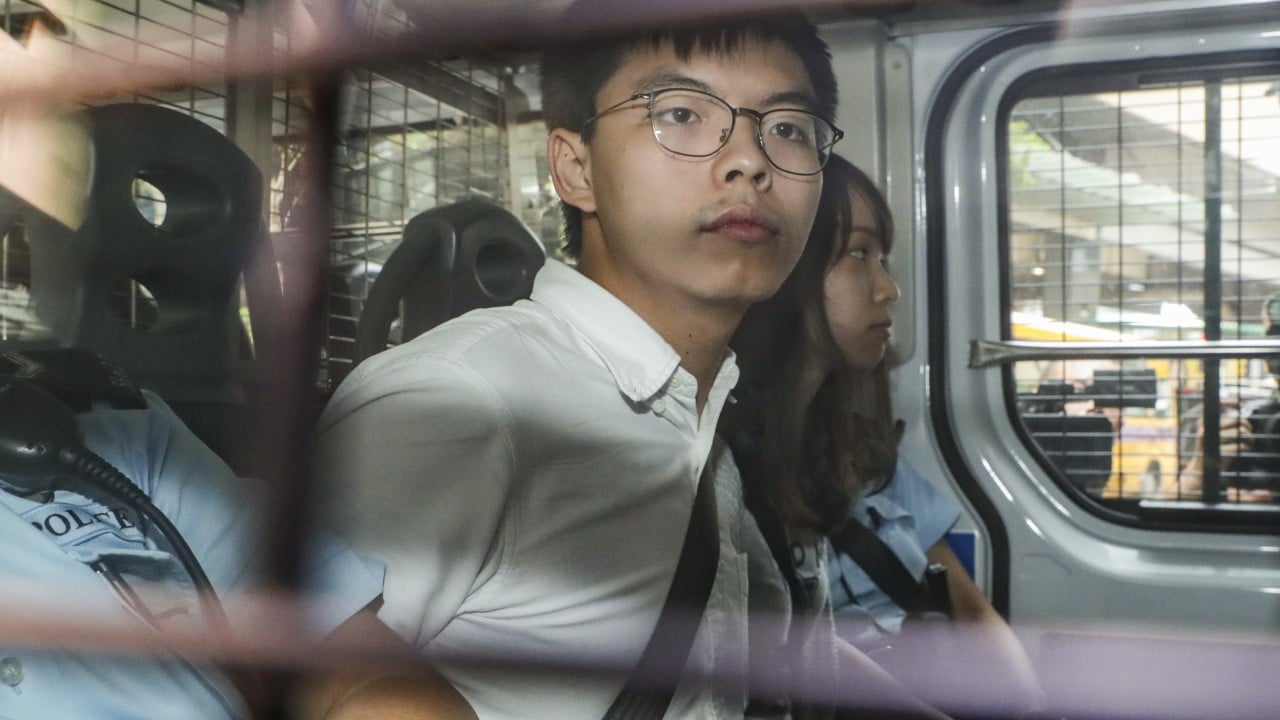
The trial ended, as trials do, with a gavel strike that echoed like a gunshot. The doors swung shut. The vans rolled away under the glare of streetlights.
Yet, the question he forced into the open remains unresolved. Where does local grievance end and foreign interference begin? In an era where borders are porous to digital communication and global markets are inextricably linked, isolation is an illusion. Every action has an equal and opposite reaction, rippling across oceans before anyone has time to brace for impact.
The neon signs in the harbor still buzz. The ferries still cut through the choppy grey waters between Hong Kong Island and the mainland. Millions of lives go on, shaped by invisible currents, constrained by laws written in marble and enforced with quiet resolve.
In the quiet hours, when the city finally slows its frantic pace, the legacy of that courtroom confession hangs in the humid air like smoke after a firework display. Brilliant, blinding, and gone too fast, leaving behind only the acrid scent of what used to be and the uncertain shape of what comes next.