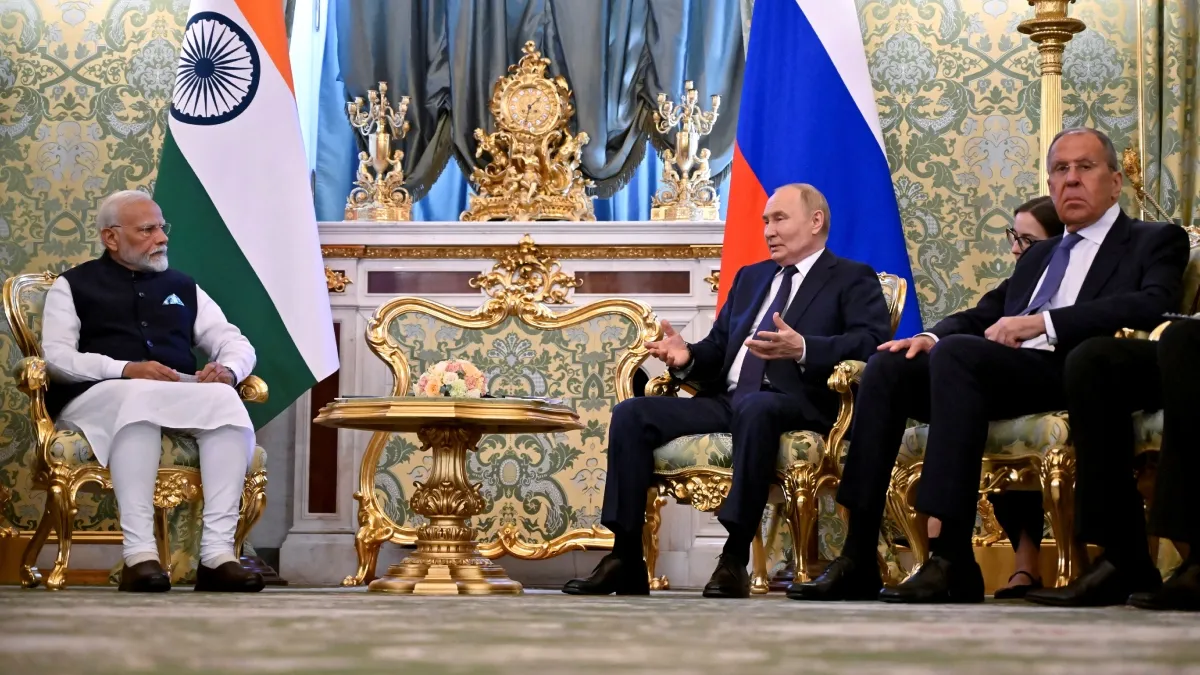
The air in Palm Beach usually smells of salt spray and expensive jasmine. But inside the gold-leafed corridors of Mar-a-Lago, the atmosphere is heavy with something far less fragrant: the crushing gravity of two men who hold the global thermostat in their hands. Donald Trump and Xi Jinping are not just politicians meeting for a second day of high-stakes dialogue. They are the personification of two tectonic plates, grinding against one another, waiting to see which one will crack first.
The first day ended with a sharp, jagged edge. A warning regarding Taiwan. In the dry language of diplomacy, a "warning" is a memo. In the reality of the Pacific, it is a tremor that makes the floorboards of every home in Taipei vibrate.
The Silence Between the Sentences
Negotiation at this level is rarely about what is said. It is about the terrifying, pregnant pauses between words. When Xi Jinping speaks about "core interests," he isn't just reciting a script. He is drawing a line in the sand with a bayonet. For the Chinese leader, Taiwan isn't a geopolitical chess piece; it is a ghost of a century of humiliation that he is determined to lay to rest.
On the other side of the silk-covered table sits Trump, a man who views the world through the lens of the deal. To him, everything has a price tag. Everything is a leverage point. The tension arises because these two men are playing entirely different games. Xi is playing a game of historical destiny that spans centuries. Trump is playing a game of immediate dominance and domestic optics.
Consider the hypothetical life of a merchant sailor on a container ship currently crossing the South China Sea. He doesn't care about the fine print of a joint communique. He cares about whether the horizon stays clear of grey hulls and fighter jets. To him, these talks are the difference between a routine voyage and a front-row seat to the end of the world.
The Taiwan Tripwire
The warning issued on day one was not a suggestion. It was a reminder that for Beijing, Taiwan is the ultimate "no-go" zone. The American side, however, remains committed to a policy of strategic ambiguity—a fancy way of saying "we aren't telling you what we'll do, so don't try anything."
It is a fragile peace.
Imagine two people holding the ends of a very thin piece of thread. If one pulls too hard, the thread snaps and both fall backward. If both let go, the connection is lost. Right now, Trump and Xi are leaning back, testing the tension. The second day of talks is designed to see if they can find a way to stop pulling without looking weak to the crowds watching from the sidelines.
Trade is the other ghost in the room. The mountains of steel, the oceans of soybeans, and the invisible streams of intellectual property that flow between these two giants are the only things keeping the thread from snapping. Money is a powerful sedative. As long as both nations are getting rich, the incentive to pull the trigger remains low. But the rhetoric is changing. The "America First" doctrine clashes violently with the "Chinese Dream," and neither man can afford to be the one who blinked.
The Human Cost of Grand Strategy
We often talk about "markets" reacting to these meetings. We talk about the S&P 500 or the Hang Seng Index as if they are living, breathing entities. They aren't. Markets are just a collective measurement of human fear. When the news broke that the first day of talks ended with a warning over Taiwan, that fear spiked.
It manifests in small ways. A farmer in Iowa wonders if his crop will rot in a silo because of a new retaliatory tariff. A tech worker in Shenzhen wonders if the components he needs will be blocked by an export ban. These aren't abstract concepts. They are the mortgage payments and grocery bills of millions of people who have never stepped foot in Florida or Beijing.
The sheer scale of the power in that room is intoxicating and terrifying. These two individuals can move the global GDP by a percentage point with a flick of a pen or a stray comment to a reporter.
The Second Day Shuffle
As the sun rises over the Atlantic for the second day of discussions, the focus shifts from the grand warnings to the grueling details. This is where the real work happens—or where it falls apart. The cameras see the handshakes and the forced smiles, but the real story is written in the side rooms where aides scramble to find a middle ground that doesn't exist.
Xi Jinping is looking for respect. He wants the United States to acknowledge China's status as a co-equal superpower. Trump is looking for a win. He wants a headline that says he squeezed a better deal out of the "dragon" than any of his predecessors.
The problem is that respect and "wins" are often mutually exclusive in the world of high-stakes ego.
There is a specific kind of exhaustion that comes with this level of theater. By the end of day two, the smiles will be tighter. The statements will be more carefully calibrated. The world will hold its breath, looking for a sign—any sign—that the two most powerful men on Earth have found a way to coexist without burning the house down.
Beyond the Gold Leaf
The grandeur of Mar-a-Lago provides a strange backdrop for a discussion about the potential for naval conflict. The contrast is jarring. Outside, the palm trees sway in a gentle breeze. Inside, the talk is of red lines and military posturing.
We tend to think of these events as inevitable, as part of some grand historical machine. But they are deeply personal. They are governed by the moods, the insecurities, and the personal chemistry of two men. If one of them didn't sleep well, or if one of them felt slighted by a comment made over dinner, the fate of a nation could shift.
It is a sobering thought. Our global stability rests on the ability of two very different human beings to find a common language in a world that is increasingly divided. The Taiwan warning was a flare sent up into the night sky. The second day is about whether they choose to follow that light toward a solution or let it burn out into total darkness.
The cameras will eventually pack up. The motorcades will vanish. The gold-leafed doors will close. But the words spoken—and the ones pointedly ignored—will echo in the Pacific for years to come.
The thread remains taut.
Nobody has let go yet, but nobody is moving closer either. We are all just standing in the middle, watching the fibers fray, hoping the man at the other end of the line remembers exactly how much we all have to lose.