The Kitchen Table arithmetic
Ask anyone who has stood in the aisle of a grocery store recently and watched the total on the register climb past reason. You do not need a degree in economics to understand what inflation feels like. It feels like subtraction. It feels like the slow, quiet erosion of security, measured in the shrinking contents of a shopping cart and the widening gap between a paycheck and a necessity.
Numbers on a spreadsheet rarely capture the pulse of this anxiety. Economists talk about trajectories, percentage points, and core indices as if they were stars mapped in a distant sky. But down here on the ground, the sky is falling a little bit every day.
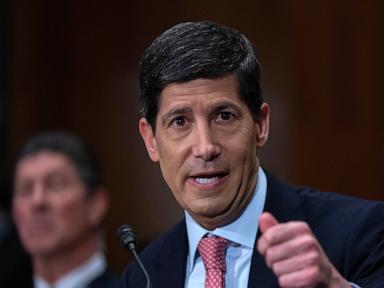
Enter Kevin Warsh.
The name carries heavy echoes in financial corridors. Appointed to steer the Federal Reserve through a turbulent horizon, Warsh steps into a role where every word is weighed, every syllable is parsed by Wall Street algorithms, and every decision ripples through millions of ordinary lives. The pressure on him is absolute. Will his tough talk be enough to tame a monster that feeds on expectations, or is the central bank whispering into a hurricane?
To understand the magnitude of his task, we have to look past the mahogany boardrooms and trace the mechanics of what happens when money loses its anchor.
The Ghost in the Machine
Money is largely an act of collective imagination. We hand over colorful paper and digital blips because we trust that tomorrow, those tokens will buy roughly what they bought yesterday. When that trust cracks, inflation accelerates. It feeds itself. People spend faster because cash loses value in their pockets, businesses raise prices to stay ahead of their own rising costs, and a psychological loop locks into place.
This is where psychological warfare meets monetary policy.
Think of the Federal Reserve not as a monolithic machine, but as a nervous system for the global economy. When inflation spikes, the traditional weapon is the interest rate hammer. Raise rates, cool borrowing, slow the economy down. But raising rates too aggressively breaks things. It crushes small businesses, halts housing markets, and puts people out of work. Raise them too timidly, and the monster keeps growing.
Warsh faces a paradox. He has long advocated for structural reforms, fiscal discipline, and a clear-eyed look at the limits of monetary magic. For years, critics have watched central banks pump liquidity into markets, creating asset bubbles while Main Street struggled with the basics of living. Now, the bill has come due.
Consider a hypothetical family, the Millers, living in a modest suburb. John works in logistics; Sarah manages accounts for a local clinic. Ten years ago, their budget had breathing room. Today, every single line item—gas, electricity, insurance, groceries—has stretched their income to a breaking point. They are not buying luxury goods. They are deciding which bills can wait until the next pay cycle.
When Warsh steps up to a podium to deliver a speech about monetary restraint, he is speaking to Wall Street traders, yes. But the real audience is the invisible psychology of millions of people like the Millers. If they believe the Federal Reserve has lost control, inflation wins. If they believe a steady hand is at the wheel, expectations anchor.
The Rhetoric of Resolve
Tough talk is cheap until it costs something.
Markets are cynical beasts. They have heard central bankers promise vigilance before, only to pivot the moment stock prices dipped. They call it the Fed Put—the unspoken belief that the central bank will always rescue investors from pain. Warsh’s legacy will depend entirely on whether he can shatter that illusion.
Credibility cannot be printed. It must be earned through painful consistency.
When a central bank chair speaks with conviction, asset prices shudder. Bond yields shift. Mortgages react. It is a high-wire act performed without a safety net. If Warsh signals that rates will stay higher for longer to break the back of inflation, investors who have feasted on cheap money for a decade will scream. Stock markets might stumble. Political figures accustomed to easy credit will apply pressure from Capitol Hill, demanding relief.
This is the crucible.
Can a policymaker stare down political expediency and market tantrums to do the hard, structural work of restoring currency stability? History offers a sobering lesson. In the late 1970s and early 1980s, Paul Volcker faced raging inflation that threatened to tear the American economy apart. He raised interest rates to punishing heights, triggering recessions and drawing furious protests—farmers dumped grain outside the Fed building, and builders mailed two-by-fours to Washington in rage.
Volcker held the line. He knew that a short, violent shock was the only cure for a chronic disease.
Warsh now walks in the long shadow of that era. The modern economy is more complex, entangled in global supply chains, digital assets, and staggering national debt loads. The tools are different. The stakes are just as high.
The Human Equation
We return to the grocery aisle.
Behind every economic statistic is a human story of endurance. The single mother working two jobs to keep up with rent. The young couple postponing starting a family because they cannot fathom the cost of daycare. The retiree watching a lifetime of savings buy a fraction of what it used to.
Monetary policy is often discussed as if it were pure mathematics, detached from human suffering or joy. That is a dangerous illusion. Every basis point hike, every policy statement, every shift in the federal funds rate echoes in kitchen conversations across the country.
Warsh’s tough talk matters only if it translates into a restored sense of predictability. People do not need perfection; they need a horizon they can plan against. They need to know that hard work will not be silently canceled out by rising prices overnight.
The pressure on him is not merely political or professional. It is moral. To wield power over the value of a nation's currency is to hold stewardship over the collective time and labor of its people. Every dollar earned is an hour of someone's life traded away. When inflation devalues that dollar, it steals those hours back.
As the financial world waits for his next move, the markets will dissect his tone, look for hesitations, and bet billions on his resolve. But the true verdict will not be written on a Wall Street ticker tape. It will be written in the quiet sigh of relief when a family finally checks out at the register, and the total matches what they expected to pay.
The coin drops. The weight remains.