The screen glowed with a sickly amber hue against the pre-dawn darkness of a Manhattan office. On the display, lines of code flickered, flashing crimson numbers that sent a familiar knot twisting in the stomach of every allocator who had once believed in the boundless promise of the East. Risk models blinked warnings. Compliance officers sighed over conference lines. Somewhere in midtown, a managing director closed a spreadsheet with a decisive click, muttering a phrase that echoed across boardrooms from London to Singapore: uninvestable.
It is a clean word. Final. It absolves the risk committee of responsibility and gives portfolio managers permission to walk away from complexity. Meanwhile, you can find related developments here: Inside the Supermarket Illusion Where Buy One Get One Free Costs You More.
Silence descended on the trading floor.
Then came the pushback. Not from an analyst chasing quarterly fees, but from someone who had watched the machinery of global finance grind through every geopolitical tremor of the past forty years. To explore the full picture, we recommend the excellent report by CNBC.
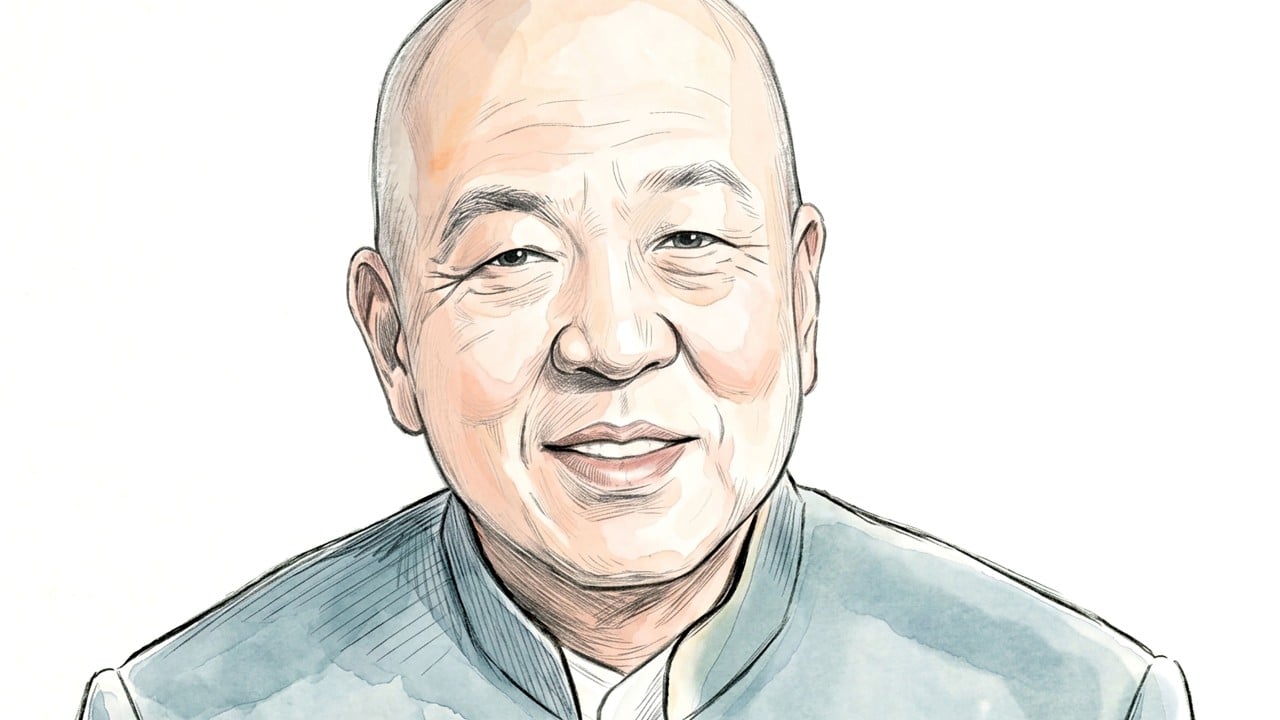
Fang Fenglei does not raise his voice when he speaks about markets. He doesn't need to. When you have spent decades negotiating complex joint ventures, building investment banks from the ground up, and standing in the room when monumental capital allocations were forged, your authority comes from scars rather than slideshows. To Fang, the entire narrative surrounding China's alleged uninvestability is built on a category error. It mistakes temporary policy friction for permanent structural collapse. It confuses the noise of foreign sentiment with the quiet, relentless hum of domestic economic gravity.
Consider what happens when you strip away the daily cable news cycles and walk the factory floors of Guangdong or the research laboratories of Shenzhen.
There is a dissonance between what Wall Street fears and what is actually being built.
To understand this gap, we must step back into the late nineteen-eighties. Back then, China was an economic abstraction to Western capital—a vast, impoverished interior trying to figure out how to plug itself into a global trading system it barely understood. Foreign investors approached the market with a mixture of philanthropic optimism and missionary zeal. They brought dollars, management textbooks, and the absolute conviction that economic liberalization would inevitably mirror Western templates.
For decades, that assumption paid off handsomely. Fortunes were made on the arbitrage of cheap labor, soaring real estate developments, and the sheer velocity of an industrial revolution compressed into a single generation. Capital flooded in because the trajectory felt familiar. It moved in straight lines upward.
Until it stopped.
When property markets wobbled under the weight of excessive debt, when regulatory clampdowns hit technology giants, and when geopolitical tensions hardened into economic cold war lines, foreign capital panicked. The exit doors, always wider on the way in than on the way out, suddenly felt terrifyingly narrow.
Disillusionment set in. Analysts who once penned glowing reports about endless growth pivoted overnight to existential warnings. The consensus hardened. China, they declared, had become uninvestable.
But consensus is rarely a reliable guide to reality. More often, it is merely the comfort of a crowd running toward the same exit.
History is littered with the wreckage of such unanimous panic. Think back to the aftermath of the Asian financial crisis in the late nineties, when entire nations were written off as perpetual basket cases right before they staged miraculous economic recoveries. Think of the dark days of two thousand and eight, when Wall Street institutions collapsed and commentators declared the end of American capitalism, only for a ferocious bull market to be born out of the ashes of despair. Markets routinely mistake cyclical exhaustion for terminal decay because human beings are biologically wired to project the immediate present into infinite futures.
Fang Fenglei looks at this stampede with the detached clarity of a veteran who has survived multiple cycles of euphoria and despair. The core of his argument is deceptively simple: capital goes where value is created, and value is created by human ingenuity, industrial capacity, and technological mastery. None of those things have evaporated simply because international portfolio managers adjusted their asset allocation models.
Let us trace the physical reality of this argument through a hypothetical lens. Imagine Lin, a mechanical engineer working in a sprawling robotics plant on the outskirts of Dongguan. While global investors debate whether Chinese equities deserve a risk premium, Lin is standing over a workbench recalibrating a high-precision robotic arm designed to weld electric vehicle chassis with microscopic accuracy. Her plant does not care about quarterly sentiment indexes published in London. Her team is focused on cycle times, metallurgical purity, and reducing energy consumption per unit by three percent.
Multiply Lin by millions.
You find a massive industrial ecosystem that is currently undergoing the most aggressive technological upgrading in modern economic history. While Western economies struggle with aging infrastructure and chronic underinvestment in manufacturing capacity, China has spent the past decade methodically building out an integrated supply chain that encompasses everything from raw chemical precursors to finished high-end electronics and clean energy hardware.
To call this ecosystem uninvestable is to mistake the wrapper for the product.
Of course, the structural shift is real. The old model—fueled by speculative real estate development and fueled by endless borrowing—is dead. Beijing made a deliberate, painful decision to deflate the property bubble, knowing full well that it would trigger short-term economic pain and alienate foreign investors who profited from the old speculative frenzy. That transition was never going to be gentle. Economies do not pivot from debt-fueled construction to advanced high-tech manufacturing without severe friction.
Yet Western markets often misread intent as paralysis. When regulators stepped in to curb the unchecked expansion of tech platforms or rein in speculative property developers, foreign observers interpreted these moves as hostile to private enterprise. Sometimes, policy execution was clumsy, sending shockwaves through equity valuations. But the strategic objective was never to dismantle private wealth creation; it was to redirect capital away from non-productive real estate speculation and toward hard technology, green energy, semiconductors, and advanced manufacturing.
Look at the scoreboard of global trade.
Chinese companies now dominate the entire supply chain of the energy transition. Solar panels, wind turbines, lithium-ion batteries, and electric vehicles are rolling out of automated factories at a scale and cost structure that no other nation can currently match. These are not speculative bubble assets built on financial engineering. They are tangible physical goods that the entire world desperately needs to meet carbon reduction targets.
When an investor refuses to engage with a market producing the fundamental building blocks of the future global economy simply because of regulatory uncertainty or sentiment fatigue, they are letting fear dictate arithmetic.
This is where the debate collapses under its own weight.
Investibility is not a moral designation. It is not an award given to economies that adhere to Western corporate governance ideals or political frameworks. Investibility is an assessment of return relative to risk, liquidity, and economic momentum. If an economy represents nearly a fifth of global gross domestic product, controls vital industrial supply chains, and continues to generate massive domestic savings pools looking for productive outlets, capital will find a way. It always does.
Water flows around rocks.
Capital flows toward opportunity.
During periods of peak pessimism, valuations detach from underlying business performance. Price-to-earnings ratios contract not because companies are failing to sell products, but because foreign investors are liquidating positions to satisfy mandate requirements or soothe nervous clients back home. For patient capital—the kind of long-term strategic money that Fang Fenglei has spent his career navigating—these moments of generalized panic are not warnings to flee. They are invitations to look closer.
Consider the domestic dynamic. For decades, international discussions about Chinese finance focused almost exclusively on foreign portfolio inflows—Northbound trading links, MSCI index weightings, and QFII quotas. This created a distorted perspective, as if the health of the entire financial system depended entirely on whether a New York hedge fund manager decided to overweight or underweight emerging market equities.
That was always an illusion.
China possesses one of the highest domestic savings rates in human history. Trillions of renminbi sit in household bank accounts and domestic wealth management products, searching for yield in an environment where residential real estate is no longer viewed as a guaranteed wealth accumulator. As domestic capital markets mature, and as regulators clean up market structures to protect retail investors, the gravitational pull of domestic savings will increasingly dictate market trajectories.
Foreign capital is welcome, but it is no longer the sole arbiter of survival.
When veteran investors like Fang point out that the investibility debate is a phantom construct, they are pointing to this profound internal shift. The external chatter about geopolitical decoupling and regulatory unpredictability is loud, relentless, and often politically charged. But beneath the noise lies a stubborn economic reality: industrial depth, technological scaling, and domestic market depth cannot be wished away by geopolitical anxiety.
Every great economic transition breeds doubt. In the late nineteen-seventies, skeptics wondered if the United States could ever recover from stagflation, industrial hollowed-out towns, and energy crises. In the early nineteen-nineties, Japan was viewed as an unstoppable economic juggernaut right before it entered decades of stagnation. Observers constantly project current anxieties onto future horizons, mistaking cyclical turning points for permanent decline.
The mistake today is believing that the current cooling of foreign sentiment represents the end of the story.
Markets are cyclical, but industrial revolutions are cumulative.
When you sit across a table from seasoned operators who have built businesses through multiple economic regimes, you realize that their worldview is anchored in patience. They do not invest on the basis of tomorrow morning's newspaper headline. They invest in the capacity of millions of engineers, entrepreneurs, and industrial workers who wake up every morning in cities like Shenzhen, Wuhan, and Chengdu to solve complex engineering and logistical puzzles.
The debate over investibility is ultimately a reflection of a changing global order. It stems from the discomfort of transition—the friction experienced as global finance adjusts to a multipolar reality where economic power is no longer centralized in Western financial capitals.
Uncomfortable? Absolutely.
Uncertain? Without question.
Uninvestable? Only to those who confuse the temporary withdrawal of foreign sentiment with the permanent cessation of economic progress.
The screen in the Manhattan office goes dark as the trading day closes. Half a world away, lights are blazing in the research and development centers of the Pearl River Delta, where tomorrow's industrial reality is being welded together piece by piece, oblivious to the panic thousands of miles away.
The market is open. The work continues.