The morning mist clings to the jagged peaks of the Accursed Mountains, a cold, wet shroud that has watched over the Albanian border for centuries. Here, the silence is heavy. It is the kind of silence that asks questions of those who stand in it. For Captain Kastriot, a man whose face carries the deep lines of twenty years in the service, the silence is currently broken by the rhythmic, metallic clanking of a training exercise.
For decades, the sound of artillery in this region was the heavy, blunt thud of Soviet-era remnants—rusty iron that groaned under its own age. Those weapons were relics of a time when the world was split into two unyielding halves. They were reliable in their simplicity, yet they belonged to a ghost army, a force that looked backward toward the twentieth century rather than forward to the shifting, volatile reality of modern European security.
But today, the sound is different. It is sharper. It is precise.
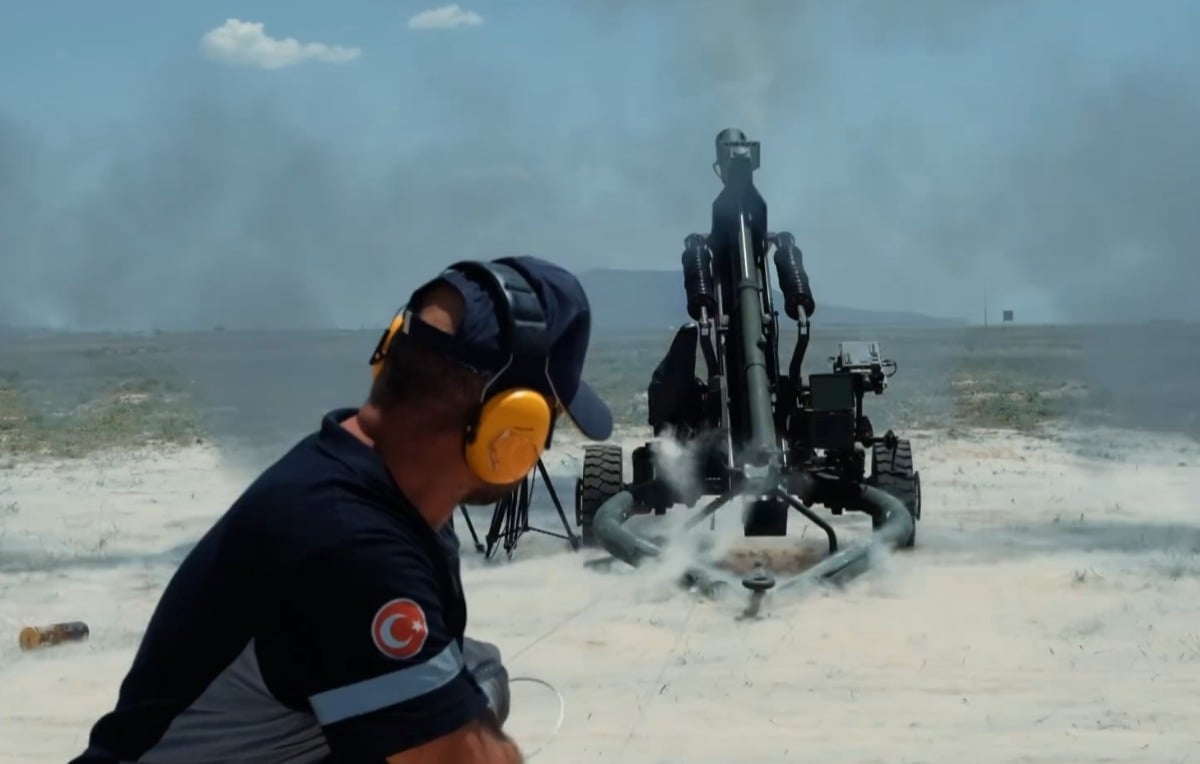
Albania has finalized a deal to acquire Turkish-made towed howitzers. On the surface, this is a line item in a defense budget. A procurement transaction. A set of numbers on a spreadsheet. Yet, when you stand on the mud-caked firing range, watching the crew handle the new equipment, the reality is far more visceral. This is not merely an upgrade in firepower; it is a fundamental shift in how the nation views its own safety.
Consider the history of these mountains. They have seen empires rise and fall, seen borders redrawn with pen and ink while men died for the dirt in between. In this part of the Balkans, security is never a given. It is a precarious construct maintained by alliances and the occasional show of strength. For years, the Albanian military acted as a caretaker of old assets, waiting for the resources to modernize. The arrival of Turkish-manufactured 155mm towed artillery is a definitive end to that period of waiting.
Why the 155mm? To a layperson, it is just a larger caliber. To an artillery officer like Kastriot, it is a language. The 155mm is the NATO standard, the lingua franca of Western defense. By adopting it, Albania is doing more than just buying guns from Turkey; they are plugging themselves into a broader, more cohesive network. They are syncing their heartbeat with the rest of the alliance.
This acquisition highlights the deepening relationship between Tirana and Ankara. Turkey, a nation that has spent years cultivating its own defense industry, is no longer just a buyer of Western technology. It is a producer, an exporter of influence, and a strategic anchor in the Eastern Mediterranean and the Balkans. When Turkey provides these systems, they are providing a layer of security that relies on interoperability. If the ammo fits both the Turkish gun and the German gun, the alliance becomes an organism rather than a collection of parts.
However, the choice of a towed howitzer—as opposed to a self-propelled system—speaks volumes about the geography of the country. Albania is not a flat plain where heavy, mechanized beasts can roll without friction. It is a land of elevation, narrow passes, and sudden changes in terrain. A towed howitzer can be pulled by a truck, maneuvered into a hidden ravine, set up, fired, and vanished before a counter-battery radar can even pinpoint the source. It is a guerrilla’s weapon, scaled up to national defense. It is the tool of an army that knows how to use the hills to its advantage.
Kastriot watches a junior lieutenant directing the crew. The gun is pivoted into position. The process is fluid, disciplined. There is no fumbling, no hesitation. The men are younger, faster, and more confident than the crews of fifteen years ago. They are trained in digital targeting systems that turn the art of artillery—once a craft of manual math and windage estimation—into a science of cold precision.
The change in gear affects the psychology of the soldier. When you carry a rifle that jams or operate a gun that might fail to cycle, you walk with a different posture. You are constantly calculating the probability of disaster. But when you are issued modern equipment that works the moment you pull the lever, that anxiety evaporates. You begin to trust your position. You begin to believe that you are truly capable of defending the line.
This, perhaps, is the most invisible cost of military modernization: the reclamation of dignity. A soldier equipped with modern technology feels like a part of the modern world. He is no longer the underdog holding onto a rusting past. He is a professional, standing on the edge of Europe, holding a weapon that speaks the same language as his allies.
There is a certain cold reality to all of this. These howitzers are not meant for parades. They are meant for the day the unexpected happens. In the Balkans, the unexpected has a habit of showing up on the doorstep. The geopolitical climate is shifting; the influence of global powers—from Moscow to Beijing—is a constant, swirling wind around the region. Albania is positioning itself, ensuring that if that wind turns into a storm, they are not left standing in the rain with nothing but outdated tools.
The training drill continues. The gun fires. The blast is a physical wall of air that hits the chest, a reminder of the raw energy being unleashed. Dust kicks up in a wide, choking cloud. For a second, everything is obscured. Then, the wind catches the grit, clearing the view. The gun is already being readied for the next round.
Observers might look at this deal and see a simple trade of capital for hardware. They might see the Turkish defense industry expanding its footprint. They might see the administrative checkboxes of NATO interoperability. All of that is true. But look closer. Look at the mud on the boots of the soldiers, the focused tension in their jaws, the way they handle the steel with a sense of newfound ownership.
This is not a story about howitzers. It is a story about the transition from defenselessness to deterrence. It is about a country deciding that it will no longer rely on the rusted iron of yesterday to secure its tomorrow. The mountains remain the same, stoic and indifferent to the affairs of men. But the men standing among them have changed.
As the afternoon light begins to fade, casting long, dark shadows across the valley floor, the artillery battery shuts down. The gear is cleaned, the tarps are pulled over the barrels, and the trucks rumble back toward the base. The quiet returns to the Accursed Mountains. It is still a heavy silence, a watchful one. But for the first time in a very long time, it feels less like a warning and more like a testament to a defense that is finally, firmly, in place.
The weapons will sit in their hangers, cold and still, until the moment they are needed. They are a promise kept in iron and gunpowder, a silent assurance that the ground beneath these peaks is not as easily taken as it once was. The deal is done, the trucks have moved, and the borders hold, silent and sharp in the twilight.