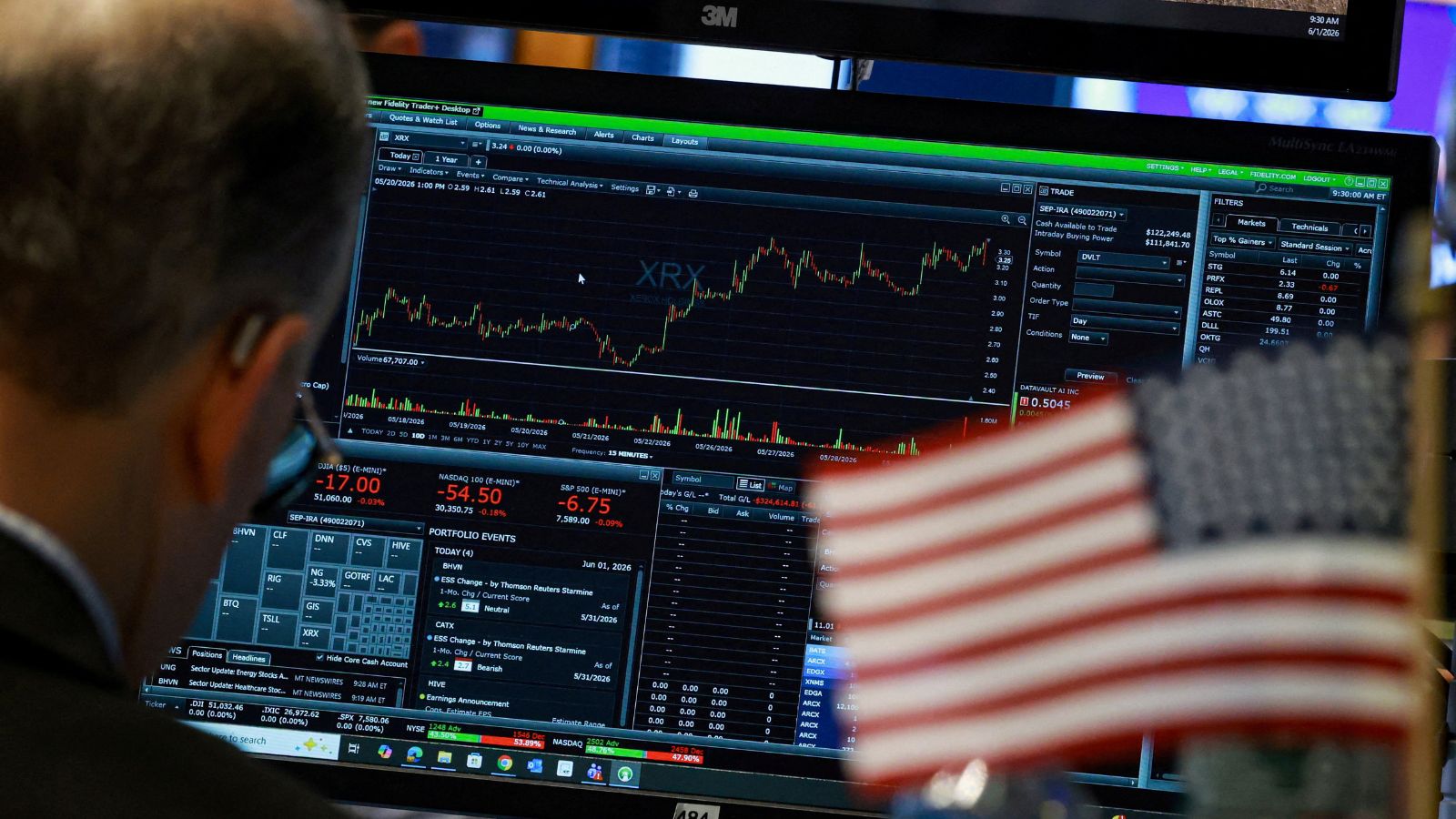
Wall Street just did something counterintuitive. The latest United States employment numbers came in weak, showing a dramatic slowdown in job creation, and investors responded by sending stocks soaring. The Nasdaq led the charge, while the Dow Jones Industrial Average climbed roughly 200 points.
If you're wondering why bad economic news suddenly translates into massive market gains, you aren't alone. It sounds completely backwards. But this reaction reveals how modern financial markets actually function right now. Traders aren't celebrating economic weakness because they hate healthy growth. They are celebrating because a cooling labor market finally forces the Federal Reserve to stop hiking interest rates and start cutting them.
Let's break down why this happens, what the numbers actually mean, and how you should think about your portfolio when bad news turns into good news for stocks.
The Fed Pivot Obsession
For the past few years, the entire stock market has danced to a single tune dictated by the Federal Reserve. When inflation ran hot, the central bank raised borrowing costs to slow down the economy. Wall Street hated those rate hikes because high interest rates squeeze corporate profit margins and make risk-free bonds look much more attractive than volatile equities.
Investors spent months praying for economic pain. That sounds harsh, but it is the raw reality of modern monetary policy. The logic goes like this: as long as the job market stays bulletproof, wages keep rising, consumer spending remains strong, and inflation refuses to drop to the targeted two percent level. If inflation stays sticky, the central bank keeps rates elevated for longer.
When the latest nonfarm payrolls report showed hiring slowing down significantly below consensus estimates, Wall Street saw a giant flashing green light. The labor market is finally cooling. Wage pressures are easing. The central bank now has the statistical cover it needs to pivot toward monetary easing. That single realization is why tech-heavy indices like the Nasdaq surged immediately after the data dropped.
Why Tech Leads the Rally
When interest rates drop or expectations shift toward looser monetary policy, growth stocks roar back to life. That is why the Nasdaq always outperforms the broader market during these specific economic inflection points.
Technology companies rely heavily on future earnings projections. When borrowing costs are high, future profits get heavily discounted. High interest rates crush the present-day valuation of software startups, semiconductor manufacturers, and mega-cap tech giants.
As soon as weak employment data signals that rate cuts are locked in, those valuation models flip overnight. Investors pile back into growth assets because cheap capital makes future expansion viable again. You saw this exact dynamic play out across the board. Semiconductor stocks popped, mega-cap platforms caught heavy buying volume, and speculative growth names found a sudden bid.
Don't confuse this with a broad, healthy economic expansion, though. This is a liquidity-driven rally rooted in the expectation of central bank rescue.
The Dangerous Trap of Bad News is Good News
Trading on the premise that weak economic data is bullish creates a massive psychological trap for everyday investors. You have to separate the stock market from the actual economy. They are not the same thing.
When job creation slows down, real people face layoffs, hiring freezes, and stagnant wages. Main Street feels the pinch long before Wall Street registers a blip on a trading terminal. Betting exclusively on lower interest rates ignores the underlying fragility that causes those rate cuts in the first place.
If the labor market cools too fast, a soft landing turns into a hard recession. When a recession hits, corporate earnings eventually take a direct hit, no matter how many rate cuts the central bank rolls out. Markets often celebrate the first few months of a cooling labor market before realizing that corporate revenues are deteriorating right alongside it.
Smart investors don't chase every single headline-driven spike. If you buy blindly every time a bad jobs report triggers a two-hundred-point Dow rally, you risk getting caught holding high-priced assets right as corporate earnings miss expectations.
How to Position Your Portfolio Now
Navigating this market environment requires discipline. You cannot afford to let daily market noise dictate your entire financial strategy.
First, look past the headline numbers. Dig into the sector-specific details of every employment report. Are losses concentrated in cyclical sectors, or are white-collar jobs drying up too? The composition of the data tells you whether a slowdown is orderly or accelerating.
Second, balance your exposure. While tech indices like the Nasdaq grab all the media attention during rate-cut rallies, maintaining a diversified basket of cash-flow-positive businesses protects you if the macroeconomic picture deteriorates faster than anticipated. Companies with rock-solid balance sheets and pricing power always survive slowdowns better than high-beta speculative plays.
Third, ignore the daily CNBC commentary. Wall Street loves a good narrative. One day bad jobs data is a recession warning, and the next day it is a green light for a bull market. Tune out the emotional swings and stick to your long-term asset allocation targets.
Markets will keep reacting violently to every economic data release until the Federal Reserve actually executes its first round of rate cuts. Expect more volatility, more whiplash, and plenty of days where bad news sends stocks flying. Keep your head clear, watch your risk exposure, and refuse to get swept up in the hype.