The thermometer in the kitchen read ninety-eight degrees, but the air felt much heavier. Outside, the surface of the Pacific Ocean looked perfectly still, a vast sheet of blue glass stretching toward the horizon. To anyone standing on the beach, it looked like a postcard. But beneath that placid surface, something massive was shifting.
Thousands of miles away, a fisherman named Mateo noticed it first in the way the bait fish vanished. For generations, his family had relied on the cold, nutrient-rich currents upwelling along the South American coast to feed the local marine life. Now, the water felt like a lukewarm bath. The fish were gone, fleeing to deeper, colder waters. Building on this theme, you can also read: Why the Strait of Hormuz Crisis Is Forcing India to Rethink Its Neutrality.
This is the quiet front line of El Niño.
We often talk about climate anomalies in the abstract. We look at colored satellite maps showing blobs of angry red spreading across the ocean, or we listen to meteorologists reel off statistical probabilities on the evening news. But El Niño is not a chart. It is a domino effect wrapped in a weather pattern, a planetary exhale that alters human lives in ways that feel intensely personal, unexpected, and devastating. Observers at USA Today have also weighed in on this trend.
The Engine in the Ocean
To understand why a patch of warm water in the middle of the Pacific can dictate the price of your morning coffee or determine whether your basement floods, you have to look at how the Earth breathes.
Normally, strong trade winds blow from east to west across the equator. These winds push warm surface water toward Asia and Australia. In their wake, cold water rises from the deep ocean off the coast of South America, bringing nutrients that sustain vast ecosystems. It is a reliable, balanced system.
But every few years, those trade winds weaken. Sometimes, they even reverse.
When the winds falter, that massive buildup of warm water sloshes backward, heading straight toward the Americas. This is El Niño. Think of it like a giant heating pad slapped onto the equator. Because the ocean and the atmosphere are locked in a permanent, intimate dance, heating the water changes the air currents above it. The jet stream—the high-altitude river of air that steers storms around the globe—gets knocked completely off course.
The results are chaotic. One corner of the world chokes on dust while another drowns in mud.
A Tale of Two Horizons
Consider two families living on opposite sides of the globe, completely unaware of each other, yet bound together by the same oceanic shift.
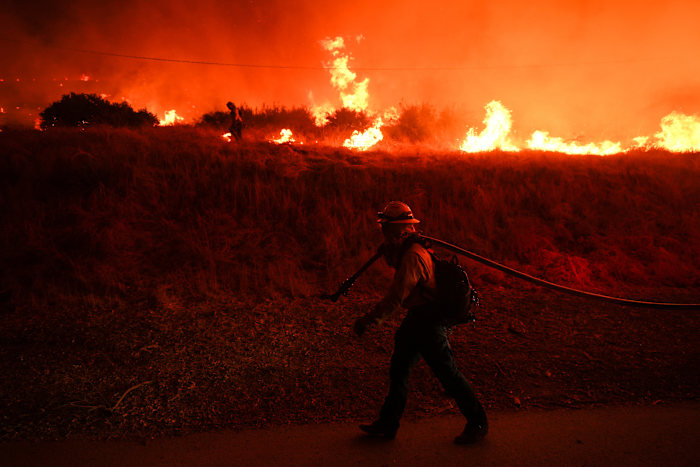
In eastern Australia, Sarah stands on her porch, looking out over a pasture that should be green but has turned the color of cardboard. The air smells like baked earth and eucalyptus. For her, El Niño means the rain clouds will simply vanish, pulled away by the shifting jet stream. The reservoirs will drop, the brush will dry to tinder, and the constant, low-grade anxiety of wildfire season will settle into her chest like smoke. She will spend her evenings checking local fire awareness apps, wondering if the wind will turn.
Meanwhile, in a hillside neighborhood outside Lima, Peru, Carlos watches the sky with a different kind of dread. The warm ocean water sitting just offshore is evaporating rapidly, feeding massive, unstable cloud systems. For Carlos, El Niño does not bring drought; it brings a relentless, pounding deluge. The dry, dusty hillsides behind his home cannot absorb that much water. They turn into liquid mud, threatening to sweep away everything he has built.
Two entirely different disasters, triggered by the exact same body of water.
The Ledger of the Warm Wave
The economic fallout of this atmospheric shift is rarely immediate. It creeps up on us. It shows up in places we do not think to look until the bill arrives.
When El Niño peaks, global commodity markets react violently. The extreme weather hits agriculture first. Droughts in Southeast Asia wither sugarcane and rice crops. Excessive rainfall in South America disrupts soybean harvests. In West Africa, cocoa trees suffer from moisture stress, causing global chocolate prices to spike.
It is a chain reaction that hits the grocery store shelf months after the ocean warms. You buy a loaf of bread or a bag of coffee, notice the price has jumped fifteen percent, and blame inflation or corporate greed. In reality, you are paying the El Niño tax.
Beyond the fields, the financial toll extends to infrastructure and insurance. Roadways buckle under extreme heat waves. Culverts collapse under the weight of five-inch downpours. Insurance companies, already reeling from consecutive years of unpredictable disasters, raise premiums or pull out of vulnerable markets entirely.
The numbers are staggering. Historical data suggests that a major El Niño event can shave trillions of dollars off global economic growth over the ensuing years. But numbers fail to capture the true cost. They do not measure the stress of a small business owner watching their inventory ruin in a flooded basement, or the despair of a farmer looking at a dead harvest.
The Uncertainty of a Changing World
We have known about El Niño for centuries. Peruvian fishermen named the phenomenon hundreds of years ago, noticing that the warm current often arrived around Christmas—hence the name, which refers to the Christ child.
But the rules of the game are changing.
We are tracking this cycle inside an atmosphere that is already warmer and holds more moisture than it did fifty years ago. Scientists are wrestling with a critical question: Does a warmer planet make El Niño worse?
The answer is complex and full of nuance, but the baseline reality is simple enough to grasp. If you add heat to an already energetic system, the swings become more violent. The droughts become thirstier. The floods become heavier. A moderate El Niño today can carry the destructive punch of a severe one from the past, simply because it is operating on a higher baseline temperature.
It is terrifying to admit how much we still do not know. We cannot pinpoint exactly which neighborhood will slide down a hill or which specific field will burn. We are dealing with global probabilities, playing a high-stakes game of chance where the dice are heavily weighted against us.
The Invisible Stakes
The real danger of El Niño is not just the physical destruction. It is the exhaustion.
When communities are forced to live in a state of hyper-vigilance for months on end, the social fabric begins to fray. Emergency services are stretched to their breaking points. Local governments spend their entire budgets reacting to immediate crises rather than investing in the future. People grow tired of rebuilding the same retaining walls, replanting the same fields, and waiting for a relief check that never seems quite large enough to cover the loss.
Yet, there is a strange kind of solace in understanding the scope of the phenomenon. It reminds us that our local struggles are part of a massive, interconnected global system. The heat wave stifling a city in the American Southwest is directly linked to the storm tracking across the coast of Ecuador. We are all breathing the same air, navigating the same currents, and waiting out the same storm.
The sun began to set over the Pacific, casting a long, amber glow across the water. It looked peaceful. But the deep ocean sensors were already sending their data back to satellites, confirming what the fishermen already knew. The warmth was spreading. The atmosphere was responding. The dominoes were already beginning to fall, one by one, across the globe.