The sirens stopped first. That is always how disaster recedes from public consciousness. One day, the air is thick with the wail of emergency vehicles, the heavy thrum of rescue boats churning muddy water, and the frantic shouting of municipal workers stacking sandbags against the inevitable. Then, the noise thins. The trucks pack up. The national news vans pack up, driving down the cracked asphalt toward the next catastrophe.
What remains is the silence. And the water.
In Ontario, a state of emergency is not merely a bureaucratic checkbox. It is an official acknowledgment that the ground beneath your feet has given up its stability. It is a legal shield, yes, but to the people standing on soggy front lawns watching the damp creep up their foundation walls, it is something much heavier. It is permission to still be terrified.
Water is patient. We forget that. We treat floods like sudden, violent weather events—a bad thunderstorm that overstays its welcome. But water has a memory, and it has an agenda. It seeps into drywall, rots joists from the inside out, and turns family heirlooms into toxic pulp. When the rivers overflow their banks, they do not just submerge streets; they uproot lives with a quiet, devastating efficiency.
Consider what happens after the crest.
Imagine a fictional resident, let us call him Arthur, standing in a kitchen that no longer smells like coffee and toast, but like stagnant river silt and wet plaster. Arthur is sixty-two. He has lived in his Ontario town for thirty years, long enough to remember when the spring thaw was just an annoyance of wet boots, not an existential threat. He spent three days hauling furniture to the second floor, his back screaming in protest, his hands blistered from filling polypropylene bags with heavy, wet earth.
When the mayor officially extended the emergency declaration, Arthur did not cheer, and he did not panic. He simply sighed, a long, weary exhalation that stirred the dust motes in the dim room.
He knew what the politicians in distant provincial offices often forget: an emergency does not end when the rain stops. The rain is just the opening act.
The real work begins when the mud dries into a crust as hard as concrete, cementing itself to living room carpets and coating the engine blocks of family sedans. It begins when insurance adjusters arrive with clipboards and polite, rehearsed expressions of regret, murmuring clauses about overland flooding and policy exclusions. It begins when the local municipality has to calculate the staggering cost of washed-out culverts, buckled bridges, and municipal infrastructure stretched past its breaking point.
To understand why an Ontario town maintains its state of emergency long after the dry dock of the media has sailed away, you have to look at the mechanics of municipal survival.
A state of emergency is a structural necessity. Without it, local governments are bound by procurement laws, environmental regulations, and budgetary red tape that can take months to untangle. With it, the town can bypass the waiting rooms. They can hire contractors immediately. They can commandeer resources. They can legally restrict access to zones where homes are tilting precariously on liquefied soil, protecting curious onlookers from becoming rescue statistics.
It is a blunt instrument. It inconveniences people. Road closures remain in place. Curfews are enforced in vulnerable neighborhoods. Commutes are doubled as detours snake around washed-out bridges. People grumble at grocery stores, fatigue fraying the communal patience that held them together during the peak of the crisis.
Friction is inevitable when survival drags on.
Yet, lifting the declaration prematurely is a gamble no responsible town council is willing to take. To drop the shield before the foundations are inspected, before the contaminated water systems are certified safe, before the riverbanks are reinforced against the next inevitable surge, is to invite catastrophe twice. It is the bureaucratic equivalent of pulling off a bandage while the wound is still bleeding.
We live in an era that demands rapid resolution. We scroll past tragedies in seconds, conditioned by algorithms to expect a neat narrative arc: crisis, climax, and resolution within a single news cycle. Real life refuses to cooperate. Geography does not care about our attention spans.
When the snow melts too fast, when the spring rains overfill the basins, nature exacts a toll that takes seasons to settle.
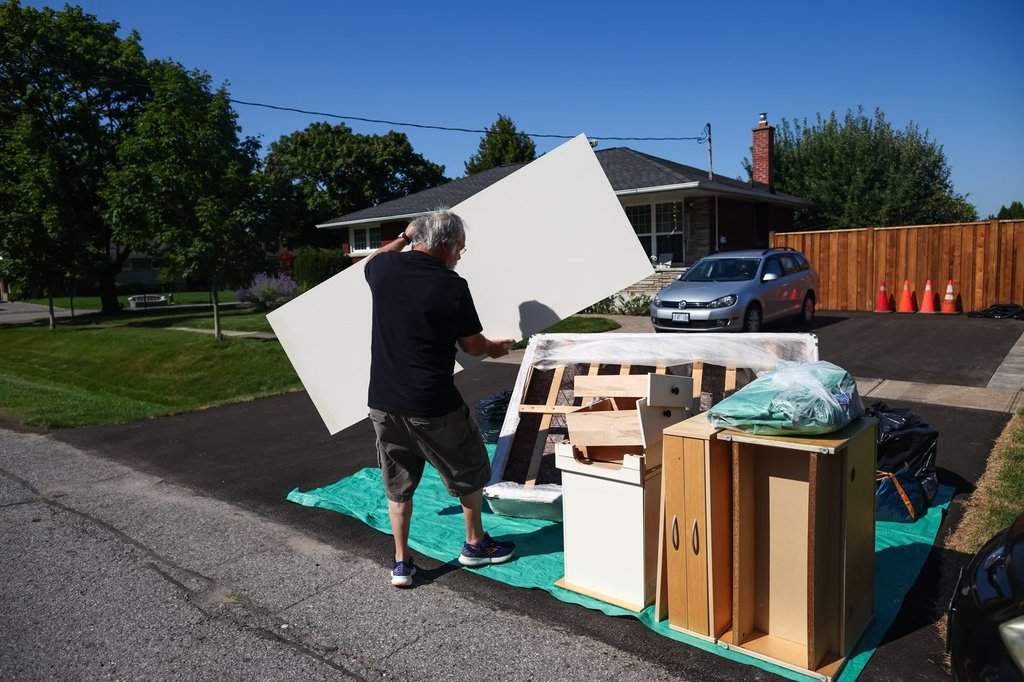
Walk through these affected neighborhoods now. The air smells of bleach and damp earth. Piles of ruined drywall, upholstered couches bloated with river water, and warped wooden cabinets line the curbs like discarded monuments to a normal life interrupted. Volunteers in rubber boots carry shovels from house to house, their faces caked in dried mud. They do not talk much. There is a solemn rhythm to the labor, a shared understanding that today it is their neighbor's living room on the curb, and tomorrow it might be theirs.
This is the hidden cost of climate volatility. It is not just the immediate dramatic footage of a rescue boat navigating a suburban street. It is the slow-motion erosion of financial security and mental peace. It is the sleepless nights every time dark clouds gather on the horizon, wondering if the sump pump will hold this time, or if the municipal drains are already overwhelmed.
The state of emergency remains in place because the danger has not vanished; it has merely changed shape. It has gone from a roaring wall of water rushing down Main Street to a silent, insidious rot behind the walls of dozens of homes.
Arthur sits on his front porch, nursing a cup of lukewarm tea from a thermos. The street is quiet, save for the distant growl of a backhoe clearing debris three blocks over. The sun is out, mocking the sodden landscape with bright, indifferent warmth. He looks at his lawn, currently a patchwork of dead brown grass and gray silt.
He knows the road back is long. He knows the town council is fighting battles with provincial bureaucrats over relief funds and infrastructure grants. He knows that the official paperwork will take months, and the rebuilding will take years.
But as he watches a municipal truck rumble slowly down the street, its amber beacon flashing a steady warning against the afternoon light, he feels a small kernel of something steady take root.
The paperwork is grinding forward. The pumps are still running. The emergency declaration is still holding the line.
They are not forgotten. Not yet. The water may have taken their floors, their walls, and their routines, but it has not taken their persistence. And as long as the town stays vigilant, braced against the mud and the memory of the crest, they will outlast the flood.


