Washington has a favorite bedtime story about the Middle East. In this story, nothing happens without an American permission slip, and if the White House ignores a diplomatic handshake, that handshake never occurred.
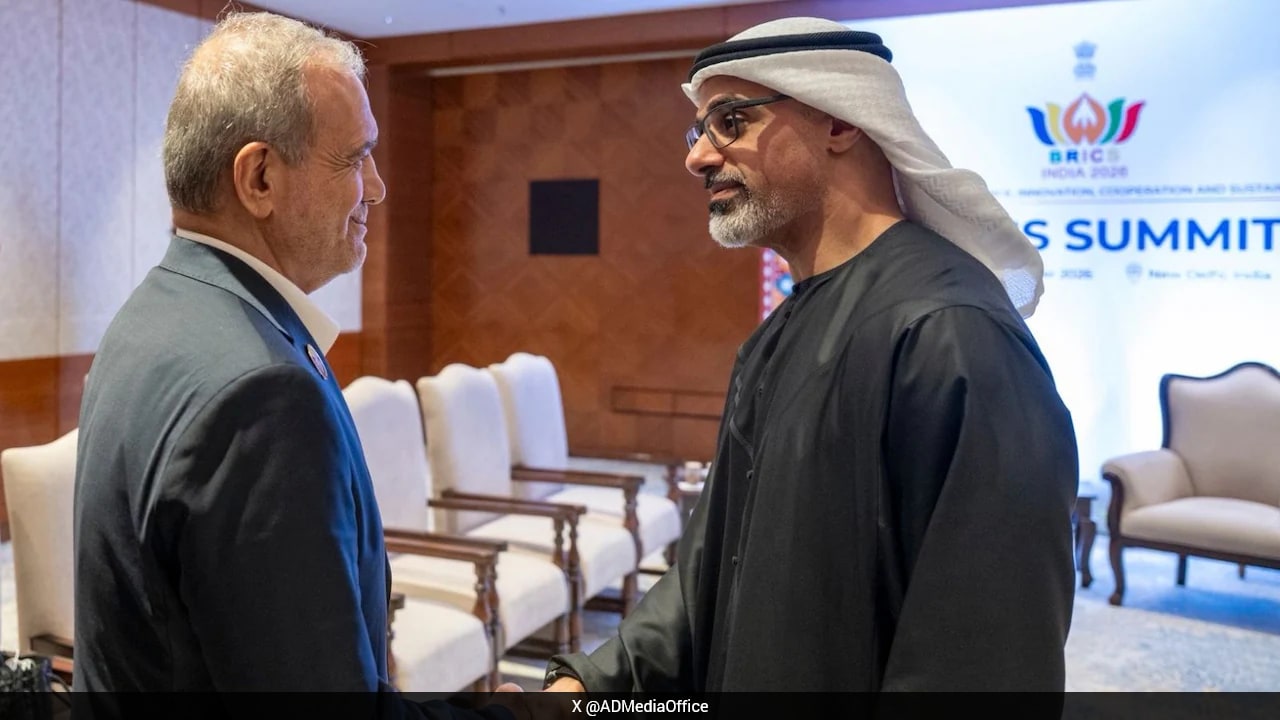
That exact delusion is on full display in the mainstream coverage of the recent diplomatic warmth between Iran and the United Arab Emirates in New Delhi. The lazy consensus among Beltway pundits is simple: Tehran and Abu Dhabi are making nice on Indian soil, and Donald Trump simply doesn't care. They frame American indifference as a power move. They treat the Delhi meeting like a minor regional sideshow that Washington is too busy—or too dominant—to notice.
They have it completely backward.
When traditional rivals stop shooting through proxies and start coordinating trade corridors inside a rising superpower’s capital without asking Washington for a seat at the table, American apathy isn't strength. It is obsolescence in real time.
The Myth of American Indifference
Let’s dismantle the core premise of the conventional take first. The idea that Trump or any American administration "doesn't care" about Gulf-Iranian rapprochement misses how modern financial warfare actually works.
For decades, the United States relied on a simple operating system in the Persian Gulf:
- Keep the Gulf monarchies terrified of Tehran.
- Sell those monarchies tens of billions of dollars in advanced hardware.
- Use their territory to choke Iran’s economy and project power.
That system only functions when the fear remains acute. The moment Abu Dhabi decides that hedging its bets with Tehran is safer than relying on an erratic American security umbrella, the entire architecture starts to crack.
I have spent years watching multinational energy firms and sovereign wealth advisors burn through millions of dollars trying to price geopolitical risk in the Strait of Hormuz. Every single time, the teams that lose money are the ones listening to Washington think-tankers instead of watching where Dubai’s port operators actually lay concrete.
When Emirati and Iranian officials smile for the cameras in New Delhi, they aren't hosting a tea party. They are signaling to global shipping insurers, commodity traders, and central banks that the risk premium in the Persian Gulf is being managed locally—not from the Pentagon. Washington saying "we don't care" is like a landlord saying he doesn't care that the tenants just changed the locks and started paying rent to the neighbor.
Why New Delhi Is the Real Story Nobody Is Reading
If you want to understand why this diplomatic thaw matters, stop looking at Tehran and Abu Dhabi. Look at the host.
Why did this "turn the page" moment happen in India instead of Geneva, Vienna, or Muscat?
Because India has quietly become the indispensable clearinghouse for post-Western diplomacy. New Delhi maintains deep defense and intelligence ties with Washington and Tel Aviv, buys discounted crude from Moscow, builds ports in Iran, and counts the UAE as one of its top trading partners and sources of sovereign capital.
This isn't accidental. Under External Affairs Minister S. Jaishankar, Indian foreign policy has abandoned the passive non-alignment of the Cold War in favor of aggressive multi-alignment. India does not pick sides; it turns itself into the bridge that every side has to cross to do business.
Consider the logistics on the ground:
- The International North-South Transport Corridor (INSTC): A 7,200-kilometer multi-modal network of ship, rail, and road routes connecting India, Iran, Azerbaijan, Russia, and Central Asia. It bypasses the Suez Canal entirely, slashing transit times and freight costs by up to 30 percent.
- Chabahar Port: India’s strategic foothold on Iran’s southeastern coast, which gives New Delhi direct access to Afghanistan and Central Asia while bypassing Pakistan.
- The India-Middle East-Europe Economic Corridor (IMEC): The flashy, US-backed rail-and-port dream that runs straight through the UAE.
By bringing Iranian and Emirati diplomats together in Delhi, India is doing what Washington refuses to do: integrating rival infrastructure projects so that a regional war becomes too expensive for anyone to start. If Abu Dhabi’s capital is intertwined with Indian logistics, and Indian logistics depend on Iranian transit routes, the UAE suddenly has a massive financial incentive to keep Tehran stable and open for business.
The "Maximum Pressure" Hangover
To understand why the Beltway crowd is misreading this, you have to look at the flawed assumption baked into the "maximum pressure" doctrine.
The theory behind maximum pressure is straightforward: squeeze an economy until the regime either collapses or crawls to the negotiating table on your terms. In practice, applying unilateral sanctions to a major energy producer in a multipolar world doesn't isolate the target. It just forces the target to build an alternative financial ecosystem with everyone else who is tired of dollar weaponization.
Let’s be brutally honest about the mechanics of sanctions evasion and regional trade. Over the past decade, Dubai has served as a critical commercial lifeline for Iranian businesses, despite endless waves of Treasury Department designations. Emirati leaders know a hard truth that Washington politicians cannot admit publicly: geography is permanent, while American administrations change every four years.
Iran sits roughly 60 miles across the Persian Gulf from the UAE. The United States is 7,000 miles away.
During the first Trump administration, when oil tankers were being mined off the coast of Fujairah and drone strikes hit regional energy infrastructure, Abu Dhabi realized a terrifying vulnerability. Washington was willing to talk tough, impose sanctions, and issue warnings, but it was not going to fight a full-scale ground and air war to protect every Emirati desalination plant and skyscraper.
So the UAE pivoted. They sent national security delegations to Tehran. They reopened embassies. They stopped treating Iran as an existential monster to be slain and started treating it as a difficult neighbor to be managed.
Dismantling the Myths About Gulf Diplomacy
When this news breaks, casual observers usually fall into three predictable traps. Let’s clear them out right now.
"Does this mean the UAE is abandoning the United States?"
No. Thinking in binary terms—either you are with Washington or against Washington—is how amateurs read foreign policy. The UAE still relies on American fighter jets, missile defense systems, and intelligence sharing. What Abu Dhabi is doing is hedging. In portfolio management, you never put 100 percent of your net worth into a single volatile asset, no matter how high the historical returns were. Washington’s erratic foreign policy swings between administrations have made the US security guarantee look volatile. Bringing Iran into the fold is simply buying insurance.
"Are Iran and the UAE actually allies now?"
Not even close. Their core interests still clash across the region, from maritime border disputes over three contested islands in the Gulf to opposing visions for political Islam. The "bonhomie" in Delhi isn't a love fest; it is a cold, transactional ceasefire. Both sides have realized that bled-out economies and burned-out oil terminals serve neither Tehran’s survival nor Abu Dhabi’s vision of becoming the global hub for AI, finance, and logistics.
"Why wouldn't Trump just threaten secondary sanctions to stop this?"
Because secondary sanctions have hit the point of diminishing returns. Every time the US Treasury threatens a major bank in Mumbai or Abu Dhabi with cutoff from the SWIFT financial system over Iranian trade, it accelerates the adoption of local currency settlement systems. India and the UAE have already begun settling bilateral trade in rupees and dirhams. Push them too hard on Iran, and you don't stop the trade—you just permanently remove the US dollar from the transaction.
The Real Cost of Looking Away
Here is the downside to my own argument, and it is worth acknowledging plainly: transactional de-escalation does not solve root causes.
Critics of the UAE’s outreach—and hawks in Washington—will rightly point out that giving Tehran breathing room allows the Islamic Republic to replenish its coffers, fund regional militias, and advance its nuclear program without making meaningful concessions. They argue that local accommodation simply delays an inevitable confrontation while making the adversary stronger.
That is a valid risk. Ignoring ideological hostility doesn't make it vanish.
However, the alternative—pretending that Washington can dictate the diplomatic calendar of the Global South through sheer indifference—is infinitely more dangerous. When American policymakers shrug off a major diplomatic alignment between Iran, the UAE, and India, they blind themselves to the structural shift happening right under their noses.
Power in Eurasia is no longer radiating outward from Washington, D.C. It is pooling in regional hubs like New Delhi, Abu Dhabi, and Riyadh. These capitals are cutting their own deals, securing their own supply chains, and writing their own rules for crisis management.
If you are an investor, a policymaker, or an analyst still waiting for the White House to give the green light before you take a regional trade corridor seriously, you are already behind the curve. The train has left the station in New Delhi, Iran and the UAE are both on board, and nobody is waiting for Washington to buy a ticket.