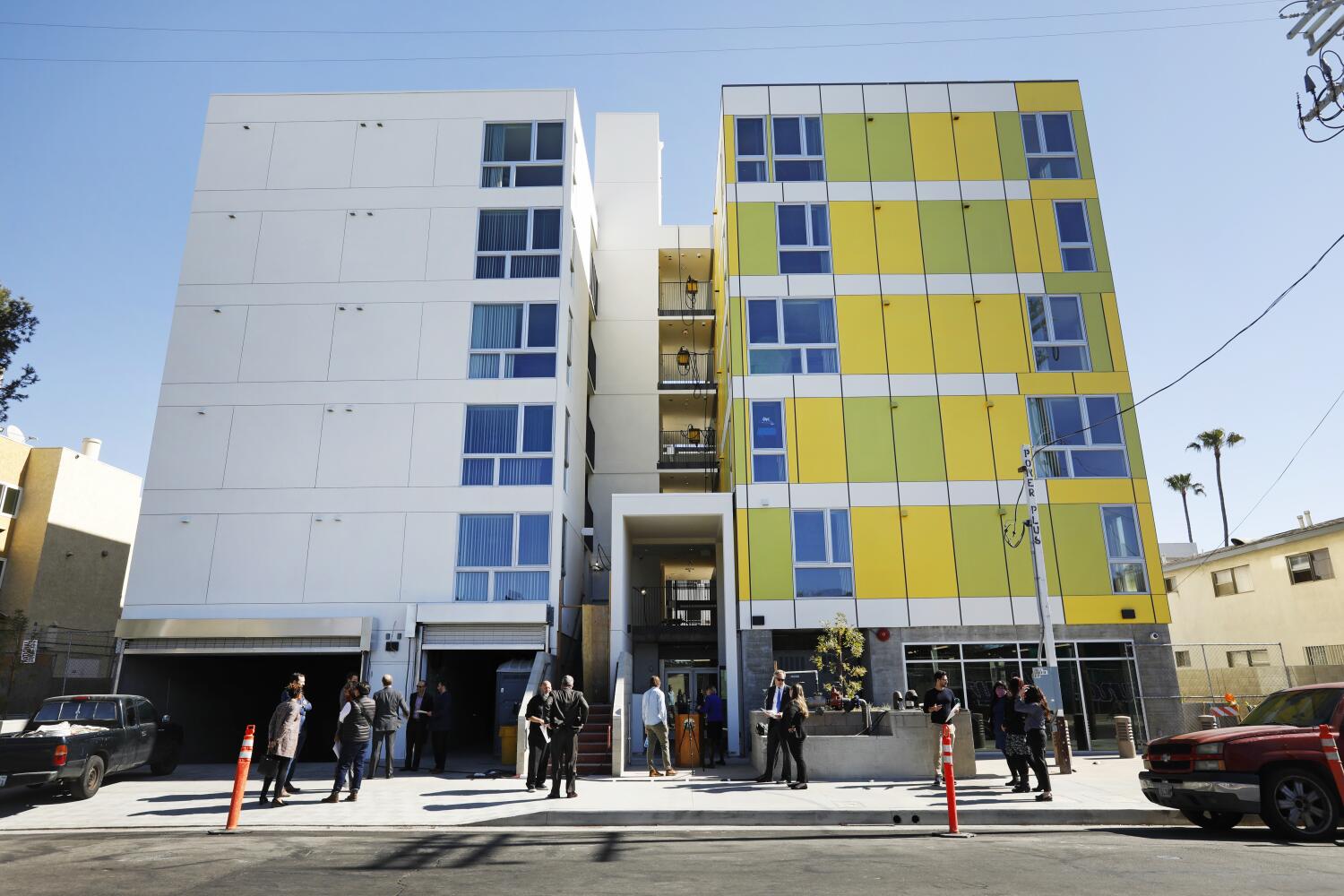
The argument that housing will remain unaffordable until wages catch up is a comforting fiction. It suggests a simple, linear fix to a mathematical nightmare. If we just paid people more, the theory goes, the keys to the front door would suddenly fit the lock. This perspective, while well-intentioned, ignores the predatory mechanics of modern real estate and the fundamental laws of supply and demand that have been skewed by decades of policy failure. Even if every worker received a $20,000 raise tomorrow, the cost of a roof would likely jump by the same margin within eighteen months.
The housing crisis is not a payroll problem. It is a structural inventory deficit compounded by the financialization of residential property. When we treat homes as speculative assets rather than essential infrastructure, the market stops serving people and starts serving portfolios. We are currently trapped in a cycle where stagnant supply meets an infinite appetite for yield, and no amount of salary growth can outrun a market designed to extract every spare cent from a tenant's paycheck.
The Mathematical Trap of Income Proportionality
For decades, the gold standard for financial health was the 30 percent rule. You spent nearly a third of your gross income on housing, and the rest went to life, savings, and the occasional luxury. That math has shattered. In major metropolitan hubs, the average worker now shells out 40 to 50 percent of their take-home pay just to keep the lights on in a space they don't own.
Raising wages in isolation creates a phenomenon known as "demand-pull inflation" within the localized housing market. In a constrained environment where ten people are fighting over one apartment, the landlord doesn't pick the most "deserving" tenant. They pick the one with the most money. If the baseline income for those ten people rises, the floor for the rent rises with it.
We saw a version of this during the recent era of remote work migration. Workers from high-salary tech sectors moved to mid-sized cities, bringing California wages to markets with Midwest inventory. The result wasn't a localized economic boom; it was the immediate displacement of the existing workforce. Wages went up for the newcomers, but the housing supply remained static. The locals, whose wages didn't move, were priced out in a matter of months. This proves that without a massive influx of units, higher wages simply act as fuel for higher prices.
The Invisible Ceiling of Regulatory Friction
If you want to know why a modest bungalow costs a million dollars in a suburb with plenty of dirt, look at the permit office. The "hidden" costs of building a home have grown at three times the rate of inflation since the 1990s. Between impact fees, environmental assessments, zoning battles, and mandatory aesthetic requirements, a developer often spends $100,000 before a single nail is driven into a piece of wood.
The Zoning Stranglehold
Single-family zoning is the primary weapon used to maintain the status quo. By making it illegal to build anything other than a detached house on a large lot, cities effectively mandate scarcity. This isn't an accident. It is a deliberate choice made by current homeowners to protect their "investment." When housing is your primary vehicle for wealth, you have a financial incentive to ensure that no one else can build near you.
The Cost of Delay
Time is a line item on a balance sheet. A project that takes five years to move from blueprint to ribbon-cutting carries massive interest payments on construction loans. These costs aren't absorbed by the builder. They are baked into the final sale price. To lower the cost of housing, we have to lower the cost of the process. Increasing wages does nothing to fix a bureaucratic system that treats every new apartment building like a natural disaster.
Wall Street is Your New Landlord
A decade ago, the idea of a multi-billion dollar hedge fund buying a starter home in a quiet cul-de-sac was unheard of. Today, it is a standard business model. Institutional investors have realized that in a world of volatile stocks, people will always need a place to sleep. They are buying up inventory with all-cash offers that no first-time buyer can match.
These entities do not care about local wage growth. They care about "Internal Rate of Return." Because they have access to nearly infinite capital, they can overpay for properties, effectively setting a new, higher floor for the entire neighborhood. When a fund owns 10 percent of the rental stock in a specific zip code, they gain the power to dictate prices. This is the financialization of shelter.
The competition is no longer between you and another family. It is between you and an algorithm designed to maximize rent. If we increase wages without addressing the ability of corporate entities to hoard residential land, we are essentially subsidizing the profits of private equity firms with taxpayer-backed salary increases.
The Myth of the Luxury Condo
Critics often point to new "luxury" developments as proof that building more doesn't help. This is a misunderstanding of how the "filtering" process works in real estate. Developers build luxury units because the high cost of land and regulation makes "affordable" construction a guaranteed net loss.
However, every person who moves into a new $3,000-a-month studio is someone who isn't competing for a $1,800-a-month older unit. When we stop building at the top, the wealthy start bidding on the middle-class inventory, and the middle class is forced into the housing stock formerly reserved for low-income earners. The "luxury" building is a pressure valve. Without it, the entire system explodes.
Why a Minimum Wage Hike Fails the Housing Test
Let’s look at the raw numbers. In many urban centers, the "housing wage"—the hourly rate needed to afford a two-bedroom apartment at fair market rent—is already double or triple the local minimum wage. To close that gap through salary alone, you would need to mandate a wage that would bankrupt half of the small businesses in the city.
The economic fallout of a $40 hourly minimum wage would be catastrophic, yet that is what the math requires if we refuse to build more housing. We are attempting to use a narrow economic lever (wages) to fix a massive supply-side failure. It is like trying to put out a forest fire with a squirt gun while someone else is standing behind you with a flamethrower.
The Construction Labor Shortage
There is an overlooked factor in the "why" of the housing crisis: we have stopped making builders. For thirty years, we told every high school student that a four-year degree was the only path to success. We gutted vocational training and stigmatized the trades. Now, we have a desperate shortage of electricians, plumbers, and carpenters.
Even if we fixed the zoning and kicked out the hedge funds, we don't have the manpower to build the 4 million units the country currently lacks. Labor costs in construction are soaring because the workforce is aging out. This is one area where wages do matter, but in reverse. We need higher wages in the trades to attract new talent, but those higher wages further increase the cost of the finished home. It is a paradox that can only be solved through a radical reinvestment in technical education and perhaps a total overhaul of how we modularize construction.
The Failed Promise of Rent Control
When the "increase wages" argument fails, people often pivot to rent control. It sounds perfect on paper. If the market is unfair, simply pass a law making it "fair." In practice, rent control is a lottery that benefits a few lucky incumbents while punishing everyone else.
Rent control discourages landlords from maintaining their properties, leading to urban decay. More importantly, it halts new construction. No developer will build in a city where their future revenue is capped by a political board regardless of their rising costs. Every city that has leaned heavily into strict rent control has seen a subsequent drop in new housing starts and an increase in the price of non-controlled units. It is a short-term sedative that leads to long-term paralysis.
The Necessary Shift in Perspective
We have to stop viewing the home as a golden goose. For the last fifty years, the American middle class was built on the idea that your house should appreciate in value every year. But if a house is always getting more expensive, it is by definition becoming less affordable for the next generation. You cannot have "affordable housing" and "housing as a high-growth investment" in the same economy. They are diametrically opposed goals.
The solution requires a brutal honesty that most politicians avoid. We need to flood the market with supply until the "investment" value of a home flattens. We need to strip away the ability of local NIMBY (Not In My Backyard) groups to veto multi-family projects. We need to tax vacant land and corporate-owned single-family homes into oblivion to force that inventory back onto the market for families.
Wages are a vital part of a healthy economy, but they are a distraction in the housing debate. If we keep waiting for the paycheck to catch up to the mortgage, we will be waiting forever. The only way out of a shortage is to build. Build up, build dense, and build now. Anything else is just theater.