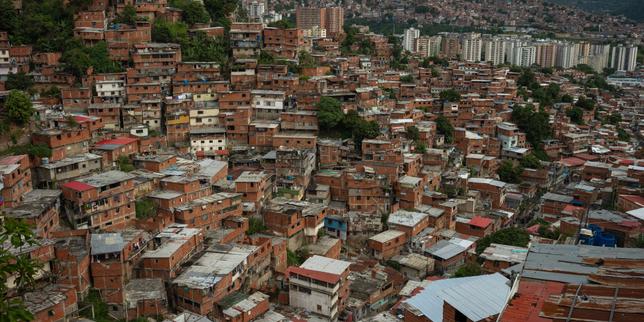
Nature has a brutal way of stripping away political propaganda. When the ground shook in northern Venezuela on June 24, 2026, it didn't just topple buildings. It completely exposed the terrifying reality of a state that has been rotting from the inside out for decades. The double earthquake—a 7.2 magnitude shock followed just 39 seconds later by a massive 7.5 tremor—left a trail of destruction that the government simply cannot hide behind cheap rhetoric.
People are starving in the streets of La Guaira. Surviving families are sleeping on open asphalt next to the rubble of their homes. If you talk to anyone on the ground right now, they aren't just crying about the tremors. They're terrified that the darkest days of total economic collapse and hyperinflation are roaring back.
The tragedy isn't just the seismic energy that surged through the Boconó-Morón-El Pilar fault system. The real tragedy is that a country sitting on the largest proven oil reserves on the planet cannot even find enough gasoline to run the excavators needed to dig children out of the rubble. It is an absolute failure of governance, and the consequences are deadly.
The Brutal Physics of a Predictable Disaster
Let's look at what actually happened when the earth moved. This wasn't a standard deep-ocean quake that loses its punch before it hits the surface. This was a shallow doublet sequence, ripping open the crust just 10 to 22 kilometers down. According to structural engineering data from Loughborough University, the energy didn't scatter. It shot like a bullet straight into the dense urban strip connecting Caracas and La Guaira.
Engineers call this the directivity effect. It means the buildings didn't just shake; they were hit by a massive, high-velocity pulse of pure kinetic energy.
Why the Buildings Failed So Fast
Walk through the worst-hit neighborhoods in La Guaira or the Miranda state, and you notice a pattern. The rubble looks like giant concrete pancakes stacked on top of each other. This wasn't bad luck. It was the direct result of terrible construction practices and a total lack of safety code enforcement.
Most of these structures used reinforced concrete frames filled out with cheap masonry. Even worse, thousands of buildings featured soft stories—think weak ground-floor columns supporting heavy concrete upper floors. When the two shocks hit back-to-back, those weak columns buckled instantly. The upper floors crashed down, trapping thousands of residents who had absolutely no time to escape.
The Soft Soil Trap
It gets worse when you look at where these cities were built. Huge sections of La Guaira and parts of Caracas sit right on soft, saturated alluvial soils and reclaimed coastal land. When the seismic waves hit these areas, the ground basically acted like jelly. It amplified the shaking, liquefying the very foundations of the buildings.
The planetary data from NASA tells a grim story. Over 58,000 buildings have been severely damaged or completely wiped off the map. This isn't just a localized emergency. It's an entire infrastructure collapse across multiple states, including Aragua, Carabobo, Falcón, and Miranda.
The Irony of Oil Reserves and Empty Gas Tanks
You'd think a nation with 303 billion barrels of proven crude oil under its feet would have the logistical power to handle a rescue operation. You'd be dead wrong.
Right now, emergency crews in La Guaira are standing over collapsed apartment complexes, staring at heavy diesel excavators that are completely useless. Why? Because there's no fuel. Government-owned rescue vehicles have run out of gas, leaving crews to dig through tons of shattered concrete using nothing but shovels, pickaxes, and their bare fingernails.
Decades of Industrial Decay
This logistical nightmare didn't happen overnight. The state-run oil monopoly has been systematically gutted by corruption, mismanagement, and underinvestment for more than twenty years. Between 2013 and 2021 alone, the country's gross domestic product shriveled by a staggering 75 percent.
The refineries that are supposed to turn domestic crude into usable gasoline are broken down. They operate at a tiny fraction of their actual capacity because the government spent billions on political vanity projects and rule preservation rather than maintaining basic industrial gear. When the earthquake severed the main distribution roads, the fragile fuel supply network snapped like a twig.
The Human Cost of Idle Machinery
Every hour an excavator sits without fuel is an hour that someone trapped beneath a collapsed wall loses their chance at survival. The confirmed death toll has already sailed past 1,700 people, and with over 46,000 individuals reported missing, that number is going to climb significantly higher.
Morgues in La Guaira ran out of physical space days ago. The intense tropical heat is compounding the horror, forcing authorities to leave bodies out in the open because there are no working refrigeration units or available burial plots. It's a scene of pure desperation that reveals exactly what happens when a state completely abandons its core duties.
The Return of the Shortage Ghost
For the average citizen who survived the initial tremors, the immediate threat shifted from falling rocks to starvation. The United Nations High Commissioner for Refugees recently ran a rapid assessment across the disaster zone and confirmed that food shortages are now general and severe.
People remember the brutal shortages of the mid-2010s, when citizens stood in line for twelve hours just to buy a single bag of corn flour. That fear is back, and it's driving people to extreme measures.
Total Collapse of Supply Chains
The earthquake completely smashed the local supply lines. Supermarkets are either crushed or locked down due to structural instability. The few warehouses that held emergency food supplies were quickly depleted or blocked by landslides along the mountain passes.
Clean water is almost nonexistent. The main aqueducts supplying Caracas and the northern coast are shattered, forcing millions of people to look for water in polluted streams or broken pipes running along the highway. UNICEF projects that roughly 1.8 million people—including nearly 700,000 children—are now in desperate need of immediate humanitarian aid.
Survival of the Fittest in the Camps
Because official state aid is slow and chaotic, makeshift camps have popped up everywhere. People are sleeping on a local golf course in La Guaira that has been turned into a staging ground. Others are simply huddled on the streets under plastic tarps.
The distribution of whatever food does arrive is incredibly tense. Survival instincts have kicked in, and the atmosphere is volatile. Eyewitnesses describe people fighting violently over basic boxes of rations. It is a chaotic scramble where the strongest survive and the vulnerable get pushed to the back.
A Looming Public Health Nightmare
If the lack of food and water doesn't break the population, the collapsing medical network might. The World Health Organization checked 21 major medical facilities across the affected states. The findings are terrifying. Three major hospitals are completely destroyed, and another six are so badly damaged that they can barely function.
The Danger of Massive Epidemics
Hospitals are dealing with massive surgical backlogs while operating under flashlights without running water. Medical staff are missing—many were injured in the quake, and others simply fled to check on their own families.
The biggest worry now is the spread of infectious diseases. Before the earthquake hit, the country already suffered from low vaccination coverage due to a broken healthcare system. Now, with hundreds of thousands of people packed into overcrowded camps with no toilets, conditions are perfect for a major outbreak. Health experts are sounding the alarm over potential surges in:
- Dengue, Zika, and Chikungunya carried by mosquitoes breeding in stagnant water.
- Waterborne diseases like cholera and severe diarrheal infections.
- Resurgent clusters of measles and diphtheria due to the lack of herd immunity.
The Failure of Local Response
International aid organizations are trying to close the gap. UNICEF managed to fly in a 47-metric-ton shipment of emergency supplies from its European hubs, but it's a drop in the bucket compared to what's actually required to fix the mess. The government's initial reaction was to restrict foreign access to keep up the illusion of control, a move that delayed critical help during the golden hours of rescue operations.
What Needs to Change Immediately
The current strategy of relying on state-controlled rationing isn't working. To prevent this humanitarian disaster from spiraling completely out of control, several concrete actions must happen right now.
First, the government must hand over the logistics of aid distribution to independent international agencies like the Red Cross and UN teams. Political loyalty shouldn't dictate who gets a bottle of clean water or a bag of rice.
Second, a dedicated fuel corridor must be established. Neighboring countries need to supply immediate, direct shipments of refined gasoline and diesel strictly earmarked for emergency vehicles and hospital generators, bypassing the corrupt domestic distribution networks entirely.
Finally, structural engineers need to conduct immediate, independent safety assessments on every building still standing in the urban corridor before allowing families to return. Relying on superficial government checks will only lead to more casualties when the next major aftershock hits.
The double earthquake was a natural event. The subsequent breakdown, the empty gas tanks, and the starving survivors are entirely man-made. If the current structural and political rot isn't addressed, the next disaster will simply finish what this one started.