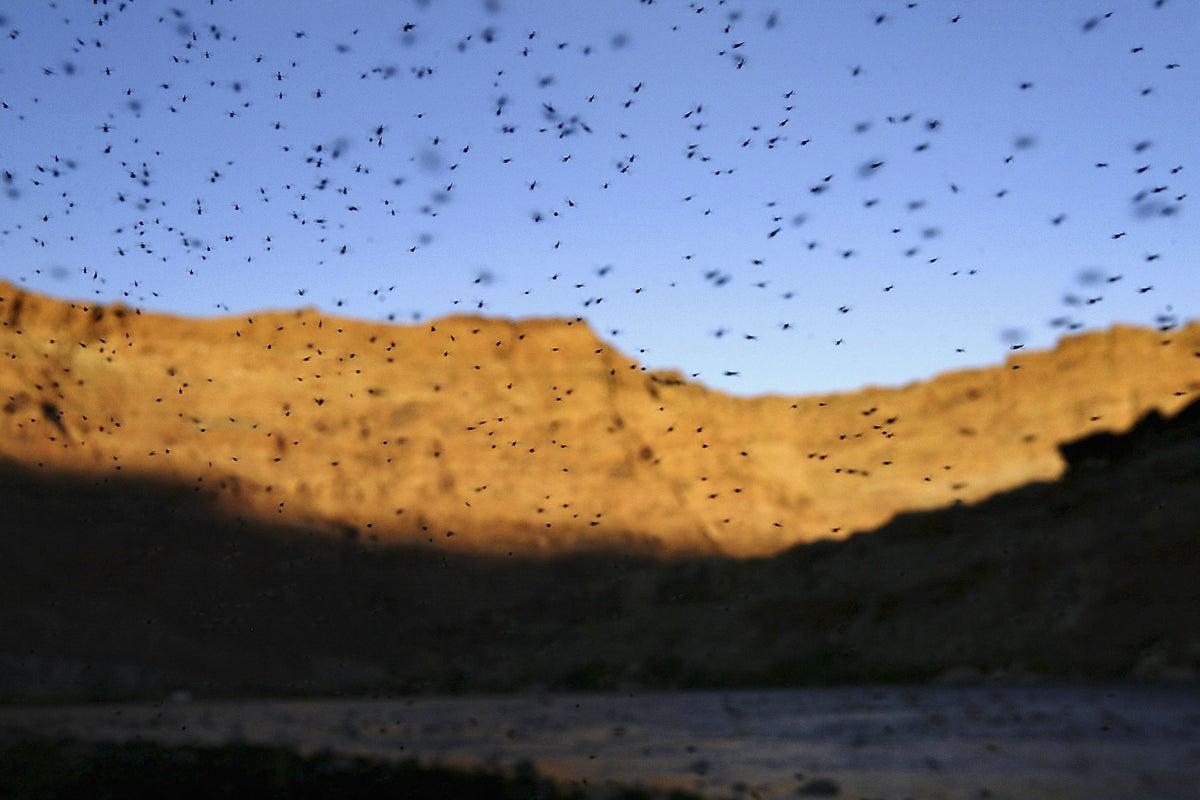
Recent entomological surveillance across Western and Midwestern jurisdictions reveals a sharp population contraction in common nuisance vector species, with local abundance metrics dropping between 50 and 70 percent relative to historical baselines. Public discourse treats this deficit as an unmitigated environmental windfall. This interpretation misreads the underlying ecological mechanics. A reduction in biting pressure does not scale linearly with pathogen transmission risk. Instead, macro-environmental constraints that suppress aggregate vector density frequently concentrate pathogen amplification cycles among surviving populations, decoupling the visual metric of pest annoyance from the epidemiological probability of arboviral infection.
The Environmental Mechanics of Vector Depression
Vector lifecycle progression is governed by strict hydro-thermal thresholds. The primary driver behind the current regional population contraction is sustained meteorological drought. Mosquito oviposition and larval maturation require stable, standing aquatic micro-habitats. When precipitation deficits coincide with elevated ambient temperatures, two compounding pressures alter demographic output.
First, the desiccation rate of ephemeral water sources—such as roadside ditches, unmaintained containers, and agricultural runoff pooling—accelerates beyond the minimum development time required for larvae to reach the pupal stage. Second, elevated vapor pressure deficits increase desiccation stress on adult females seeking host blood meals for protein-driven egg development, reducing fecundity rates across primary nuisance genera like Aedes vexans.
The operational variable is not merely the presence of water, but its persistence duration relative to the thermal development coefficient. When dry conditions outpace precipitation inputs, the net reproductive output collapses. However, this macro-scale suppression is geographically uneven. Urban heat islands, localized irrigation runoffs, and engineered drainage anomalies frequently function as micro-refugia. Within these isolated pockets, vectors persist at high densities while the surrounding regional population registers near-zero abundance.
The Concentration Effect in Vector-Borne Pathogens
Public health vulnerability is a function of infection prevalence within the vector pool rather than gross vector counts. This distinction exposes the core fallacy of equating fewer mosquitoes with lower public health risk.
When regional drought forces surviving vector populations into compressed spatial corridors—primarily shaded riparian zones, urban stormwater infrastructure, and residential micro-environments containing managed irrigation—vector-host contact rates do not decline proportionally with population size. Instead, hosts and remaining vectors converge on identical moisture-rich bottlenecks.
This spatial compression alters the transmission dynamics of zoonotic pathogens, most notably the West Nile virus. The amplification cycle relies on avian reservoir hosts and ornithophilic vector species. Under drought conditions, diminished surface water forces both birds and mosquitoes into close proximity around remaining aquatic nodes. The contact frequency per individual vector escalates rapidly.
Consequently, even as aggregate surveillance traps register historic lows, the infection rate among the surviving vector cohort frequently spikes. Pathogen transmission efficiency increases because surviving vectors take more frequent blood meals under thermal stress, and the probability of encountering an infected host within a concentrated micro-refugium multiplies. Case distribution data historically confirms this decoupling: severe outbreak years for neuroinvasive arboviral diseases often materialize during or immediately following meteorological dry spells that suppressed general nuisance biting.
Vector Control Strategy Under Resource Constraints
Managing public health risk during a period of anomalous vector depression requires a complete inversion of standard operational playbooks. Conventional pest abatement protocols rely heavily on broad-spectrum adulticide applications triggered by high trap counts. When baseline populations are structurally depressed by drought, these reactive interventions yield diminishing returns and misallocate financial and labor resources.
An effective epidemiological response framework during low-density cycles shifts from spatial reduction to targeted focal surveillance and source management.
- Targeted Larviciding of Refugia: Municipal programs must abandon blanket applications and focus surveillance capital on permanent or semi-permanent water structures—such as catch basins, retention ponds, and sub-surface drainage networks—that maintain hydration despite regional drought. These sites act as the sole remaining nurseries for vector continuity.
- Molecular Surveillance Integration: Trap density metrics become operationally misleading when populations drop. Surveillance protocols must prioritize real-time pool testing (RT-PCR assays of captured vectors) to track minimum infection rates (MIR) rather than relying on landing rates or trap counts. Resource allocation should follow pathogen presence indicators rather than nuisance complaints.
- Public Behavioral Calibration: Public health messaging must actively counteract the false sense of security generated by low pest numbers. When residential biting pressure falls, citizen-led remediation of small-scale standing water (such as flower pots and gutter blocks) typically ceases. Public communication must frame localized container management as a critical intervention against concentrated viral amplification rather than a comfort-driven chore.
Strategic Resource Allocation Framework
Public health agencies and municipal vector control boards operate within fixed budgetary constraints. When environmental shocks depress target populations, leadership faces an immediate optimization problem: maintain baseline operational capacity or reallocate capital toward predictive monitoring.
The structural hazard of low-density periods is institutional complacency. Budgetary allocations for vector control are frequently tied to seasonal nuisance complaints from the general public. When nuisance levels drop, governing bodies face political pressure to curtail surveillance funding. This response ignores the nonlinear relationship between vector density and pathogen amplification.
Data-driven strategy dictates maintaining baseline molecular testing infrastructure regardless of trap yields. The cost of failing to detect an escalating minimum infection rate within a suppressed vector population results in delayed public health warnings, leading directly to acute spikes in neuroinvasive human disease cases. Capital must be preserved for sentinel chicken testing, equine surveillance, and targeted larvicidal maintenance of urban subterranean water systems where environmental drought cannot reach.
The current downward trend in regional mosquito populations represents an ecological disruption driven by climate variability. Treating this phenomenon as an extended holiday from pest management introduces severe epidemiological exposure. Surviving vectors operating within compressed urban micro-refugia maintain, and frequently accelerate, the transmission velocity of high-consequence pathogens. Operational planning must prioritize infection rate surveillance over gross population counts, shifting vector management from a reactive comfort service to an active biosecurity defense.


