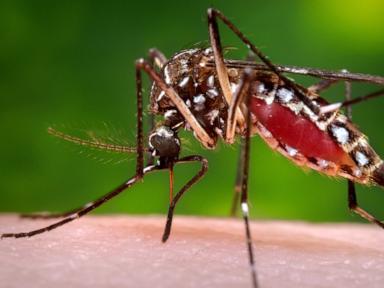
The emergence of locally acquired dengue transmission within the continental United States exposes structural vulnerabilities in municipal vector management and epidemiological surveillance. When the Florida Department of Health recorded over six hundred autochthonous cases centered primarily in the Tampa Bay region alongside a confirmed fatality, the outbreak transitioned from a localized vector control anomaly into a broader indicator of shifting arboviral boundaries. Analyzing this trajectory requires dissecting the transmission mechanics, the limitations of passive surveillance, and the environmental multipliers governing urban vector expansion.
The Tripartite Engine of Transmission
Autochthonous transmission requires the intersection of three distinct variables: an imported viremic human reservoir, an established vector population of competent mosquitoes, and environmental conditions that optimize the extrinsic incubation period.
The primary vector, Aedes aegypti, thrives in hyper-urbanized environments characterized by artificial water-holding containers. Unlike rural malaria vectors, Aedes species exhibit anthropophilic behavior, feeding almost exclusively on humans and resting indoors or in sheltered micro-habitats.
The transmission cycle initiates when a female mosquito ingests blood from a traveler returning from a dengue-endemic region, such as the Caribbean or Central and South America. Once infected, the mosquito undergoes an extrinsic incubation period—typically eight to twelve days, dependent on ambient temperature—after which the virus migrates to the salivary glands. Subsequent feeding events inject viral particles directly into a new human host, bypassing geographic containment barriers.
The Mechanics of Under-Counting and Surveillance Lag
Passive surveillance systems inherently miscalculate the true prevalence of arboviral outbreaks. The epidemiological curve relies on clinical presentation and diagnostic confirmation via Polymerase Chain Reaction (PCR) or IgM serology. However, the phenotypic expression of dengue virus infection varies across a wide spectrum:
- Asymptomatic Clearance: Up to eighty percent of infected individuals exhibit zero clinical manifestations, yet they serve as temporary viremic hosts capable of fueling local mosquito vectors.
- Oligosymptomatic Presentation: Mild febrile illnesses are frequently misattributed to influenza or common seasonal viruses, resulting in suppressed healthcare-seeking behavior and absent laboratory testing.
- The Reporting Latency Loop: A multi-week delay typically separates symptom onset, clinical presentation, laboratory assay processing, and state-level aggregation. Consequently, municipal emergency declarations respond to historical transmission data rather than real-time incidence.
This systemic latency creates a reactive policy cycle. Municipalities deploy ultra-low volume (ULV) adulticide spraying only after vector density and human case numbers cross designated thresholds, long after the primary amplification loop has matured.
Serotypic Dynamics and Immunological Risk
Dengue virus comprises four distinct serotypes (DENV-1 through DENV-4). Primary infection confers lifelong homotypic immunity against the infecting serotype but only transient, partial heterotypic protection against the remaining three.
Epidemiological surveillance data from the Florida outbreak indicate an overwhelming dominance of the DENV-2 serotype among sequenced local cases. In populations with low baseline seroprevalence—where historical exposure to any dengue serotype is near zero, as is typical for continental U.S. populations—initial infections result in classic dengue fever without prior-immunity complications.
However, the longer an area maintains active circulation of a specific serotype, or if subsequent introductions introduce secondary serotypes, the risk profile shifts. Secondary infection with a heterologous serotype increases the physiological probability of antibody-dependent enhancement (ADE). In ADE, non-neutralizing cross-reactive antibodies from the primary infection bind to the new viral serotype, facilitating viral entry into Fc-gamma receptor-bearing cells and significantly escalating the risk of severe clinical manifestations, including plasma leakage and hemorrhagic shock.
Environmental Multipliers and Vector Habitat Economics
Urban ecology dictates vector capacity. The concentration of cases in densely populated counties like Hillsborough and Pinellas reflects the distribution of ideal micro-environments. Excessive seasonal rainfall provides millions of oviposition sites within artificial receptacles—discarded tires, unmaintained gutters, ornamental planters, and storm drain networks.
The biological multiplication equation is non-linear. A single female Aedes aegypti can deposit multiple egg batches over her lifespan, with eggs displaying desiccation resistance capable of surviving months in dry environments before hatching upon re-immersion. Municipal abatement economics face severe diminishing returns: chemical adulticides target flying adults with temporary efficacy, while true population suppression requires exhaustive source reduction—locating and eliminating micro-container habitats across private and commercial properties.
Strategic Resource Allocation and Intervention Vectors
Mitigating hyper-endemic drift requires moving away from reactive pesticide application toward an integrated vector management (IVM) framework.
- Targeted Source Reduction: Prioritize spatial intelligence and GIS mapping of historical case clusters to direct community sanitation sweeps within a 200-meter radius of confirmed cases, matching the typical flight range of Aedes aegypti.
- Ovitrap Surveillance Networks: Deploy lethal ovitraps combined with molecular surveillance to monitor vector infection rates before human clinical cases manifest in emergency departments.
- Public-Private Infrastructure Compliance: Enforce municipal codes regarding stagnant water on commercial properties to eliminate high-yield breeding grounds.
Municipalities facing sustained autochthonous transmission must budget for multi-million-dollar vector control expenditures as a baseline operational cost rather than an emergency contingency. The long-term trajectory depends on whether vector control agencies can permanently suppress urban Aedes density below the epidemic threshold before shifting climate patterns permanently anchor tropical arboviruses within continental latitudes.