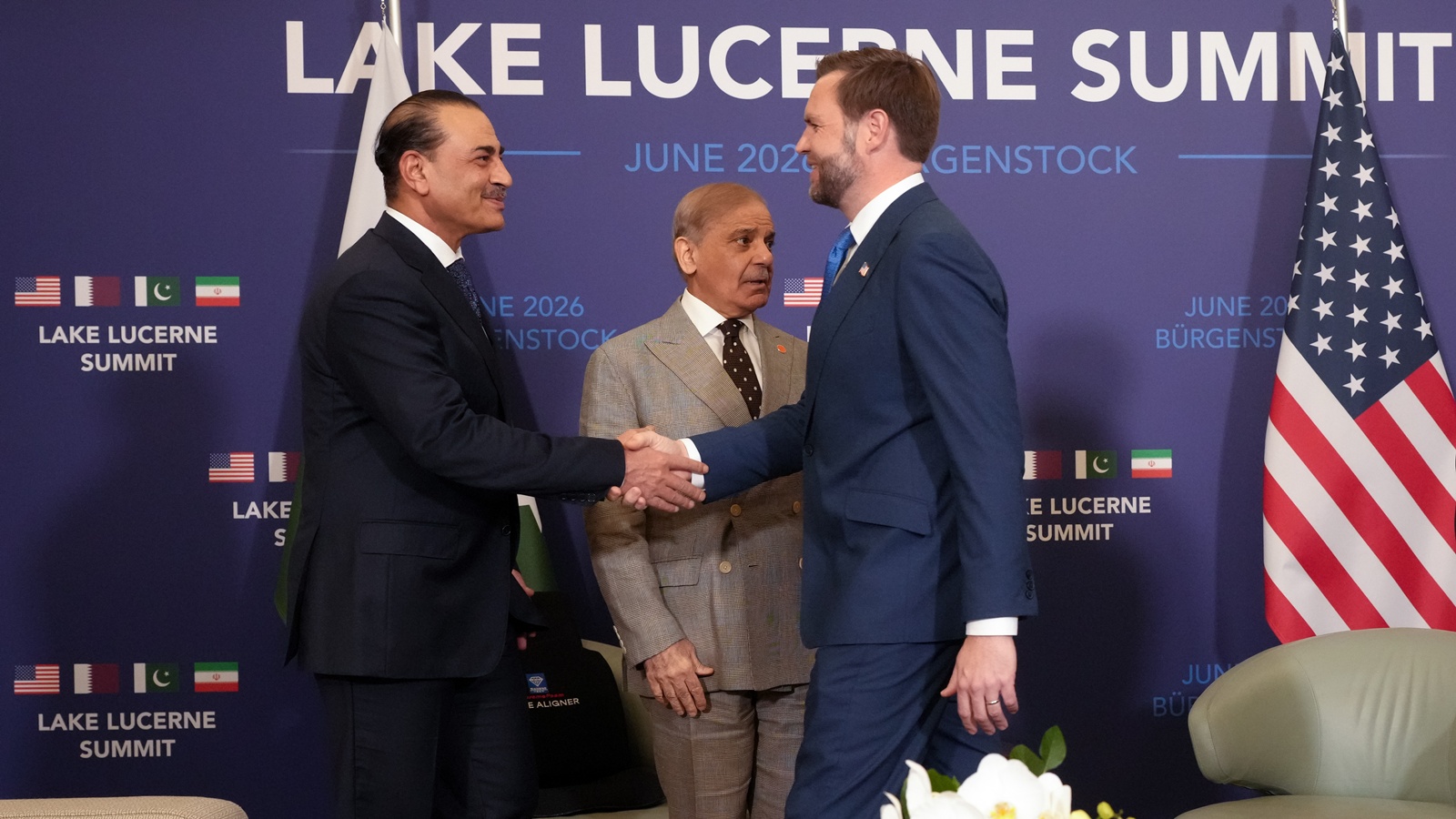
Mainstream political media fell into a predictable trap when reporting on Vice President JD Vance’s comments during high-stakes US-Iran talks. The headlines latched onto a single, sentimental phrase: Vance referring to "an Indian and a Pakistani" as his "favourite people." The press treated this as either a heartwarming display of cross-cultural affinity or a clumsy gaffe in a tense geopolitical environment.
Both interpretations are completely wrong. They miss the calculated, cold-blooded utility of modern statecraft.
The lazy consensus among political commentators is that personal anecdotes and identity-driven rhetoric in foreign policy are either superficial fluff or dangerous distractions. Media outlets analyzed the remark through the lens of domestic identity politics, treating geopolitical negotiations like a cable news panel. This exposes a fundamental misunderstanding of how international diplomacy actually functions.
Vance wasn't slipping up, nor was he trying to win a diversity award. He was executing a classic tactical maneuver: using identity as a strategic shield to reset the thermal dynamics of a hostile room.
The Myth of the Purely Rational Negotiation
West Wing idealists love to believe that international relations are governed strictly by white papers, structured treaties, and bloodless realism. I have watched analysts spend decades reading transcripts of state dinners as if they were decoding top-secret military blueprints. They fail to understand that the human element in statecraft is not a bug; it is an instrument.
When negotiations stall—especially with an adversary as historically ideological and deeply suspicious as Iran—the standard rhetorical playbook fails. Standard talking points create a predictable gridlock. In these moments, a seasoned negotiator pivots to aggressive personalization.
By invoking two specific individuals from historically conflicting nations (India and Pakistan) as his "favourite people," Vance accomplished three distinct tactical objectives simultaneously:
- He disrupted the adversary's script. Iranian diplomats arrive with a highly rigid, rehearsed narrative about American imperialism, Western monoculture, and predictable partisan behavior. Throwing a deeply personal, subcontinental reference into a Middle Eastern security debate short-circuits that prepared defense.
- He signaled multi-alignment without making policy concessions. Expressing profound affinity for individuals from India and Pakistan reminds everyone in the room that the United States operates on a global chessboard, not a bilateral vacuum. It is a subtle nod to the shifting center of global gravity toward South Asia.
- He humanized the executive branch on his own terms. Instead of adopting the pre-packaged, focus-grouped language of bureaucratic diplomacy, he used raw, informal vernacular to throw the other side off balance.
The Flawed Premise of Diplomatic Decorum
Go ahead and look at the "People Also Ask" columns online whenever a politician says something unconventional during an international summit. The questions are agonizingly naive: Should politicians use personal anecdotes during peace talks? Is it professional to talk about identity in foreign policy negotiations?
These questions are fundamentally flawed because they assume "professionalism" equals effectiveness.
The history of successful, high-stakes diplomacy is a history of breaking decorum. When Richard Nixon went to China in 1972, he didn't stick to the scripted consensus of the State Department; he engaged in raw, philosophical, and deeply personal debates with Mao Zedong that horrified traditional diplomats. When Ronald Reagan joked about outlawing Russia during a mic check in 1984, the press corps experienced a collective meltdown, yet that exact brand of unpredictable, high-stakes posturing forced the Soviet leadership to realize they were dealing with an entirely different psychological profile.
The downside to this contrarian approach is obvious: it carries a massive risk of misinterpretation. When you abandon the scripted, bloodless language of the diplomatic corps, you hand your opponents—both foreign and domestic—the raw materials to manufacture a controversy. A single phrase can be stripped of its context, clipped into a ten-second video, and weaponized on social media before the delegation even leaves the tarmac.
But in a world completely saturated by predictable political PR, calculated unpredictability is the only currency that still holds value.
Deconstructing the Subcontinental Lever
The choice of India and Pakistan is not accidental, nor is it merely a reflection of Vance's personal life or his wife Usha Vance’s heritage. In the theater of global affairs, India and Pakistan represent the ultimate geopolitical paradox: two nuclear-armed states locked in a permanent, existential rivalry, yet inextricably tied by history, culture, and geography.
By grouping them together as his "favourite people," Vance deployed a sophisticated rhetorical tool known as strategic convergence. He took two adversarial identities and unified them under the umbrella of American affinity.
To the Iranian delegation, this carries an unspoken but powerful subtext. It demonstrates that the United States is entirely capable of managing complex, contradictory relationships simultaneously. It signals that Washington does not view the East through a monolithic lens, but rather understands the hyper-specific, fractured realities of regional rivalries.
The media missed this entirely because they were too busy checking the comment sections for outrage. They viewed the statement through the narrow lens of domestic culture wars, completely blind to the fact that international diplomacy is an exercise in psychological warfare.
Stop Demanding Scripted Leadership
The political establishment wants leaders who act like highly polished teleprompter readers. They want every syllable vetted by a committee of seventeen staffers until the final output is completely devoid of human flavor, risk, or utility.
When a politician departs from that sanitization, the immediate reaction from the pundit class is panic. They mistake a shift in tactics for a lack of discipline. They analyze the surface-level words while remaining utterly blind to the underlying structural mechanics of the interaction.
International relations are not settled by who has the neatest press release or who adheres most rigidly to the etiquette manuals of the twentieth century. They are dictated by leverage, psychological dominance, and the ability to control the narrative inside the room.
The next time a major political figure drops an unexpected, deeply personal reference in the middle of a global security crisis, do not look at the mainstream media's translation. Stop asking if it was polite. Stop asking if it fit the conventional mold of a statesman.
Start asking what script it broke, who it caught off guard, and exactly what reality it forced the adversary to face. The room changed the moment those words were spoken. The press is still trying to figure out the seating chart.


