Power usually makes a sound. It rattles in armored convoys, echoes off marble courthouse walls, and booms through the microphones of state television. But sometimes, power sits entirely still. It looks like an elderly woman in a simple courtroom chair, listening to testimony about atrocities so vast they threaten to swallow the room whole.
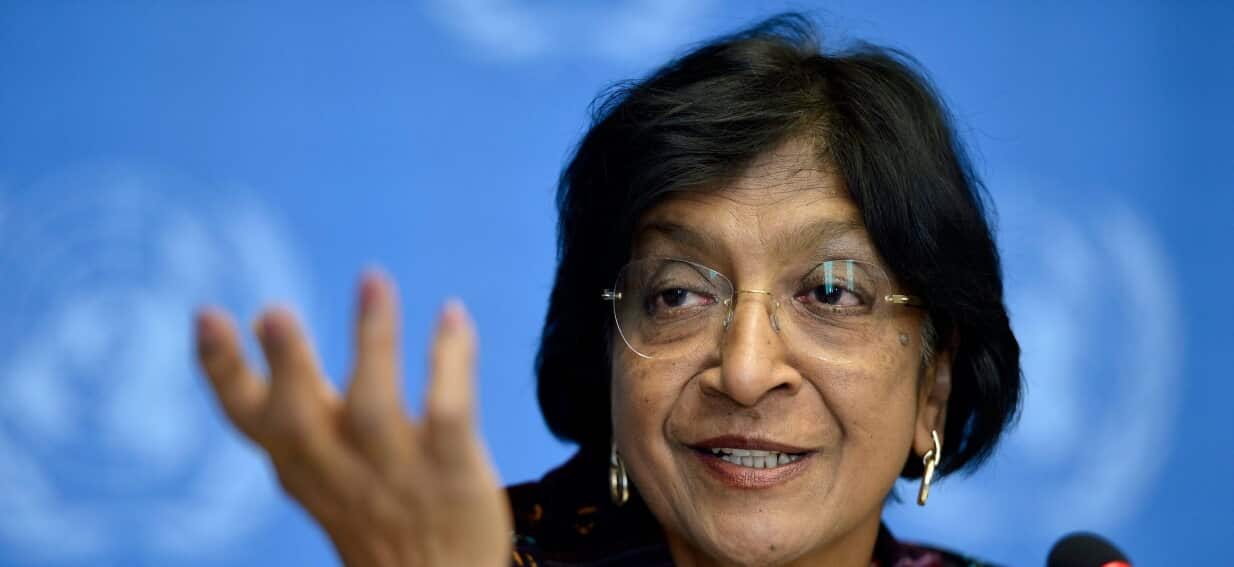
Navanethem Pillay has spent a lifetime inhabiting that stillness.
When the announcement came from Oslo, the world learned that Navi Pillay had won the 2026 Nobel Peace Prize. To the casual observer tracking international headlines, it was a prestigious nod to a decorated jurist. To anyone who has watched the machinery of global justice grind, sputter, and occasionally break over the last half-century, it was something else entirely. It was a long-overdue reckoning with the quiet forces that keep humanity from tearing itself apart in the dark.
Consider what the word justice actually costs. We see it on bronze statues and graduation banners, sanitized into a neat scale held by a blindfolded figure. Real justice is messier. It smells of damp basement archives in post-conflict zones. It tastes of the stale tea shared with a grieving mother in Durban during the apartheid years, when speaking the truth could get you vanished before sunset.
Pillay knows that taste.
Long before she became the United Nations High Commissioner for Human Rights, long before she presided over the International Criminal Tribunal for Rwanda, and long before she sat on the bench of the International Criminal Court, she was a young woman staring down the barrel of an entire legal system built to crush her. In South Africa, under the suffocating weight of apartheid, being both a woman of color and an attorney with a conscience meant working inside a house on fire. She didn't just defend political dissidents; she exposed the torture chambers. She demanded habeas corpus for the detained when the state pretended prisons were empty.
History loves to credit grand armies and charismatic revolutionaries with the turning of eras. History forgets the stenographers of survival. It forgets the lawyers who stayed up until three in the morning drafting appeals on battered typewriters, knowing the judge had already made up his mind, doing it anyway because the act of recording the crime is the first step toward reclaiming the future.
When Pillay took her seat at the tribunal for Rwanda in the mid-nineties, the world was still reeling from a genocide that unfolded while global leaders looked the other way. The scale of the horror defied language. Nearly a million human beings slaughtered in a hundred days. How do you judge a catastrophe? How do you write a legal indictment for an apocalypse?
She didn't blink. Under her leadership, the tribunal delivered a historic verdict that recognized rape not merely as a byproduct of war, but as an instrument of genocide. That distinction matters. It matters because for centuries, the horrors inflicted upon women in conflict zones were brushed aside as the tragic collateral damage of men with guns. Pillay looked at the evidence, stripped away the institutional cowardice of international diplomacy, and named it for what it was: a weapon of mass destruction aimed at the social fabric of a people.
That is the thread running through her entire career. She refuses to look away from the ugly parts.
We live in an era that desperately craves quick fixes. We want villains to be cartoonish, heroes to be flawless, and moral crises to be resolved within a single news cycle. Real life is an exhausting slog through gray mud. Dictators shroud their violence in bureaucratic euphemisms. Corporations poison water supplies with impunity behind legal firewalls. State-sponsored violence hides behind national security exemptions.
Pillay spent decades punching holes in those firewalls.
When she served as the UN High Commissioner, she frequently infuriated the world's most powerful capitals. She did not play the diplomatic game of polite indifferenc. She called out war crimes in Gaza, denounced human rights abuses in Sri Lanka, and criticized surveillance states that treat civilian populations as walking data points. Governments hated her for it. That is generally the best metric for measuring a true human rights defender. If the people with the armies are comfortable with you, you are probably not doing your job.
There is a specific kind of loneliness that comes with holding power accountable. Most people fold. Compromise whispers sweet rationalizations into the ear of anyone standing too close to the flame. Keep your head down, the voice says. Don't rock the boat. You are just one person; you can't fix the whole world.
Pillay listened to that voice, presumably, and then ignored it.
The 2026 Nobel Peace Prize does not reward a person who made the world comfortable. It honors someone who made the world look in the mirror. It acknowledges that peace is not simply the absence of gunfire. True peace requires accountability. Without truth, reconciliation is just a polite word for sweeping corpses under the rug. Without justice, a ceasefire is merely a countdown to the next war.
Imagine standing in a courtroom in Arusha, Tanzania, decades ago. The air is thick with humidity and the heavy, suffocating weight of unimaginable grief. Witnesses take the stand. They describe things that should never have happened under the sun. Across the room, men who ordered the slaughter sit with folded arms, daring the judges to prove it. The system is slow. The paperwork is endless. The political pressure from global superpowers to rush the proceedings and look away is palpable.
And then there is Pillay. Listening. Taking notes. Weighing every syllable with the cold, sharp precision of a surgeon who knows that a single slip of the scalpel will infect the whole patient. She is not performing for the cameras. She is building a cage out of law and evidence, brick by painstaking brick, until the architects of slaughter have nowhere left to run.
That is the legacy the Nobel Committee recognized. Not a utopian dream, but a gritty, unglamorous blueprint for human dignity.
We often talk about human rights as if they are weather patterns—something that happens to us, shifting from sunny tolerance to stormy authoritarianism without our consent. They are not. They are fragile agreements maintained entirely by the courage of individuals who refuse to let go of their humanity, even when the world around them is actively trying to strip it away.
Navanethem Pillay is eighty-something years old now. Her hair is white, her steps measured. But her legacy stands as a warning to every tyrant, every corrupt bureaucrat, and every bystander who ever muttered that nothing can be done.
Something can always be done. You just have to be stubborn enough to start.
The prize money will be spent. The headlines will fade into the digital archive. But the precedent remains, carved deep into the bedrock of international law: no one is too powerful to escape the reckoning of human conscience, and no victim is too small to be forgotten.
The courtroom lights stay on. The record is clear. The work continues.