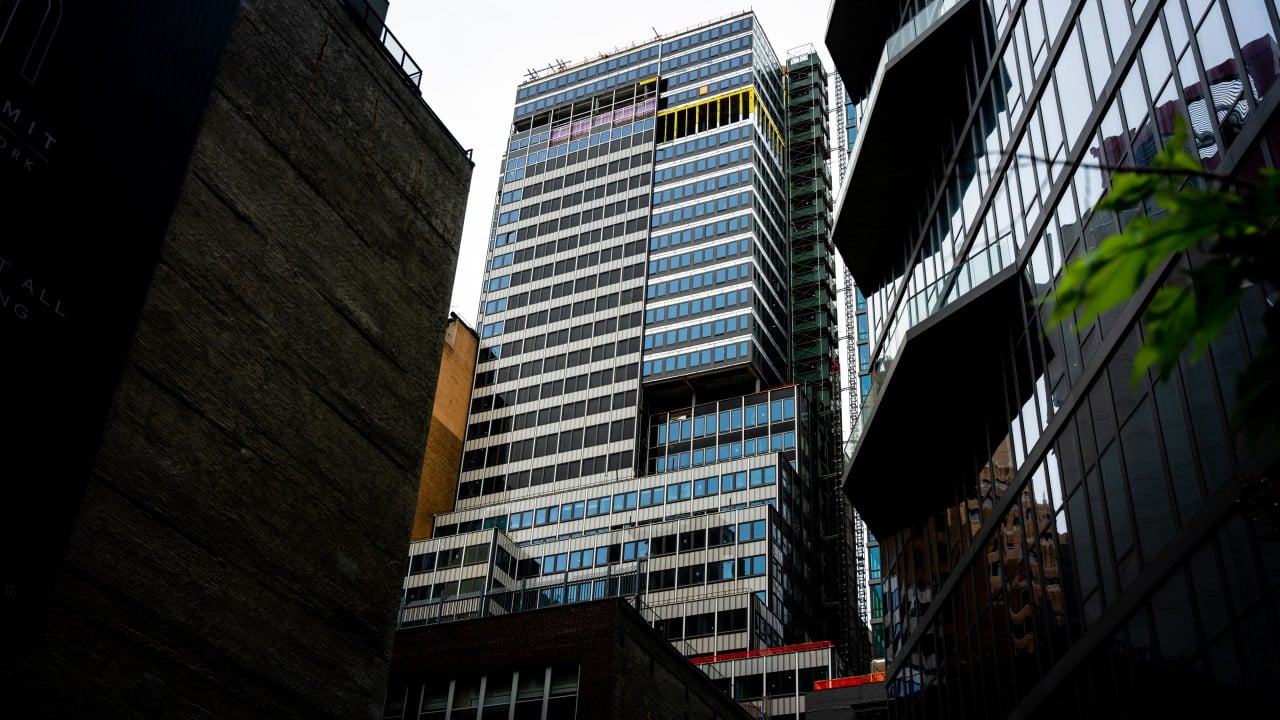
The media is currently having a collective panic attack over a high-profile New York City skyscraper experiencing structural settling, buckling columns, and sagging floors. The headlines scream about imminent catastrophe, developer greed, and municipal failure. The city is "racing against time."
They are asking the entirely wrong question.
Instead of wondering how this happened, we should be asking why we aren't letting it happen more often.
The lazy consensus among real estate pundits and armchair engineers is that structural movement equals structural failure. It doesn't. In the world of ultra-tall engineering, if your building isn't moving, settling, or occasionally stressing its components to the limit, you didn't build a monument—you built an over-engineered, economically non-viable bunker.
I have spent two decades analyzing commercial real estate risk and structural asset allocation. I have watched developers burn hundreds of millions of dollars over-specifying steel configurations just to satisfy outdated municipal codes written when the slide rule was high tech. The panic over a few buckling cosmetic jackets or localized structural deflections is a symptom of an industry terrified of calculated risk.
The Myth of the Static Building
Let's clear up a massive misunderstanding right now. Buildings are not rocks. They are dynamic, shifting, elastic systems.
When a 60-story or 80-story tower is erected, the dead load—the actual weight of the concrete and steel—compresses the lower columns. For a standard reinforced concrete column, you can expect significant shortening over its construction lifetime.
$$\Delta L = \frac{P \cdot L}{A \cdot E}$$
Where $P$ is the load, $L$ is length, $A$ is cross-sectional area, and $E$ is the modulus of elasticity. This isn't a defect; it is basic physics.
When a building sags or columns deform under load, it is frequently the structure finding its equilibrium. The sensationalized "buckling columns" the public sees are often the fireproofing enclosures or architectural cladding buckling under the natural, expected compression of the structural steel core inside.
The mainstream media covers these events like a ticking time bomb. In reality, it is usually a routine remediation cycle. Engineers inject high-strength epoxy grout, install temporary shoring, or add external steel jackets to redistribute load paths. It is the structural equivalent of getting a root canal, not a terminal diagnosis.
Why Zero-Risk Engineering Is Killing Our Cities
If you demand absolute, zero-variance stability from day one, you get two things: hyper-inflation in housing costs and architectural stagnation.
When a municipality tightens regulations to ensure that no floor ever sags by even a fraction of an inch, they force engineers to use an absurd factor of safety. Instead of a standard 1.5 or 2.0 safety factor, developers are forced to build structures that could withstand a direct meteor strike.
This over-engineering consumes massive amounts of structural steel and high-performance concrete. It drives up construction costs exponentially. Who pays for that? The tenants. The businesses. The city.
Consider the economics of a typical Manhattan supertall tower:
- Structural Steel: Accountable for up to 15% to 20% of total hard costs.
- Over-engineering Premium: An artificial 5% to 8% tax tacked onto total development costs just to appease risk-averse city inspectors.
- Opportunity Cost: Months of delays spent run-time testing redundant systems that will never experience their peak design load.
By embracing a philosophy of dynamic tolerance—allowing structures to settle actively and treating structural remediation as a planned phase of a building’s life cycle rather than an emergency—we could slash urban development costs by billions.
The True Cost of Panic
| Metric | Over-Engineered Bunker | Dynamic Tolerance Tower |
|---|---|---|
| Safety Factor (Structural) | 2.5 - 3.0 | 1.4 - 1.6 |
| Material Efficiency | Low (Heavy, Rigid) | High (Lightweight, Elastic) |
| Upfront Capital Required | Astronomical | Optimized |
| Post-Construction Tuning | None (Theoretically) | Periodic (Planned Maintenance) |
Dismantling the People Also Ask Panic
Go online right now and look at what people are asking about unstable buildings. The premises of their questions are completely broken.
"Can a skyscraper just collapse out of nowhere?"
No. Steel and concrete give warnings. They creak, they groan, they deflect, and they sag. The idea that an occupied modern skyscraper will simply snap like a twig without weeks of highly visible, measurable macro-deformation is a Hollywood fantasy.
"Why don't we just build everything out of solid stone or low-rise structures?"
Because urbanization requires density, and density requires height. Low-rise sprawl is an environmental and economic disaster. High-rise living is the only sustainable path forward for major metropolitan areas. Forcing high-rises to behave like low-rise masonry buildings is an engineering anachronism.
"Are developers cutting corners to save money?"
Every business cuts costs where possible, but structural integrity is governed by strict physics, not corporate greed. A developer cannot bribe gravity. What the public calls "cutting corners" is usually just an engineering team optimizing material usage to the absolute edge of legal compliance. And that is exactly what they should be doing.
The Downside of Efficiency
Let's be completely transparent. If we shift to a model where we accept structural settling and active post-construction remediation as the norm, there are real trade-offs.
It means your building might require structural tuning five years after completion. It means tenants might have to tolerate temporary shoring columns in the lobby while a structural engineering firm reinforces a localized shear wall. It means real estate values will fluctuate based on a building’s current structural maintenance cycle, much like commercial aircraft require intensive overhauls every few thousand flight hours.
That is a terrifying prospect for institutional investors who want to buy an asset, forget about it, and collect rent. But for the health of our cities, it is a necessary evolution. We treat airplanes, ships, and bridges as dynamic systems requiring constant, invasive maintenance. It is time we treat skyscrapers the same way.
Stop looking at the sagging floors of Manhattan as a sign of decline. Look at them as a sign of an industry that is finally pushing the boundaries of what materials can endure.
Stop fixing the symptoms of structural anxiety. Stop over-regulating the skyline. Let the buildings move.