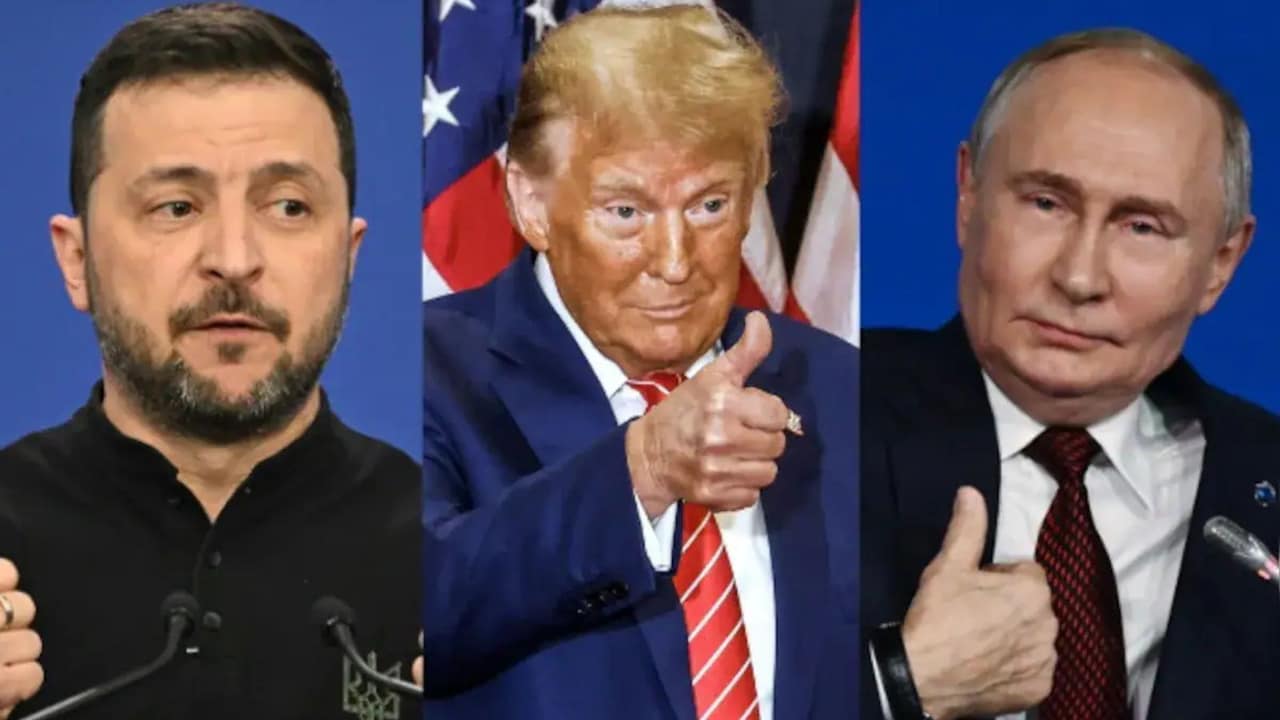
A unilateral ceasefire declaration by a third-party mediator fails when the structural incentives of the belligerents remain unaligned, turning a diplomatic announcement into a mechanism for tactical exploitation. On October 11, 2026, U.S. President Donald Trump declared via social media that an immediate "energy ceasefire" had been agreed upon by Russia and Ukraine. Within hours, Ukrainian President Volodymyr Zelensky stated the agreement was "news for me," while Russian drone and missile strikes continued against Ukrainian power generation facilities in Kharkiv and Kyiv. Rather than representing a genuine de-escalation, this diplomatic friction exposes a three-tier clash between domestic U.S. fuel price stabilization, Russian revenue generation, and Ukrainian asymmetric deterrence.
The Structural Mechanics of a Phantom Ceasefire
Standard diplomatic reporting treats the October 11 announcement as a mere communication breakdown between Washington and Kyiv. Operational analysis reveals it was an attempt at coercive diplomacy designed to lock Ukraine into a pause without securing verifiable Russian compliance.
In game theory, a partial truce—specifically an infrastructure-only ceasefire—requires symmetric vulnerability and simultaneous verification to hold. Neither condition existed in October 2026:
- Verification Deficit: No monitoring framework, start timestamp, or definition of "energy infrastructure" was published prior to the Truth Social post. When Zelensky asked Washington to clarify when the truce began, no operational parameters were forthcoming.
- Compliance Asymmetry: Ukraine initially observed a brief pause on deep-strike operations against Russian refineries to signal diplomatic goodwill to Washington. Conversely, Moscow maintained kinetic pressure on Ukrainian grid assets—including a Kharkiv power plant and central regional infrastructure in Kirovohrad—exploiting the ambiguity to degrade Ukraine's grid ahead of winter without incurring immediate retaliation.
- Information Control Friction: During the window of the purported ceasefire, Kyiv experienced sudden operational restrictions on its Starlink and Starshield mobile internet terminals alongside gaps in U.S. intelligence sharing. Whether deliberate or technical, this degradation directly impaired Ukraine's air defense coordination and deep-strike targeting at the exact moment Russia launched swarms exceeding 850 Shahed drones.
By October 15, the arrangement collapsed entirely. Ukraine resumed long-range strikes—hitting the Ryazan oil refinery with 69 drones and Flamingo cruise missiles—while Russia escalated attacks on central Ukrainian logistics and power grids.
The Cost Function of Global Diesel Supply
To understand why Washington attempted to impose an unnegotiated energy truce on Kyiv, one must examine the global refined-products market in late 2026. The primary driver of the global fuel shock was not Ukrainian drone strikes on Russian refineries, but the U.S. war with Iran that began in February 2026. Blockades in the Strait of Hormuz severed a chokepoint that previously carried one-fifth of the world's petroleum supply.
The resulting supply contraction pushed U.S. retail diesel prices from $3.67 per gallon in late 2025 to a peak of $6.53 per gallon in September 2026, hovering at $6.28 per gallon in mid-October. Facing midterm elections on November 3, the White House prioritized rapid price suppression over allied strategic alignment.
The October 9 Russian Diesel Agreement
Two days before announcing the energy ceasefire, Trump unveiled a bilateral arrangement with Russian President Vladimir Putin to inject over 4.8 million tons of Russian diesel into global markets:
- Tranche One: Over 300,000 tons released immediately.
- Tranche Two: 500,000 tons scheduled for November 2026.
- Tranche Three: 1 million tons delivered immediately thereafter.
- Tranche Four: An additional 3 million tons contingent on Russian refining capacity.
This fourth tranche explains the October 11 ceasefire declaration. Russia cannot export 4.8 million tons of refined diesel if Ukrainian long-range drones and cruise missiles are systematically destroying its distillation towers and hydrocracking units. The energy ceasefire was therefore a supply-chain protection mechanism for the U.S.-Russia diesel deal, accompanied by explicit U.S. threats to halt weapons procurement systems for Kyiv if deep strikes on Russian refineries continued.
Market Limitations of the Russian Supply Injection
Energy economists identified a critical flaw in this supply-side intervention. While easing sanctions on Russian diesel provides Moscow with hard currency to finance its war economy, 4.8 million tons (roughly 35.8 million barrels) is insufficient to offset a protracted closure of the Strait of Hormuz. Global diesel markets price at the margin; as long as Persian Gulf maritime transit remains contested, Russian seaborne exports alter trade flows—rerouting barrels rather than expanding net global supply—without restoring pre-war price equilibrium.
Asymmetric Deterrence and the Winter Grid Equation
From Kyiv's operational perspective, accepting an unverified energy ceasefire creates a fatal strategic imbalance. Russia and Ukraine possess fundamentally different energy vulnerabilities, making a mutual pause on energy strikes advantageous to Moscow and detrimental to Kyiv.
- Ukraine's Centralized Vulnerability: Ukraine relies on a concentrated network of thermal power plants, hydroelectric dams, and high-voltage substations. Replacing damaged autotransformers and turbine halls requires months of custom manufacturing and Western financial aid.
- Russia's Distributed Refining Exposure: Russia's domestic electricity grid is largely insulated from Ukrainian strike capabilities, but its downstream oil refining sector is concentrated within range of Ukrainian unmanned aerial vehicles and domestically produced cruise missiles like the Neptune and Flamingo.
For Ukraine, targeting Russian refineries serves two distinct operational functions: it degrades the fuel logistics required by the Russian military in occupied territories, and it imposes a direct macroeconomic cost on the Kremlin by forcing domestic fuel export bans and eroding state revenues. Surrendering this leverage in exchange for a non-binding social media announcement—while Russian forces retain the capability to strike Ukrainian power plants with ballistic missiles and Shahed drones—strips Kyiv of its primary strategic deterrent.
Coercive Diplomacy and Allied Fragmentation
The diplomatic fallout between October 10 and October 15 demonstrated how unilateral mediation fractures coalition cohesion. On October 10, frustrated by Kyiv's refusal to halt refinery strikes, Trump publicly called for Ukraine to replace Zelensky with a leader willing to finalize a settlement, while Zelensky countered that he would only organize wartime elections under a comprehensive, verified 60-day total ceasefire.
Instead of isolating Kyiv, this pressure triggered immediate counter-balancing from European and G7 allies:
- European Commission Alignment: Commission President Ursula von der Leyen publicly backed Zelensky's demand for a structured, verifiable ceasefire protecting both energy infrastructure and global food corridors, rejecting the premise of an informal, one-sided freeze.
- G7 Pushback: Canadian Prime Minister Mark Carney endorsed an energy truce in principle but condemned the U.S.-Russia diesel agreement as a direct threat to European security that undercuts sanctions regimes.
This divergence highlights a structural reality in coalition warfare: a hegemon cannot unilaterally broker a partial truce between two active combatants when its own domestic economic imperatives contradict the existential security requirements of its junior partner.
Strategic Trajectory for Winter 2026–2027
With the October energy truce dead and Kremlin spokesperson Dmitry Peskov explicitly ruling out temporary respites in favor of protracted, multi-year negotiations, both combatants are locked into an attrition cycle through the 2026–2027 winter. Pentagon assessments confirm that Russia continues to mobilize manpower and orient its industrial base for a prolonged conflict.
Future mediation efforts—including the upcoming talks in Shenzhen between Trump, Putin, and Chinese President Xi Jinping, alongside parallel consultations in Berlin with European powers—will fail if they rely on informal, sectoral ceasefires. Any durable pause in infrastructure strikes requires three non-negotiable mechanisms:
- Automated Retaliation Triggers: Pre-agreed third-party verification (via satellite telemetry and cross-border radar monitoring) tied to automatic, pre-authorized sanctions snapbacks or weapons deliveries upon the first verified strike on a protected grid asset.
- Decoupling Sanctions Relief from Unverified Pauses: Conditioning any energy export relief for Moscow on verified, sustained reductions in kinetic launches against Ukrainian civilian substations, rather than granting upfront market access.
- Symmetric Asset Definition: Explicitly codifying both Ukrainian electrical generation/transmission nodes and Russian downstream refining/export terminals within a single binding protocol, eliminating the definitional ambiguity that allowed Moscow to bomb Kharkiv while claiming adherence to a truce.
Until diplomatic frameworks replace verbal assurances with enforceable verification architectures, Ukraine will continue to treat Russian refining capacity as a primary military target, and global energy markets will remain hostage to kinetic escalation in both Eastern Europe and the Persian Gulf.


