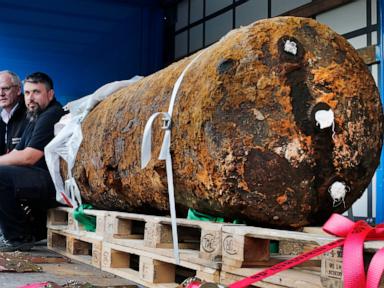
The soil remembers what politics tries to forget. Across Europe, Asia, and North Africa, millions of acres of forest are quietly harboring unexploded ordinance from the twentieth century. When climate change supercharges seasonal wildfires, these subterranean arsenals wake up. Extreme heat triggers old chemical fuses, detonates unstable high explosives, and turns routine firefighting operations into active combat zones.
We are witnessing a slow-motion environmental collision. Decades of unexploded ordnance left over from World War I and World War II now sit directly in the path of expanding fire corridors. Traditional forestry management assumed these munitions were inert tombs of rust. They are not. They are volatile time bombs waiting for a spark.
The Chemistry of Decay
Munitions do not age gracefully. Metal casings corrode in acidic forest soils, letting moisture breach the outer shell. Inside, chemical compositions shift. TNT, picric acid, and white phosphorus become increasingly unstable as they degrade over decades of freeze-thaw cycles.
When a modern wildfire sweeps through a sector, ambient ground temperatures can skyrocket within minutes. This sudden thermal shock acts as a crude detonator.
- White phosphorus melts at relatively low temperatures, spontaneously combusting upon contact with oxygen once its degraded container cracks open.
- Primary explosives like mercury fulminate become hyper-sensitive to heat and friction as they dry out and crystallize further inside deteriorating shells.
- Secondary boosters containing RDX or composition B cook off when soil temperatures exceed structural thresholds, triggering sympathetic detonations in adjacent buried mines.
Firefighters cannot simply deploy water drops when ordnance begins cooking off. Standard aerial retardants and water buckets are useless against subterranean high explosives. In many cases, emergency crews are forced to pull back, establishing perimeter lines miles away from the active fire front while artillery shells and mortar bombs detonate on their own accord.
Frontline Realities in the Modern Burn Zone
The geographic footprint of this crisis spans continents, but the operational nightmare is hyper-local. In the forests of Verdun, France, the Iron Harvest remains an active hazard more than a century after the guns fell silent. The soil is saturated with millions of unexploded artillery shells containing toxic compounds like arsenic and mustard gas.
When a summer heatwave bakes the French countryside, these forests transform into ticking zones. Fire crews cannot enter certain sectors until demining units clear narrow corridors, a painstaking process that takes weeks. By then, a localized brush fire has often mutated into an uncontained mega-fire.
"We are no longer just fighting nature. We are fighting the ghosts of twentieth-century industrial warfare buried under pine needles and dry peat."
A similar crisis plays out along the former Eastern Front, where peat bogs and dense forests hide countless Soviet and German munitions. Peat fires burn underground, silently smoldering for weeks beneath the root systems. This subsurface heat is insidious. It bypasses surface indicators and directly cooks buried ordnance at close range, leading to sudden, violent explosions that trap firefighters underground or blast shrapnel through heavy smoke.
Structural Failures in Global Emergency Response
Civil protection agencies are structurally unprepared for this convergence of hazards. Emergency management frameworks treat fire suppression and explosive ordnance disposal as entirely separate domains. Firefighters receive training in thermal dynamics, wind vectors, and hose lays. EOD specialists receive training in electronics, detonators, and bomb disposal robots.
They rarely train together.
When a wildfire enters an artillery-contaminated zone, coordination breaks down immediately. Incident commanders face an impossible calculus. Send personnel in and risk catastrophic casualties from unexpected detonations, or stand down and let entire communities burn.
- Mapping gaps leave emergency workers blind. Historical military maps are often inaccurate, incomplete, or classified, meaning foresters have no reliable database showing where poison gas shells or anti-personnel mines were dumped after previous conflicts.
- Equipment mismatch plagues response teams. Standard firefighting gear offers zero protection against fragmentation or blast waves. Meanwhile, military EOD gear is heavy, cumbersome, and completely unsuited for navigating fast-moving timber fires.
Governments continue to fund post-conflict clearance programs as a humanitarian cleanup effort rather than an urgent climate adaptation priority. That administrative blind spot costs lives every fire season.
The Path Forward Requires Total Integration
Resolving this existential threat demands a complete rewrite of how vulnerable nations manage legacy conflict zones. Governments must treat unexploded ordnance mapping as essential climate infrastructure. LIDAR and hyperspectral imaging technologies can detect subsurface metallic anomalies and chemical soil contamination before fires ignite, allowing proactive clearance operations to take place during cooler months.
Investment must shift from reactive emergency firefighting toward preemptive soil remediation in high-risk historic combat regions. Until civil defense organizations merge munitions clearance with wildfire mitigation strategies, every dry summer will bring us closer to a catastrophe where the past literally blows up beneath our feet.